Universal Shafts Supplier
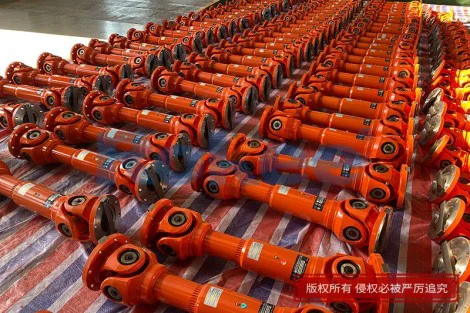
In the intricate and interconnected system of modern mechanical power transmission, universal shafts stand out as one of the most indispensable and versatile functional components, serving as a critical bridge for power delivery between misaligned mechanical structures. Unlike rigid transmission components that rely on strictly coaxial installation to operate normally, universal shafts feature unique flexible transmission characteristics, which enable stable torque and rotational motion transmission even when there are angular deviations, axial displacements, and parallel offsets between driving and driven shafts. This inherent structural advantage allows mechanical equipment to break free from the limitations of fixed installation positions and linear transmission layouts, greatly improving the design flexibility, operational adaptability, and structural compactness of various mechanical systems. As industrial equipment continues to evolve toward high load, high speed, high precision, and multi-scenario adaptive operation, the technical connotation and application value of universal shafts are constantly being deepened, making them a core basic component supporting the stable operation of numerous industrial and mechanical fields.
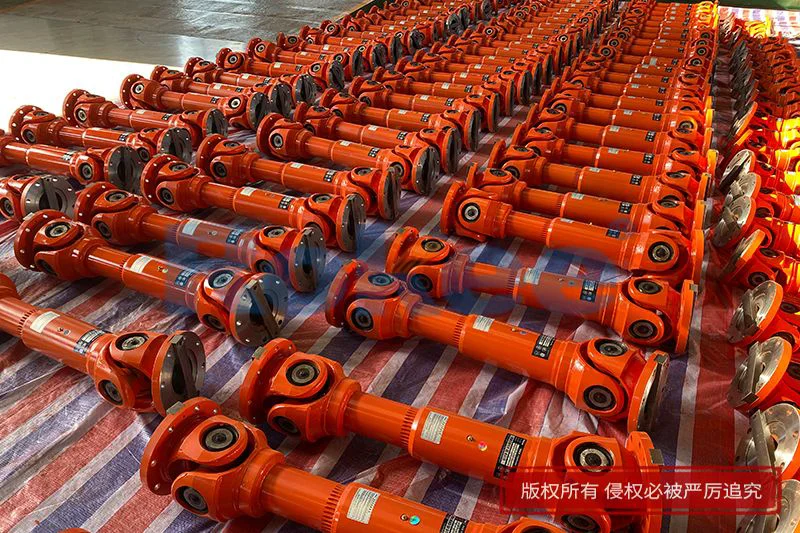
The fundamental working principle of universal shafts is derived from the flexible coupling structure composed of universal joint assemblies and intermediate shaft bodies, which cleverly converts irregular offset rotation into continuous and stable power output through the cooperative movement of internal mechanical structures. A single universal joint can effectively adapt to a certain range of angular misalignment between two shafts, while the combined structure of multiple joints and intermediate shafts further expands the adaptability to complex displacement deviations, including comprehensive offsets of angle, axial direction, and radial direction generated during equipment operation. During the power transmission process, the universal joint’s internal rotating parts undergo regular angular deflection and reciprocating micro-movement following the equipment’s operating state, which offsets the transmission errors and power loss caused by shaft misalignment. This flexible compensation mechanism not only ensures the continuity and stability of power transmission but also effectively buffers the vibration and impact generated during the start-up, variable-speed operation, and load switching of mechanical equipment, realizing dual protection of transmission efficiency and equipment stability.
The excellent operational performance of universal shafts stems from rigorous material selection and sophisticated manufacturing processes, which lay a solid foundation for their long-term stable operation under complex working conditions. High-performance universal shaft products mainly adopt high-strength alloy steel as the core raw material, which undergoes multiple precision processing and heat treatment procedures to optimize internal metal structure and mechanical properties. The key components such as universal joint forks, cross shafts, and rolling bodies are processed by precision forging technology, which enables the internal metal fiber structure to be continuously distributed along the force-bearing direction, avoiding the internal porosity, cracks, and loose structures that are prone to occur in traditional casting processes. This processing method significantly improves the structural compactness, torsional rigidity, and fatigue resistance of core parts, enabling them to withstand long-term high-load torsion, frequent impact loads, and high-speed rotating friction.
Subsequent standardized heat treatment processes including quenching and tempering further optimize the hardness and toughness matching of component surfaces and interiors. The surface strengthening treatment effectively enhances the wear resistance and corrosion resistance of parts, reducing surface abrasion, oxidation, and aging failure caused by long-term friction and exposure to complex working environments. The precision machining of shaft body diameters, assembly holes, and matching surfaces ensures extremely high dimensional accuracy and fitting tolerance, eliminating assembly gaps and eccentric rotation problems that may cause vibration, noise, and accelerated wear during operation. Every processing link from raw material inspection, forming processing, heat treatment, precision grinding to surface finishing is strictly controlled, which ensures that each finished universal shaft has consistent mechanical properties, stable transmission performance, and reliable structural durability.
Universal shafts have an extremely wide range of application scenarios, covering almost all mechanical equipment fields that require flexible power transmission and offset compensation. In heavy industrial equipment, they serve as core transmission components for mining machinery, metallurgical equipment, and forging machinery, stably transmitting huge torque under heavy-load and strong-impact working conditions to ensure the continuous operation of large-scale production equipment. In material processing industries such as papermaking, printing, and textile machinery, the high-precision and low-vibration transmission characteristics of universal shafts avoid operating jitter and speed fluctuation, ensuring the uniformity and precision of material processing and effectively improving product qualification rates and production stability.
In transportation machinery and engineering equipment, universal shafts undertake the power transmission task of mobile operating equipment with complex posture changes. During the operation of engineering machinery such as loaders, excavators, and cranes, the working posture of the equipment changes frequently, and the relative position of the power output end and the execution end is constantly offset. The flexible compensation capability of universal shafts can perfectly adapt to this dynamic displacement change, ensuring uninterrupted power transmission during equipment posture adjustment and walking operation. In various automated production lines and intelligent mechanical equipment, compact and high-precision universal shaft products adapt to the miniaturization and integrated design trend of modern equipment, realizing efficient and low-loss power transmission in narrow installation spaces, and supporting the stable operation of high-frequency and high-precision automated production.
Compared with other traditional transmission coupling components, universal shafts have unparalleled comprehensive advantages in structural adaptability and operational reliability. Rigid couplings are only suitable for absolutely coaxial and static installation environments, and slight shaft misalignment will cause severe equipment vibration, component wear, and even structural damage. ordinary elastic couplings have limited compensation capability and poor load resistance, making them difficult to adapt to heavy-load and high-speed continuous operating scenarios. In contrast, universal shafts integrate large displacement compensation capability, high torque transmission efficiency, strong impact resistance, and excellent structural stability, and can maintain stable working performance in harsh environments such as high dust, high humidity, and variable load. In addition, the modular structural design of universal shafts brings excellent maintainability. The standardized component structure is convenient for daily inspection, partial replacement, and fault maintenance, effectively reducing equipment downtime and later operation and maintenance costs for users.
In actual industrial operation, the service life and working stability of universal shafts are closely related to reasonable model matching, standardized installation, and scientific daily maintenance. In the equipment design and selection stage, it is necessary to comprehensively match the specifications of universal shafts according to the equipment’s operating torque, rotating speed, offset range, and working environment. Reasonable parameter matching can avoid performance attenuation and premature failure caused by long-term overload operation or excessive offset angle. During the installation process, standardized operation is required to control the installation coaxiality, fixation tightness, and assembly gap to ensure that the universal shaft operates within the optimal working state and avoid additional torsion and friction loss caused by irregular installation.
Daily maintenance work mainly includes regular lubrication, running state inspection, and component wear detection. Good lubrication can effectively reduce the friction and wear of internal rotating and matching parts, lower operating temperature, and delay component aging. Regular inspection of operating vibration, noise, and rotation uniformity can timely discover potential faults such as part wear, loose assembly, and lubrication failure. Timely replacement of worn and aging components can avoid small faults evolving into large-scale equipment failures, ensuring the long-term stable and efficient operation of the transmission system.
With the continuous progress of industrial manufacturing technology and the iterative upgrading of mechanical equipment, the technical development of universal shafts is also moving toward high precision, high durability, lightweight, and intelligent adaptation. Modern optimized design further improves the structural stress distribution of universal shafts, reduces internal power loss during transmission, and improves overall transmission efficiency. The application of new high-strength and wear-resistant materials further enhances the equipment’s adaptability to extreme working conditions, enabling universal shafts to operate stably in higher load, higher speed, and more complex environmental scenarios. At the same time, personalized customized design has become an important development trend. For special equipment with non-standard installation space, special operating posture, and extreme working conditions, targeted structural optimization and performance customization can be carried out to meet the differentiated power transmission needs of various special scenarios.
As a basic core component of mechanical power transmission systems, universal shafts play an irreplaceable role in supporting the stable operation of modern industrial systems and mechanical equipment. Their unique flexible transmission principle, reliable manufacturing quality, and wide scenario adaptability make them an important guarantee for improving equipment operating efficiency, reducing operating failure rates, and extending equipment service life. In the future, with the continuous upgrading of industrial intelligence and high-end manufacturing, universal shaft technology will continue to innovate and break through, continuously adapting to the new development needs of modern mechanical equipment, and providing more efficient, stable, and durable power transmission solutions for various industrial fields.
Tags: Telescopic Universal Joint , Universal Coupling Joint , Universal Coupling Shaft , Universal Couplings , Universal Joints , Universal Shafts , Universal Shaft Couplings , Universal Shaft Joint , Universal Drive Shafts , Flange Universal Joint Couplings , Industrial Universal Joint , Small Universal Joint Couplings , Universal Cross Joint Couplings , Universal Joint Shaft Coupling , Universal Joint Shaft Coupler , Universal Joint Shafts , sandwich panel machine , pu sandwich panel line
« Universal Shafts Supplier » Update Date: 2026/7/17
Contact
If you require custom machined couplings, please contact Rokee via the contact information below for inquiries.
Email: https://www.gshmdpq.com
 WeChat