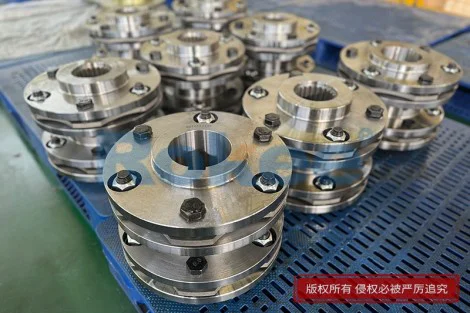
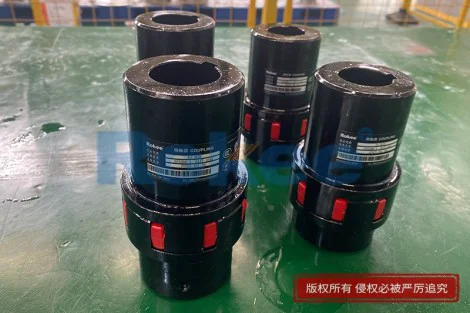
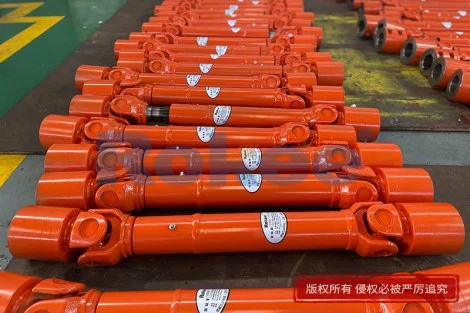
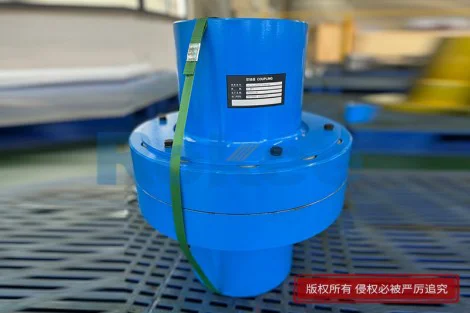
Universal Joint Shaft Coupling
Rokee is a manufacturer of universal joint shaft coupling from china, we can provide non-standard custom universal joint shaft coupling based on parameters or drawings supplied by customers, with export support available.

As one of the most versatile and time-tested mechanical transmission components, universal joint shaft couplings have long served as an indispensable link in modern mechanical power transmission systems, solving the core problem of torque and rotational power transfer between non-coaxial shafts. Unlike rigid shaft couplings that strictly require precise coaxial alignment of connected shafts and can hardly tolerate any positional deviation during operation, this type of flexible coupling is uniquely designed to adapt to various forms of shaft misalignment, including angular deflection, parallel offset, and combined spatial displacement, making it widely applicable in complex mechanical operating environments where fixed and accurate shaft alignment cannot be permanently maintained. Its ingenious mechanical structure, stable transmission performance and strong environmental adaptability enable it to play a core role in countless mechanical equipment, from daily transportation tools to large industrial machinery and precision transmission devices.

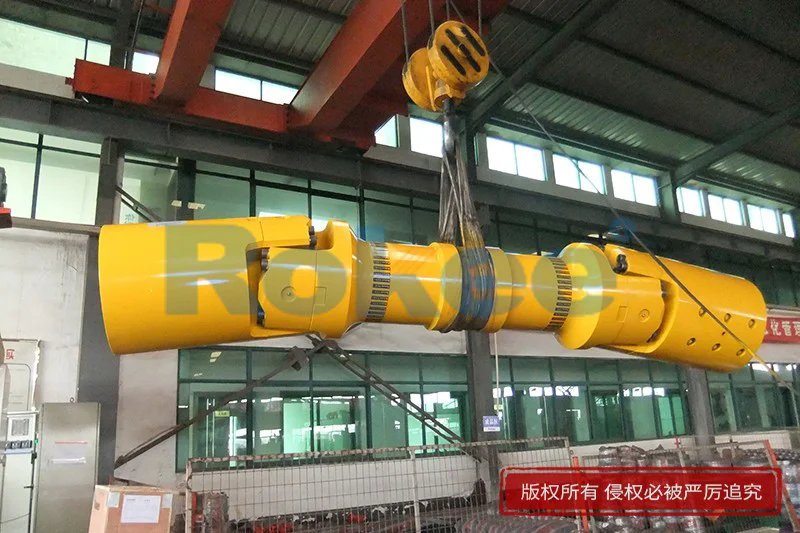

The basic structural composition of a universal joint shaft coupling follows a mature and optimized mechanical design logic, with a simple and robust overall layout that balances structural stability and flexible movement capability. The core functional components mainly include two symmetric fork-shaped yokes, a central cross-shaped spindle, and matching bearing assemblies. The two yokes are respectively connected to the driving shaft and the driven shaft of the transmission system, forming the input and output ends of power transmission. The cross spindle is installed between the two yokes, with its four end shafts precisely matched with the bearing holes of the yokes through bearing structures. This structural design enables the two yokes to generate relative rotational deflection around the two mutually perpendicular axes of the cross spindle, forming a spatial movable hinge structure. The bearing assemblies between the cross spindle and yokes effectively reduce frictional resistance during relative movement, avoid rigid friction between metal components, and lay a foundation for efficient and stable power transmission under misalignment conditions. Some optimized structural models are also equipped with spline connection structures at the shaft connection parts, which can effectively compensate for axial displacement between shafts during equipment operation and further expand the adaptive range of the coupling.
The working principle of universal joint couplings is derived from the kinematic characteristics of spatial linkage mechanisms, realizing continuous power transmission through the conversion and transmission of spatial rotational motion. When the driving shaft rotates at a constant speed and outputs torque, the connected driving yoke performs fixed-axis rotational motion, and drives the central cross spindle to produce composite motion of rotation and spatial swing. The cross spindle then transmits the motion and torque to the driven yoke, and finally drives the driven shaft to rotate synchronously, completing the entire power transmission process. A notable kinematic feature of a single universal joint is the non-uniform instantaneous angular velocity of the driven shaft when there is an included angle between the input and output shafts. With a fixed angular misalignment, the rotational speed of the driven shaft will fluctuate periodically within a single rotation cycle. This periodic speed fluctuation may produce alternating torque and vibration during high-speed operation, which is the inherent kinematic characteristic of a single universal joint structure. In practical engineering applications, this problem is effectively solved by adopting a double universal joint combination structure. By arranging two universal joints in a matched manner and reasonably adjusting the installation angle and phase position, the speed fluctuation generated by the first joint can be completely offset by the second joint, realizing constant-speed synchronous transmission of the input and output shafts and ensuring the smoothness and stability of power transmission.
Universal joint shaft couplings possess prominent performance advantages that distinguish them from other types of shaft couplings, which are the key reasons for their wide popularization in the mechanical field. First of all, they have excellent misalignment compensation capability, allowing a large angular deflection between the connected shafts. This enables the coupling to adapt to installation errors during equipment assembly, structural deformation during long-term operation, and position deviation caused by equipment vibration and load impact, avoiding additional mechanical stress and transmission failure caused by shaft misalignment. Secondly, the coupling has high torque transmission efficiency and strong load-bearing capacity. Its rigid core force-bearing structure can stably transmit large torque without power loss, and can withstand instantaneous impact loads and alternating loads generated during equipment start-up, shutdown and variable-load operation, showing good mechanical reliability. In addition, the overall structure of the universal joint shaft coupling is compact and reasonable, with small space occupation, convenient assembly and disassembly processes, and low assembly precision requirements. It can be quickly installed and debugged in various complex mechanical layouts, effectively reducing equipment assembly and maintenance time. Meanwhile, compared with other flexible transmission components, it has lower daily operation and maintenance costs, with fewer vulnerable parts and stable long-term operating performance.
Nevertheless, universal shaft couplings also have certain inherent limitations and usage defects that need to be fully considered in equipment design and application. The most obvious shortcoming is the periodic speed fluctuation and vibration problem of the single-joint structure under angular misalignment, which will increase mechanical vibration and noise during high-speed operation, and may cause fatigue wear of transmission components in the long run. Although the double-joint structure can eliminate speed fluctuation, it will increase the overall structural length and structural complexity of the transmission system, putting forward higher requirements for equipment layout space. In addition, the bearing and matching friction parts inside the coupling are prone to wear during long-term reciprocating swing and rotational movement. Insufficient lubrication or aging of lubricating grease will accelerate component wear, leading to increased transmission clearance, reduced transmission precision, and even abnormal vibration and jitter of the equipment. It is also worth noting that the basic structural design of the universal joint shaft coupling cannot compensate for pure axial misalignment alone, and its compensation performance for parallel offset of shafts is limited, so it needs to be used in combination with other compensation structures in working conditions with large parallel displacement.
The application scenarios of universal joint shaft couplings cover almost all mechanical fields that require flexible power transmission, showing extremely strong industrial adaptability. In the field of transportation machinery, it is a core transmission component in vehicle power transmission systems, responsible for transmitting engine power to the driving axle. It can adapt to the up and down swing and position deviation of the axle caused by road vibration and suspension deformation during vehicle driving, ensuring continuous and stable power output. In heavy industrial machinery such as metallurgical equipment, mining machinery and engineering machinery, the coupling undertakes the transmission task of large torque and heavy load. Its strong impact resistance and load-bearing capacity can adapt to the harsh working conditions of heavy load, frequent start-stop and complex vibration in industrial production, and maintain stable operation of mechanical equipment for a long time. In precision processing equipment and light industrial machinery, the optimized and refined universal joint coupling can realize low-vibration and low-noise power transmission, ensuring the transmission precision of precision machinery while adapting to tiny position changes of components during operation.
In addition to traditional mechanical fields, universal joint shaft couplings also play an important role in emerging mechanical equipment and special working condition scenarios. In automated production equipment and robotic transmission systems, compact universal joint couplings are used to connect multi-axis transmission structures, realizing flexible power transmission between spatially distributed shafts and meeting the motion requirements of multi-degree-of-freedom mechanical movement. In marine and aerospace auxiliary mechanical equipment, the high-reliability optimized coupling can adapt to special environmental conditions such as temperature change and slight structural deformation, ensuring the stability of power transmission in complex working environments. In agricultural machinery and construction machinery working in open and harsh environments, the good environmental adaptability and anti-dust performance of the coupling enable it to operate stably in dusty, humid and vibration-intensive working scenarios, reducing equipment failure rates caused by transmission system problems.
Reasonable selection and standardized use are crucial to giving full play to the performance advantages of universal couplings and extending their service life. In the type selection stage, it is necessary to comprehensively evaluate key factors such as the actual transmission torque of the equipment, operating speed, shaft misalignment angle, working environment and load characteristics. For working conditions with large torque and heavy impact load, it is necessary to select coupling structures with enhanced load-bearing capacity and optimized rigidity; for high-speed operating equipment, priority should be given to structural models that can effectively reduce vibration and friction, and double-joint constant-speed transmission structures should be matched to avoid speed fluctuation vibration. At the same time, the structural size and installation stroke of the coupling need to match the shaft diameter and installation space of the equipment to ensure accurate assembly and flexible movement of the component. For equipment with frequent variable load and long-term continuous operation, it is necessary to reserve a certain performance margin during type selection to avoid fatigue damage and performance attenuation of the coupling caused by long-term overload operation.
Daily maintenance and scientific maintenance are key links to ensure the long-term stable operation of universal shaft couplings. The core of maintenance work lies in the lubrication management of friction parts. The bearings and hinge parts inside the coupling need to be filled with high-performance lubricating grease regularly to reduce metal friction and wear, avoid dry friction and high-temperature aging of components. In harsh working environments with much dust and humidity, it is also necessary to check the sealing performance of the coupling regularly to prevent dust, moisture and impurities from entering the friction gap, which may cause abrasive wear and component corrosion. During regular equipment inspection, it is necessary to focus on checking the operating clearance of the coupling, the fastening state of connecting parts and the surface wear degree of the cross spindle and bearings. Once excessive clearance, abnormal wear or loose fastening is found, adjustment and replacement should be carried out in a timely manner to prevent small faults from evolving into transmission system failures. In addition, during equipment operation, abnormal vibration, noise and jitter of the transmission system should be monitored. These abnormal phenomena are often early warning signs of coupling wear, failure or misalignment, and timely troubleshooting can effectively reduce equipment operation risks.
With the continuous upgrading of modern mechanical manufacturing technology and the continuous improvement of equipment precision and reliability requirements, the design and manufacturing technology of universal joint shaft couplings are also constantly innovating and optimizing. Modern optimized couplings adopt high-strength alloy materials and precision processing technology, which further improve structural rigidity, wear resistance and fatigue resistance, and can adapt to higher speed and heavier load working conditions. The optimized structural design effectively reduces the weight and vibration of the coupling while ensuring load-bearing performance, improving the dynamic balance performance of high-speed operation. At the same time, the modular design concept is gradually applied to the production of universal joint couplings, realizing standardized production of components, convenient replacement and maintenance, and further reducing the comprehensive operation and maintenance cost of equipment. In the future, with the development of intelligent mechanical equipment and extreme working condition machinery, universal joint shaft couplings will develop towards higher precision, stronger adaptability, longer service life and more intelligent fault prediction, and will always maintain an irreplaceable core position in the field of mechanical power transmission.
« Universal Joint Shaft Coupling » Update Date: 2026/7/17
Contact
If you require custom machined couplings, please contact Rokee via the contact information below for inquiries.
Email: https://www.gshmdpq.com
 WeChat