Telescopic Drive Shaft
Rokee is a manufacturer of telescopic drive shaft from china, we can provide non-standard custom telescopic drive shaft based on parameters or drawings supplied by customers, with export support available.
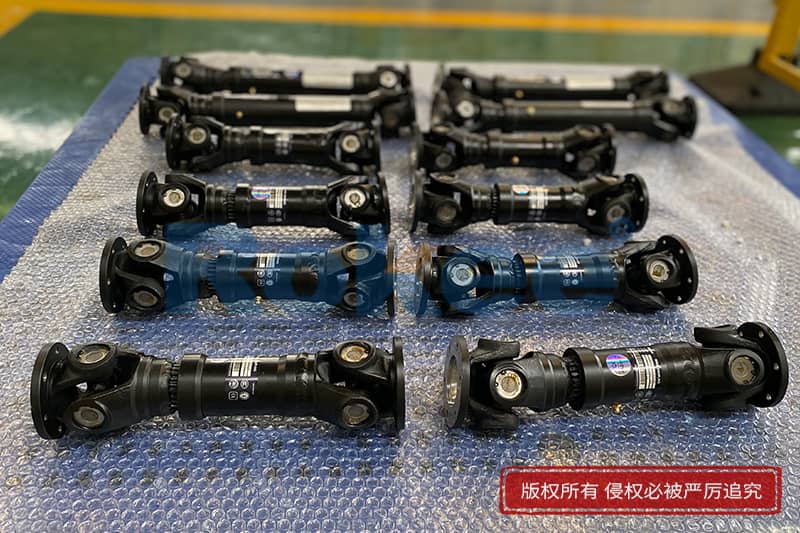
As a core functional component of modern mechanical power transmission systems, the telescopic drive shaft has become an indispensable part of automotive engineering, construction machinery, agricultural equipment and various industrial transmission devices. Unlike conventional fixed-length drive shafts with rigid structural limitations, this specialized mechanical component is ingeniously designed to integrate axial length adjustment and stable torque transmission functions, effectively solving the technical pain points of power interruption, structural jamming and component damage caused by dynamic position changes between power sources and load ends during equipment operation. With the continuous upgrading of mechanical equipment towards high efficiency, high stability and long service life, the structural optimization, material innovation and performance improvement of telescopic drive shafts have also become important research directions in the field of mechanical transmission, providing reliable basic support for the stable operation of various dynamic mechanical systems.


The working principle of the telescopic drive shaft is based on the collaborative operation of precision sliding structure and flexible transmission mechanism, realizing the dual functions of continuous torque transmission and adaptive length compensation. The core of its structural design lies in the nested matching of internal and external components, mainly including precision spline shaft and spline sleeve assembly, which forms a tight meshing connection through external splines on the inner shaft and internal splines on the outer sleeve. This special structural form enables the shaft body to freely slide axially within a preset stroke range while maintaining stable rotational torque transmission, perfectly adapting to the dynamic distance changes between the driving end and the driven end of mechanical equipment. In the actual working process, when the operating state of the equipment changes, such as suspension jitter and chassis deformation of moving vehicles, structural deflection and thermal expansion of industrial equipment, and terrain adaptation displacement of engineering machinery, the telescopic structure can automatically extend or retract to compensate for the axial distance deviation. At the same time, matched universal joint assemblies are installed at both ends of the drive shaft, which can effectively offset the angular displacement and deflection deviation generated during equipment operation, ensuring that the power transmission process remains smooth and continuous without rigid impact, vibration or power loss.
The overall structure of a standard telescopic drive shaft presents a highly integrated and modular design, with each component cooperating precisely to undertake different mechanical loads and functional tasks. In addition to the core spline telescopic mechanism, the complete structural system also includes high-strength shaft tube main body, universal joint transmission components, bearing support assemblies, sealing protection structures and internal lubrication systems. The shaft tube main body is usually made of high-strength alloy steel materials with excellent torsional resistance and structural rigidity, which can bear high torque load and alternating stress generated by long-term operation, avoiding structural deformation or fracture under heavy-load working conditions. The spline pair as the telescopic core undergoes fine precision machining and surface hardening treatment, with smooth matching surfaces and high dimensional accuracy, which not only ensures the flexibility of axial sliding, but also maintains the uniformity and stability of torque transmission, avoiding local stress concentration caused by uneven meshing. The universal joint assembly undertakes the flexible connection function of the transmission system, adapting to the multi-directional angular offset generated during the operation of mechanical equipment, breaking the transmission limitation of fixed-angle rigid shafts. The internal bearing components play a role in supporting rotation and reducing friction, ensuring the low-resistance operation of the rotating shaft body. Meanwhile, the integrated sealing structure can effectively isolate external dust, moisture, sediment and other pollutants, preventing abrasive wear and corrosion damage of the internal spline and bearing components, and the built-in lubrication system can continuously maintain the lubrication state of the matching surfaces, reduce friction and wear, and extend the overall service life of the component.
The unique structural and functional advantages enable telescopic drive shafts to be widely used in multiple industrial fields, covering mobile transportation, engineering construction, agricultural production, industrial manufacturing and other key scenarios. In the automotive industry, this component is widely applied in the transmission systems of passenger cars, commercial vehicles and off-road vehicles. During the driving process of vehicles, the up and down jitter of the suspension and the deformation of the chassis during load-bearing will cause real-time changes in the distance and angle between the engine power output end and the driving axle. The telescopic drive shaft can adapt to this dynamic change in real time, ensuring stable power output during vehicle acceleration, deceleration and bumpy driving, and avoiding transmission noise and power attenuation caused by rigid structural constraints. In the field of engineering machinery, large-scale equipment such as excavators, loaders, concrete mixers and cranes often operates in complex and harsh working conditions, with frequent structural deflection, load impact and position displacement. The telescopic drive shaft can effectively compensate for the structural displacement generated during the operation of engineering equipment, maintain the continuity of power transmission under complex working conditions, and improve the operational stability and reliability of heavy-duty machinery.
In agricultural production equipment, field operating machinery such as tractors, harvesters and rotary tillers often needs to adapt to uneven terrain and frequent attitude adjustment. The power transmission system of such equipment is prone to position deviation and angle change due to terrain fluctuation and mechanical vibration. The application of telescopic drive shafts solves the problem of unstable power transmission caused by terrain changes, ensures that agricultural machinery can maintain efficient power output during flexible operation, and adapts to the complex and changeable field operating environment. In the industrial manufacturing field, telescopic drive shafts are also used in the power transmission links of rolling mills, papermaking equipment, mining machinery and automated production lines. Industrial equipment will produce thermal expansion and contraction due to long-term high-load operation, and the structural frame will have slight deflection under long-term load. The telescopic compensation function can effectively eliminate the transmission failure risks caused by thermal deformation and structural displacement, ensure the continuous and stable operation of industrial production lines, and reduce equipment shutdown and maintenance costs. In addition, in the fields of special transportation equipment and aerospace auxiliary machinery, the high-precision and high-stability characteristics of telescopic drive shafts also provide reliable power transmission guarantees for high-precision and high-reliability mechanical systems.
Compared with traditional fixed-length drive shafts and ordinary flexible transmission components, telescopic drive shafts have outstanding comprehensive performance advantages in structural adaptability, operational stability and service life. First of all, it has excellent dynamic adaptability, realizing integrated compensation of axial displacement and angular deviation, which can cope with multi-dimensional structural position changes generated during equipment operation, a performance that fixed-length drive shafts do not possess. Traditional fixed shafts are prone to structural extrusion, component wear and even fracture failure when facing small displacement and deviation, while telescopic drive shafts can buffer and compensate for displacement changes through flexible telescopic movement, avoiding rigid stress impact on the transmission system. Secondly, the telescopic drive shaft maintains high transmission efficiency while realizing flexible adaptation. Its precision spline meshing structure ensures zero-power-loss transmission of rotational torque, and the efficient lubrication and friction reduction design makes the mechanical energy loss during operation extremely low, maintaining stable transmission efficiency under different working conditions and load states.
Moreover, the optimized structural design gives the telescopic drive shaft excellent anti-vibration and anti-noise performance. The modular matching structure and smooth sliding fit can effectively reduce the vibration and impact generated during power transmission, avoid the resonance phenomenon of the mechanical transmission system, and significantly reduce the operating noise of the equipment. In terms of durability, the use of high-strength wear-resistant materials and surface strengthening processes enables the component to resist abrasive wear, corrosion and fatigue damage under harsh working conditions. The perfect sealing system can block the erosion of external adverse factors, greatly reducing the failure rate of components and extending the service cycle of the transmission system. In terms of installation and maintenance, the integrated modular structure of the telescopic drive shaft simplifies the installation and disassembly process, reduces the difficulty of daily maintenance, and can quickly complete component inspection and replacement, improving the overall operational efficiency of mechanical equipment.
The production and manufacturing process of telescopic drive shafts presents high precision and high standard characteristics, and every processing link directly determines the final performance and service life of the product. The selection of raw materials is the basis for ensuring component performance. High-quality alloy steel with high torsional strength, good toughness and excellent wear resistance is usually selected as the base material to meet the mechanical performance requirements of high load, frequent movement and long-term operation. In the machining stage, the spline structure, which is the core component, needs to be processed by high-precision CNC machining equipment to ensure the dimensional accuracy and surface smoothness of the spline tooth profile. The tooth profile matching gap is strictly controlled within the precision range to avoid transmission jitter caused by excessive gap or unsmooth sliding caused by too small gap. After machining, the spline surface and shaft body need to undergo heat treatment processes such as quenching and tempering to improve surface hardness and internal toughness, enhance wear resistance and fatigue resistance, and prevent structural deformation and tooth surface wear during long-term telescopic operation.
The assembly process also has strict standard requirements. The internal lubricating grease is quantitatively filled according to the design standard to ensure that the sliding friction pair is always in a good lubricating state. The sealing components such as rubber sealing rings and dust covers are installed in a standardized manner to ensure the tightness of the internal structure and prevent the entry of external impurities. After the assembly is completed, all products need to pass strict performance tests, including torque transmission test, telescopic flexibility test, high-load durability test and anti-vibration test, to screen out unqualified products and ensure that every delivered component can meet the working standard requirements of complex mechanical equipment. With the development of modern manufacturing technology, precision forging technology, laser finishing technology and intelligent detection technology are gradually applied to the production of telescopic drive shafts, further improving the structural precision, mechanical performance and product consistency of the components.
Daily maintenance and scientific use are crucial to maintaining the long-term stable performance of telescopic drive shafts. In the operating process of mechanical equipment, the telescopic drive shaft will bear alternating torque, friction and impact load for a long time, and daily inspection and maintenance can effectively avoid sudden failure and extend the service life. The key points of daily maintenance include regular inspection of the sealing state of the component to check whether there is aging, damage or oil leakage of the sealing parts, so as to prevent the loss of internal lubricating oil and the entry of external dust and impurities. It is necessary to regularly check the flexibility of the telescopic structure. If there is jamming, lag or abnormal noise during telescopic sliding, the equipment should be shut down in time for inspection and maintenance to eliminate foreign body blockage and local wear faults. Meanwhile, the lubrication state of the internal spline pair and bearing components should be regularly supplemented and updated to avoid dry friction and accelerated wear caused by insufficient lubrication.
In addition, during the operation of the equipment, avoid long-term overload operation and sudden extreme load impact, so as to prevent the spline structure from tooth surface crushing and structural deformation caused by excessive torque, which will affect the telescopic performance and transmission accuracy. For mechanical equipment operating in harsh environments such as dust, humidity and corrosion, the cleaning and protection of the drive shaft assembly should be strengthened regularly to reduce the erosion and wear of external adverse factors. Regular dynamic balance detection of the drive shaft is also required to eliminate vibration and noise faults caused by unbalanced rotation, ensuring the stability and safety of the power transmission system. Scientific maintenance management can not only maintain the excellent performance of the telescopic drive shaft, but also reduce the frequency of equipment maintenance, save operating costs, and improve the overall operating efficiency of mechanical equipment.
With the continuous progress of mechanical engineering technology and the upgrading of industrial equipment, the development trend of telescopic drive shafts is gradually moving towards high precision, high load resistance, lightweight and intelligent optimization. In terms of material innovation, new high-strength lightweight alloy materials and composite materials are gradually applied to product manufacturing, which can reduce the self-weight of components on the premise of ensuring mechanical strength, reduce the energy consumption of equipment operation, and adapt to the lightweight development trend of modern mechanical equipment. In terms of structural optimization, through finite element analysis and mechanical simulation technology, the structural topology of the drive shaft is optimized, the stress concentration area is improved, the structural stability and fatigue resistance are further enhanced, and the adaptive range of telescopic stroke and angular deviation is expanded to meet the working needs of more complex mechanical scenarios.
In terms of performance upgrading, with the popularization of high-precision mechanical equipment, the transmission accuracy, operational stability and mute performance of telescopic drive shafts are continuously improved, which can meet the high-standard operation requirements of precision manufacturing equipment and special mechanical equipment. In terms of intelligent development, some advanced telescopic drive shaft components begin to integrate miniature sensing devices, which can monitor the operating state, telescopic stroke, torque load and wear degree of the drive shaft in real time, realize real-time feedback of operating data and early warning of faults, help equipment management personnel accurately grasp the operating state of components, realize predictive maintenance, and avoid equipment shutdown accidents caused by component failure. In addition, the green and environmental protection manufacturing process has become an important development direction. Optimizing the production process, reducing energy consumption and pollution emissions in the processing process, and improving the recyclability of components can realize the coordinated development of product performance and environmental protection benefits.
In conclusion, the telescopic drive shaft, as a key flexible transmission component in modern mechanical systems, solves the core technical problem of stable power transmission under dynamic displacement conditions through its unique telescopic adjustment structure and flexible transmission performance. It has irreplaceable application value in multiple industrial fields, and provides a solid basic guarantee for the stable, efficient and safe operation of various mechanical equipment. From traditional mechanical transmission to modern intelligent equipment systems, the continuous innovation and optimization of telescopic drive shaft technology have always promoted the progress of mechanical transmission technology. With the continuous development of material technology, manufacturing technology and intelligent sensing technology, the performance of telescopic drive shafts will be further improved, the application scenarios will be continuously expanded, and it will play a more important role in the development of modern manufacturing, transportation, engineering construction and other industries, becoming an indispensable basic component supporting the high-quality development of the mechanical industry.
« Telescopic Drive Shaft » Update Date: 2026/7/15
Contact
If you require custom machined couplings, please contact Rokee via the contact information below for inquiries.
Email: https://www.gshmdpq.com
 WeChat