Flange Universal Joint Couplings
Rokee is a manufacturer of flange universal joint couplings from china, we can provide non-standard custom flange universal joint couplings based on parameters or drawings supplied by customers, with export support available.

As a core flexible transmission component in modern mechanical systems, flange universal joint coupling serves as a critical connecting medium for power and motion transmission between two independent rotating shafts. Unlike rigid coupling structures that demand precise coaxial alignment of paired shafts, this type of coupling is uniquely designed to accommodate various forms of shaft misalignment while maintaining stable and efficient torque transmission, making it an indispensable part of general machinery, heavy industry, transportation and mechanical transmission fields. Its integrated flange connection structure combined with the flexible universal joint hinge mechanism perfectly balances structural rigidity and transmission flexibility, solving many practical pain points in mechanical operation such as installation deviation, equipment vibration and thermal deformation displacement that cannot be avoided in actual production and operation scenarios.


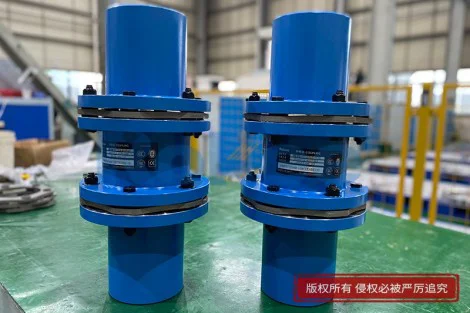
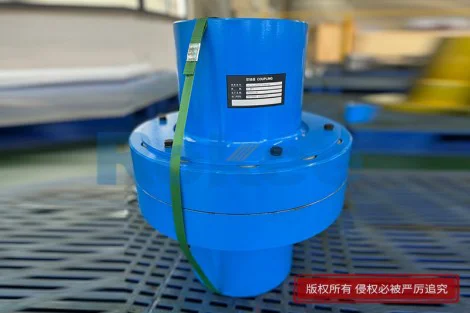
The basic structural composition of flange universal joint coupling is sophisticated and functionally partitioned, with each core component undertaking irreplaceable transmission and protection functions. The cross shaft assembly acts as the core moving unit of the entire coupling, consisting of a precision forged cross shaft, high-precision needle roller bearings and integrated sealing components. The cross shaft forms a spatial hinge connection with two sets of universal joint yokes, enabling free swinging and rotating deflection within a specific angle range, which lays the structural foundation for adaptive compensation of shaft misalignment. The bearing seat is configured as the outer fixing structure of the needle roller bearings, which can firmly lock the bearing position, avoid radial displacement and shaking of bearings during high-speed rotation, and ensure the uniformity and stability of bearing force. The matching sealing system is composed of multi-layer waterproof and dustproof sealing rings and anti-leakage gaskets, which can effectively lock internal lubricating grease, prevent lubricant leakage caused by long-term rotation and pressure, and block external dust, moisture and corrosive impurities from entering the internal moving gaps, so as to reduce component wear and prolong the overall service life of the coupling. On the external connection part, the integrated flange disc is arranged at the end of the universal joint yoke, with evenly distributed bolt holes on the disc surface. This flange bolt fixing mode realizes rigid connection with the shaft end, effectively limiting axial and radial displacement of the connecting part, improving the overall connection rigidity, and facilitating rapid installation, disassembly and later maintenance of the equipment.
The working principle of flange universal coupling is based on the spatial motion coordination mechanism of the cross shaft hinge structure, realizing continuous and stable power transmission between non-collinear shafts. In the working process, the driving shaft drives the connected universal joint yoke to perform rotary motion, and the yoke transmits torque and rotational power to the cross shaft through the flexible cooperation of needle roller bearings. The cross shaft can swing adaptively according to the angle deviation between the driving shaft and the driven shaft, and further drive the other group of universal joint yokes and the connected driven shaft to rotate synchronously. This unique motion mode enables the coupling to maintain normal power output when there is angular misalignment, axial deviation and radial offset between the two connected shafts. Different from fixed-axis transmission of rigid couplings, the flexible hinge structure of the universal joint can buffer and offset the displacement changes generated by equipment operation vibration, parts thermal expansion and contraction, and mechanical installation errors, avoiding additional bending stress and torsional vibration caused by forced coaxial transmission. It is worth noting that a single universal joint structure has the inherent characteristic of periodic angular velocity fluctuation in the rotation process. When the driving shaft runs at a constant speed, the instantaneous angular velocity of the driven shaft will produce regular small changes with the rotation angle. In order to eliminate this transmission fluctuation and achieve uniform and stable power output, most practical application scenarios adopt a double universal joint matching structure. Through the symmetric arrangement of two universal joints and reasonable phase angle matching, the angular velocity deviation generated by the single joint can be mutually offset, realizing constant-speed and smooth transmission of the entire transmission system.
Flange universal joint coupling possesses distinct comprehensive performance advantages compared with other types of transmission couplings, which is the key reason for its wide application in various mechanical equipment. First of all, it has excellent misalignment compensation capability, which can adapt to complex and variable shaft position deviations in actual working conditions. Whether it is angle deflection caused by equipment assembly errors, axial displacement caused by thermal expansion of mechanical parts after long-term operation, or radial offset caused by base vibration and equipment settlement, the coupling can conduct flexible compensation without affecting the overall transmission efficiency, greatly reducing the assembly precision requirements of mechanical equipment and lowering the installation and debugging cost of the transmission system. Secondly, the flange connection structure endows the coupling with high connection rigidity and structural stability. The bolt fastening mode of the flange disc can ensure tight and reliable connection between the coupling and the shaft end, effectively resisting torsional impact and axial thrust generated during high-torque operation, avoiding connection loosening and transmission failure, and ensuring the safety and stability of equipment operation under heavy load and high-strength working conditions.
In terms of load resistance and durability, the main components of flange universal joint coupling are made of high-strength alloy materials through precision forging and heat treatment processes, with high mechanical strength, good toughness and strong fatigue resistance. It can withstand long-term high-torque transmission, frequent forward and reverse rotation and intermittent impact load operation, and is not easy to produce deformation, fracture and fatigue damage. The built-in needle roller bearing structure has small friction coefficient and high transmission sensitivity, which can reduce mechanical friction loss in the power transmission process, improve the overall transmission efficiency of the equipment, and achieve energy-saving operation effect to a certain extent. In addition, the fully enclosed sealing design can adapt to various harsh working environments. Whether it is dusty working conditions in industrial production, humid and corrosive outdoor environments, or high-temperature and high-load extreme working scenes, the sealing system can effectively protect the internal moving components, avoid abrasive wear and corrosion failure of parts, and greatly improve the environmental adaptability and service life of the coupling.
The application scope of flange universal joint coupling covers almost all mechanical transmission scenarios that require flexible power transmission, showing strong industry adaptability and practical value. In the field of heavy engineering machinery, it is widely used in core equipment such as excavators, loaders, bulldozers and agricultural harvesters. Such equipment often operates in complex and changeable working environments, with frequent equipment vibration, large load changes and easy generation of shaft position deviation. The excellent misalignment compensation and impact resistance of flange universal joint coupling can fully meet the high-strength and high-stability transmission requirements of engineering machinery, ensuring continuous and efficient operation of equipment under complex working conditions. In the marine and offshore engineering industry, the coupling is applied to ship power propulsion systems and offshore mechanical transmission devices. The hull will produce slight deformation and position offset with the fluctuation of waves during navigation, and the thermal deformation of power components during long-term operation will also cause shaft misalignment. The flexible transmission performance of the coupling can effectively adapt to these dynamic deviations, maintaining the stability of power transmission between the engine and the propeller.
In the field of industrial manufacturing and automated production equipment, flange universal joint couplings are used in the transmission systems of machine tools, conveyor equipment, packaging machinery and automated production lines. These precision mechanical equipment require stable and uniform power transmission and low vibration and low noise operation environment. The double universal joint structure can eliminate transmission speed fluctuation, reduce mechanical vibration and running noise, and improve the operation precision and working stability of precision equipment. At the same time, its convenient disassembly and assembly characteristics facilitate daily equipment maintenance and parts replacement, reducing equipment downtime and improving production efficiency. In addition, it also has important application value in transportation machinery, mining equipment, metallurgical machinery and other fields, providing reliable transmission guarantee for various heavy-duty and continuous operating mechanical systems.
Daily maintenance and reasonable use management are crucial to giving full play to the performance of flange universal joint coupling and extending its service life. In the installation stage, it is necessary to ensure that the flange connection surface is flat and clean, avoid sundries and scratches affecting the connection tightness, and evenly fasten the flange bolts according to the symmetrical locking method to prevent uneven bolt force from causing local stress concentration and transmission deviation. In the daily operation process, regular inspection of the coupling operating state is required, including checking whether there is abnormal vibration, abnormal noise and local temperature rise during operation, observing whether the flange connection is loose, and judging whether the internal sealing system is damaged or lubricant leaks. Regular lubrication maintenance is a key link in daily use. It is necessary to select suitable lubricating grease according to the operating load and environmental temperature, and replenish and replace lubricant regularly to ensure sufficient lubrication of bearings and cross shaft friction pairs, reduce friction and wear, and avoid dry friction damage of components.
In the long-term use process, if the equipment is overloaded for a long time, frequently impacted or operated in a harsh environment for a long time, the internal bearings and cross shaft parts will produce gradual wear. Timely detection and replacement of worn parts can avoid small wear evolving into structural damage and transmission failure, ensuring the long-term stable operation of the coupling. At the same time, it is necessary to avoid long-term overload operation and frequent sudden start and stop of the equipment, so as to reduce the instantaneous torsional impact on the coupling and delay the fatigue aging speed of components.
With the continuous upgrading of modern mechanical equipment towards high precision, high efficiency and high intelligence, the design and manufacturing technology of flange universal joint coupling is also constantly optimized and innovated. Modern production processes adopt precision machining and fine heat treatment technology to further improve the dimensional accuracy and mechanical performance stability of coupling parts, reduce assembly gaps and transmission errors, and improve transmission precision and smoothness. The optimized sealing structure and new sealing materials further enhance the dustproof, waterproof and corrosion resistance of the coupling, making it adaptable to more extreme working environments. In addition, the lightweight design concept is gradually applied to the product research and development. On the premise of ensuring structural strength and load-bearing performance, the structural optimization of the coupling is carried out to reduce self-weight and rotational inertia, which helps to improve the dynamic response speed of the transmission system and meet the high-speed and high-precision operation requirements of modern automated equipment.
In general, flange universal joint coupling, as a mature and reliable flexible transmission component, integrates the advantages of stable rigid connection and flexible adaptive transmission. Its unique structural design and excellent comprehensive performance solve various misalignment transmission problems in mechanical operation, and provide efficient, stable and durable power transmission solutions for all walks of mechanical industry. With the continuous development of mechanical manufacturing technology and the continuous improvement of equipment operation requirements, flange universal joint coupling will continue to complete technical iteration and performance upgrading, and maintain an irreplaceable core position in the field of mechanical transmission, bringing more reliable operation guarantee for modern mechanical equipment systems.
« Flange Universal Joint Couplings » Update Date: 2026/7/17
Contact
If you require custom machined couplings, please contact Rokee via the contact information below for inquiries.
Email: https://www.gshmdpq.com
 WeChat