Stainless Steel Jaw Couplings
Rokee is a manufacturer of stainless steel jaw couplings from china, we can provide non-standard custom stainless steel jaw couplings based on parameters or drawings supplied by customers, with export support available.

Among the diverse range of power transmission components used in modern mechanical systems, stainless steel jaw couplings stand out as a highly versatile and reliable solution for connecting rotating shafts and transmitting torque across countless industrial and commercial equipment. Renowned for their ingenious simple structure, exceptional adaptive performance, and outstanding environmental durability, these couplings have become a preferred choice for machinery that demands stable power transmission, precise motion control, and long-term operational reliability under complex working conditions. Unlike rigid coupling models that lack flexibility and vulnerable plastic or ordinary metal couplings that fail in harsh environments, stainless steel jaw couplings balance structural robustness, operational flexibility, and environmental adaptability, making them indispensable core components in precision transmission and heavy-duty mechanical systems.

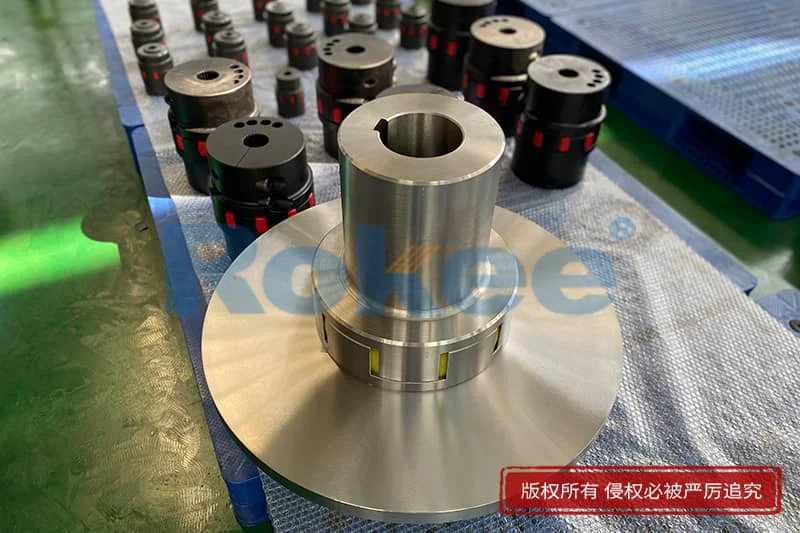

The basic structural composition of stainless steel jaw couplings follows a classic three-piece modular design, a mature and optimized configuration that underpins their superior working performance and convenient application. The entire assembly consists of two symmetrical stainless steel hubs and a central flexible elastomeric spider insert, with no redundant complex parts or cumbersome assembly structures. Each stainless steel hub is machined with evenly distributed claw-shaped protrusions along the outer circumference, and the claws of the two hubs interlock with each other in a staggered arrangement. The elastomeric spider, processed into a star-shaped or polygonal flexible structure, is precisely embedded in the gaps between the interlocked claws of the two hubs, forming the only flexible connection medium between the driving shaft and the driven shaft. This unique structural design completely separates the rigid metal contact of the hubs through the elastic insert, realizing non-rigid torque transmission while maintaining compact overall dimensions and high structural rigidity under normal operating conditions.
The working principle of stainless steel jaw couplings relies on the elastic deformation of the central flexible insert and the mechanical compression transmission between the hub claws, forming a stable and efficient power transmission mechanism. During equipment operation, the driving hub rotates synchronously with the power input shaft, and its claw structures apply uniform compressive force to the flexible spider insert. The elastic insert undergoes controllable micro-deformation under compression, transferring rotational torque and motion to the claws of the driven hub, thereby driving the output shaft to rotate synchronously. This compression-based transmission mode fundamentally avoids the friction loss and mechanical wear caused by direct metal-to-metal contact in rigid transmission structures. More importantly, the elastic deformation characteristics of the spider insert enable the coupling to naturally absorb instantaneous impact force and mechanical vibration generated during equipment start-up, shutdown, load mutation, and variable speed operation, achieving effective vibration damping and buffering effects throughout the transmission process.
The most prominent advantage that distinguishes stainless steel jaw couplings from ordinary cast iron or aluminum alloy jaw couplings lies in the excellent comprehensive performance of the stainless steel material used for the hubs. Stainless steel possesses inherent anti-corrosion, anti-rust, and oxidation-resistant properties, enabling the coupling to maintain stable structural performance and smooth surface state for a long time in humid, dusty, weakly corrosive, and high-humidity working environments. Ordinary metal couplings are prone to surface oxidation, rust formation, and structural corrosion in such harsh conditions, which will increase transmission friction, cause shaft misalignment deviation, and even lead to structural fatigue damage after long-term operation. In contrast, stainless steel hubs effectively resist electrochemical corrosion and environmental erosion, avoiding rust scaling, surface pitting, and structural deformation. This material advantage greatly extends the service life of the coupling and ensures consistent transmission accuracy even in continuously harsh working scenarios.
In addition to superior corrosion resistance, stainless steel materials also provide excellent mechanical strength, structural toughness, and fatigue resistance for the coupling. Stainless steel hubs can withstand long-term high-load torque transmission, frequent positive and negative rotation switching, and continuous variable-speed operation without permanent structural deformation or mechanical failure. The material’s high tensile strength and impact resistance allow the coupling to cope with instantaneous overload impacts during equipment operation, effectively preventing structural fracture or claw deformation that often occurs in low-strength metal couplings under sudden load fluctuations. Meanwhile, the good ductility and processing performance of stainless steel enable precise machining of hub bores, claw structures, and positioning surfaces, ensuring high fitting accuracy with transmission shafts and realizing zero-backlash torque transmission. This high-precision fitting characteristic eliminates rotational play during operation, meeting the strict positioning and repeated motion accuracy requirements of precision mechanical equipment.
The flexible spider insert, as the core functional component for achieving buffer and deviation compensation, further enriches the comprehensive performance of stainless steel jaw couplings. The insert can be made of various high-performance elastomeric materials according to different application scenarios, each providing targeted elastic performance, temperature resistance, and wear resistance. Common insert materials feature excellent elasticity and resilience, enabling rapid recovery after compressive deformation and ensuring stable and consistent vibration damping effects during long-term cyclic operation. The flexible insert can effectively compensate for minor axial, angular, and parallel misalignment between the driving shaft and driven shaft caused by installation errors, equipment vibration, or long-term operational wear. This misalignment compensation capability avoids additional bending stress and shear stress on the transmission shaft, bearings, and other key components, reducing equipment operation noise and mechanical wear, and greatly improving the overall operational stability and service life of the mechanical transmission system.
The functional characteristics of stainless steel jaw couplings endow them with extremely wide application adaptability, covering light-duty precision transmission to medium-heavy-duty industrial power transmission scenarios. In precision automated equipment such as servo motor drive systems, numerical control machine tools, and automated positioning platforms, the zero-backlash transmission and high positioning accuracy of these couplings ensure precise motion response and accurate position control, meeting the high-precision operation requirements of automated processing and positioning equipment. In continuous production equipment including conveyor lines, packaging machinery, and assembly equipment, their excellent vibration damping and impact resistance adapt to frequent start-stop and variable-load operation, maintaining stable power transmission and reducing equipment failure rates caused by vibration impact.
Moreover, the environmental adaptability of stainless steel jaw couplings makes them highly suitable for special industrial scenarios that ordinary couplings cannot adapt to. In food processing, pharmaceutical production, and cosmetic manufacturing equipment, the smooth, non-rusting, and easy-to-clean surface of stainless steel hubs avoids dust accumulation, bacterial growth, and medium corrosion, meeting the hygienic and clean production requirements of the industry. In chemical, marine, and outdoor mechanical equipment, their corrosion and oxidation resistance enables long-term stable operation in humid, volatile corrosive medium, and variable temperature environments. In logistics handling, agricultural machinery, and general industrial mechanical equipment, the couplings balance cost performance and durability, providing reliable long-term power transmission support for conventional mechanical operation.
In terms of daily operation and maintenance, stainless steel jaw couplings have obvious practical advantages, reducing equipment operation costs and maintenance workload. The overall structure is simple and compact with no complex transmission accessories, and the assembly and disassembly process is extremely convenient without the need for professional complex tools or tedious debugging procedures. The entire coupling requires no lubrication during operation, completely eliminating the daily lubrication maintenance work required by gear couplings, chain couplings, and other transmission components, while avoiding equipment pollution and component failure caused by lubricant deterioration, leakage, or failure. The wearing parts of the coupling are only the central flexible spider insert, which has low replacement cost and simple replacement steps. Regular inspection and timely replacement of the aging insert can restore the coupling’s original transmission performance, realizing long-term cyclic use of the metal hub components and greatly improving the economic efficiency of equipment operation.
Despite their excellent comprehensive performance, stainless steel jaw couplings have reasonable application limitations that need to be fully considered in equipment selection and design. Due to the performance constraints of elastomeric inserts, these couplings are not suitable for extreme high-temperature environments that exceed the temperature resistance range of flexible materials, as high temperature will cause accelerated aging, hardening, or deformation of the insert and lose flexible buffer performance. Meanwhile, their misalignment compensation capability is only applicable to minor shaft deviation; they cannot adapt to severe axial, angular, or parallel misalignment between shafts, and excessive deviation will lead to accelerated wear of the flexible insert and reduced transmission efficiency. In addition, for ultra-high-speed and ultra-high-precision special mechanical systems with extremely strict transmission requirements, the elastic micro-deformation of the insert may cause tiny motion errors, making it necessary to select more professional high-precision coupling products for extreme working conditions.
Reasonable model selection and standardized installation are key prerequisites for maximizing the performance of stainless steel jaw couplings. In the selection process, it is necessary to comprehensively combine the equipment’s operating torque, operating speed, start-stop frequency, working environment, and shaft misalignment parameters to match the appropriate coupling specification and spider insert material. Excessively small specifications will lead to insufficient load-bearing capacity and accelerated component wear, while overly large specifications will cause redundant structural volume and increased equipment inertia, affecting equipment operating sensitivity. During installation, the coaxiality of the driving and driven shafts should be strictly calibrated to control shaft misalignment within the allowable range of the coupling, avoiding abnormal stress concentration caused by installation deviation. The clamping or fixing structure of the hub and shaft should be installed firmly to prevent rotational slippage or positional offset during high-speed operation and load switching, ensuring stable and consistent power transmission.
Daily inspection and maintenance management further guarantee the long-term stable operation of stainless steel jaw couplings. In routine equipment inspection, attention should be paid to observing the operating state of the coupling, checking for abnormal vibration, abnormal noise, and rotational jitter during equipment operation, which are typical signs of aging, wear, or deviation overload of the flexible insert. Regularly check the fastening state of the hub positioning structure to prevent loosening caused by long-term vibration. For equipment operating in harsh environments, regular cleaning of the coupling surface dust, dirt, and residual attachments is required to avoid long-term adhesion of impurities affecting the flexible deformation of the insert and the fitting accuracy of the hub. Timely replacement of aged, cracked, or deformed inserts can effectively avoid transmission failure and equipment shutdown losses, ensuring the continuous and efficient operation of the mechanical transmission system.
With the continuous upgrading of modern mechanical equipment towards high precision, high efficiency, and high stability, stainless steel jaw couplings are constantly optimized and iterated in structural design and material matching. The continuous improvement of stainless steel processing technology further improves the surface finish and dimensional accuracy of the hub, reducing transmission friction and improving operation stability. The continuous innovation of elastomeric materials enables the flexible inserts to have wider temperature resistance range, stronger wear resistance, and better fatigue resistance, expanding the application boundary of the couplings in more complex working conditions. As a mature and efficient flexible transmission component, stainless steel jaw couplings will continue to rely on their simple structure, reliable performance, convenient maintenance, and strong environmental adaptability to occupy an important position in modern industrial power transmission systems, providing stable and durable basic support for the safe and efficient operation of various mechanical equipment.
« Stainless Steel Jaw Couplings » Update Date: 2026/7/17
Contact
If you require custom machined couplings, please contact Rokee via the contact information below for inquiries.
Email: https://www.gshmdpq.com
 WeChat