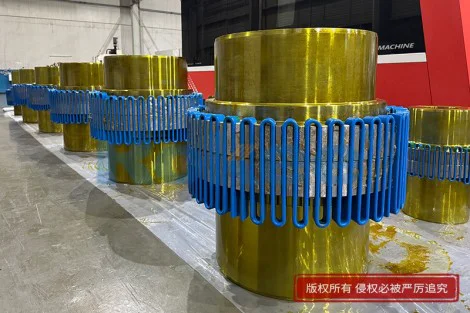
Flexible Shaft Couplings
Rokee is a manufacturer of flexible shaft couplings from china, we can provide non-standard custom flexible shaft couplings based on parameters or drawings supplied by customers, with export support available.
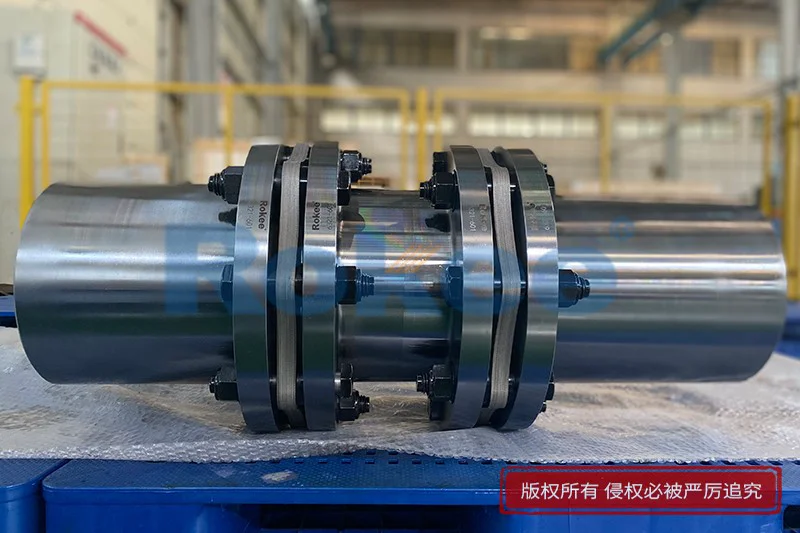
In the intricate ecosystem of mechanical power transmission, flexible shaft couplings stand out as indispensable foundational components, quietly underpinning the stable operation of nearly all rotating machinery systems. Serving as critical connecting units between two adjacent rotating shafts, these components are primarily tasked with transmitting torque and rotational motion from driving components to driven equipment, while resolving a series of mechanical deviations and dynamic disturbances that inevitably emerge during equipment installation and operation. Unlike rigid coupling structures that pursue absolute alignment and rigid transmission, flexible shaft couplings integrate ingenious flexible compensation mechanisms, which fundamentally address the operational defects caused by shaft misalignment, mechanical vibration, and impact loads, making them a core guarantee for the long-term efficient and safe operation of mechanical transmission systems.


The necessity of flexible shaft couplings in mechanical systems stems from the inherent limitations of mechanical assembly and dynamic operation. In practical industrial production and mechanical application scenarios, it is nearly impossible to achieve absolute coaxial alignment between the driving shaft and the driven shaft during installation. Minor positional deviations will inevitably occur due to manual assembly errors, equipment foundation settlement, and structural machining tolerances. Moreover, during the continuous operation of equipment, factors such as thermal expansion and contraction of metal components caused by temperature changes, structural deflection under variable loads, and gradual wear of supporting bearings and parts will further amplify shaft misalignment. These misalignments, if left uncompensated, will generate additional radial, axial, and torsional stresses on the shaft system, leading to severe problems such as shaft deformation, bearing abrasion, accelerated gear wear, and increased equipment operating noise. In severe cases, they may even cause shaft fracture, equipment shutdown, and greater production losses. Flexible shaft couplings precisely solve these pain points through their unique flexible structure, absorbing and offsetting various misalignment deviations while maintaining continuous and stable torque transmission.
The working mechanism of flexible shaft couplings revolves around elastic deformation and flexible displacement compensation. All flexible coupling designs rely on controllable elastic deformation of internal components to achieve operational flexibility without damaging the overall transmission stability. When misalignment exists between the two connected shafts, the flexible parts inside the coupling will produce tiny, reversible elastic deformation, including bending, shearing, and telescopic displacement. This deformation can effectively adapt to axial displacement, radial offset, and angular deflection between shafts, eliminating the rigid extrusion and friction between shaft components. Beyond static misalignment compensation, this elastic structure also exhibits excellent dynamic buffering performance. During equipment start-up, shutdown, sudden load changes, and frequent forward and reverse rotation switching, the mechanical system will generate instantaneous impact loads and high-frequency vibration. The flexible components can convert these violent impact forces and vibration energy into elastic potential energy for temporary storage, and slowly release the energy as the equipment operation stabilizes, thereby damping vibration, weakening impact peaks, and smoothing the torque transmission process. This dynamic adjustment capability greatly improves the operating smoothness of the entire transmission system and reduces the fatigue loss of mechanical parts caused by alternating loads.
Based on structural composition and flexible implementation principles, flexible shaft couplings can be divided into two mainstream categories: elastomeric flexible couplings and metallic flexible couplings, each with distinct performance characteristics and applicable scenarios. Elastomeric flexible couplings rely on high-elasticity non-metallic elastic elements to achieve flexibility and torque transmission. The core elastic parts are usually made of polymer materials with excellent elasticity and toughness, which are clamped and fixed by metal hubs on both sides to form a complete transmission structure. The flexible characteristics of this type of coupling come from the compression and shear deformation of polymer materials during operation. It boasts outstanding vibration damping and impact resistance performance, with low operating noise and good adaptability to variable load and frequent start-stop working conditions. In addition, the overall structure of elastomeric couplings is simple, with no need for lubrication during operation, low maintenance costs, and good corrosion resistance, making them suitable for light and medium-load transmission scenarios with high requirements for operational stability and noise control.
Metallic flexible couplings, by contrast, adopt an all-metal flexible structure, realizing displacement compensation and flexible transmission through the sliding, rolling, or bending deformation of precision-processed metal components. Without non-metallic elastic materials, this type of coupling features higher torsional stiffness, better structural stability, and stronger resistance to high temperature and aging. Its flexible performance is derived from the precise movement matching of metal parts or the micro-bending deformation of thin-walled metal structures. Metallic flexible couplings can maintain stable transmission accuracy and structural rigidity under high-speed, heavy-load, and high-temperature working conditions, with extremely small torsional deformation and excellent synchronous transmission performance. Although their vibration damping capacity is slightly inferior to that of elastomeric couplings, they have obvious advantages in service life, high-speed adaptability, and environmental adaptability, and are widely used in high-precision, high-power, and long-duration continuous operation scenarios.
Material selection is a core factor that determines the comprehensive performance and service life of flexible shaft couplings, and different material combinations endow couplings with completely different application attributes. For metal hub components, high-strength alloy steel, carbon steel, and lightweight aluminum alloy are the most commonly used materials. Alloy steel and carbon steel provide high structural strength, wear resistance, and load-bearing capacity, suitable for heavy-load and high-strength operating environments; aluminum alloy materials have the advantages of light weight, low inertia, and good thermal conductivity, which can effectively reduce the overall weight of the transmission system, lower rotational inertia, and improve the dynamic response speed of equipment, making them ideal for high-speed precision transmission equipment. For elastomeric flexible components, modified rubber, polyurethane, and engineering plastics are mainstream choices. These materials are optimized through special formula processes to balance elasticity, toughness, and wear resistance, ensuring long-term stable elastic deformation without aging, cracking, or permanent deformation. Some specially modified polymer materials also have excellent oil resistance, high and low temperature resistance, and anti-aging properties, enabling the couplings to work stably in harsh environments such as oil pollution and temperature fluctuation.
The application scope of flexible shaft couplings covers almost all fields of mechanical manufacturing and industrial production, showing strong scene adaptability. In general industrial equipment such as conveyors, fans, and pumps, flexible couplings effectively compensate for installation errors and operational structural deviations, reduce equipment operating vibration and noise, and ensure the continuous and stable operation of conventional production equipment. In precision processing equipment such as machine tools and automated production lines, high-rigidity metallic flexible couplings are widely used. Their tiny torsional deformation and high-precision synchronous transmission performance ensure the positioning accuracy and processing consistency of precision equipment, avoiding processing errors caused by shaft vibration or displacement deviation. In power transmission equipment including motors, gearboxes, and reducers, couplings serve as a buffer connection link between power sources and execution components, weakening the impact of instantaneous torque changes on equipment and protecting core power components from fatigue damage.
In addition, flexible shaft couplings also play an irreplaceable role in special working condition environments. In low-temperature, high-temperature, dusty, and corrosive working environments, couplings with corresponding material and structural optimization can maintain stable working performance and avoid structural failure caused by environmental erosion. In mechanical equipment with frequent start-stop, forward-reverse rotation, and variable load operation, the excellent buffering and vibration reduction capabilities of flexible couplings can greatly reduce the alternating load loss of the transmission system, prolong the service life of bearings, gears, and other vulnerable parts, and reduce equipment failure rates and maintenance costs. With the continuous upgrading of industrial automation and intelligent manufacturing, the demand for high-precision, low-loss, and long-life flexible shaft couplings is constantly increasing, and their application value in high-end equipment manufacturing, new energy equipment, and precision transmission systems is becoming increasingly prominent.
Scientific selection and standardized use are key to giving full play to the performance advantages of flexible shaft couplings. In the selection process, multiple core factors need to be comprehensively considered according to actual working conditions. First, the torque demand of the transmission system must be matched, including the rated torque during stable operation and the instantaneous peak torque during start-up and load mutation, to avoid structural deformation or damage caused by insufficient load-bearing capacity of the coupling. Second, the actual misalignment state of the shaft system should be evaluated, and a coupling with matching compensation performance should be selected according to the possible axial, radial, and angular misalignment ranges of the equipment. Third, the operating environment and working characteristics of the equipment need to be considered, including operating speed, temperature range, load fluctuation frequency, and environmental corrosion factors, to select the appropriate material and structural type of coupling.
Meanwhile, standardized installation and daily maintenance are crucial to ensure the long-term stable operation of flexible shaft couplings. During installation, it is necessary to minimize the initial misalignment of the two shafts through precise calibration, so that the coupling can work within the optimal compensation range and avoid excessive long-term deformation leading to accelerated fatigue loss of flexible components. In daily equipment operation, regular inspection of the coupling’s operating state is required, including checking for abnormal vibration, noise, and component wear. For elastomeric couplings, attention should be paid to the aging, cracking, and deformation of elastic parts, and worn components should be replaced in a timely manner; for metallic couplings, the matching state of moving parts should be checked to avoid jamming and excessive wear caused by dust accumulation and lubrication failure. Reasonable installation and maintenance can not only maximize the transmission efficiency and service life of flexible shaft couplings but also effectively reduce the failure rate of the entire mechanical transmission system and improve the overall operational reliability of the equipment.
In the entire mechanical power transmission system, flexible shaft couplings are small in size but carry vital system protection and transmission optimization functions. They are not only simple connecting components for mechanical parts but also core adjustment units that balance transmission rigidity and operational flexibility, resolve system stress conflicts, and buffer dynamic load impacts. With the continuous development of mechanical manufacturing technology, the structural design, material technology, and processing technology of flexible shaft couplings are also constantly optimized and upgraded. Modern flexible coupling products are developing towards higher precision, stronger environmental adaptability, longer service life, and lower energy loss, which can better adapt to the high-precision, high-efficiency, and high-stability operation requirements of modern industrial equipment. As an essential basic component of mechanical systems, flexible shaft couplings will continue to provide solid technical support for the stable operation and performance upgrading of various mechanical equipment, and occupy an irreplaceable important position in the field of mechanical transmission engineering.
« Flexible Shaft Couplings » Update Date: 2026/7/17
Contact
If you require custom machined couplings, please contact Rokee via the contact information below for inquiries.
Email: https://www.gshmdpq.com
 WeChat