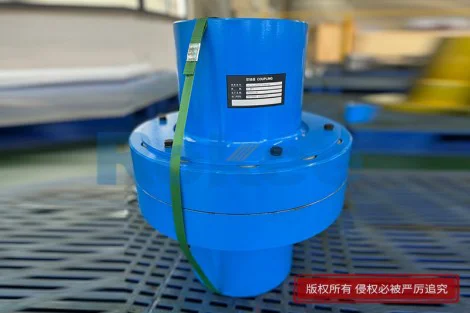
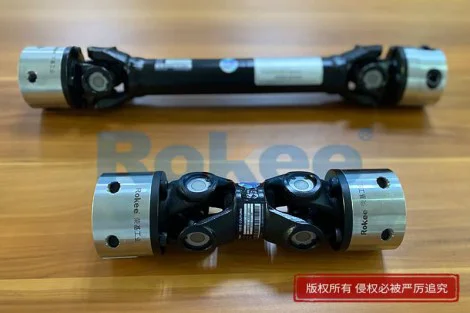
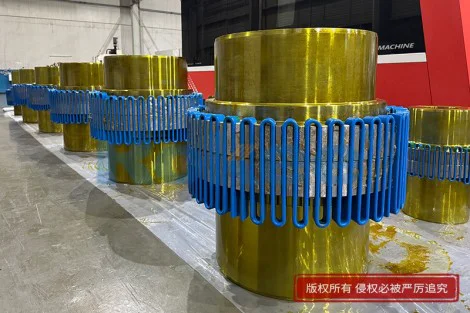
Industrial Flexible Drive Couplings
Rokee is a manufacturer of industrial flexible drive couplings from china, we can provide non-standard custom industrial flexible drive couplings based on parameters or drawings supplied by customers, with export support available.

Industrial flexible drive coupling stands as an indispensable core component in modern mechanical transmission systems, serving as a critical connecting medium between driving and driven shafts to realize stable torque transmission in diverse industrial equipment operations. Unlike rigid coupling structures that enforce complete fixed alignment between shafts, flexible drive couplings are ingeniously designed with deformable elastic components or movable mechanical structures, enabling them to accommodate subtle and moderate positional deviations during equipment operation while maintaining efficient power transmission. This unique structural characteristic makes them widely applicable in complex and variable industrial operating conditions, effectively solving a series of mechanical operation problems caused by shaft misalignment, vibration impact and thermal deformation, and greatly improving the overall operational stability and service life of mechanical equipment.
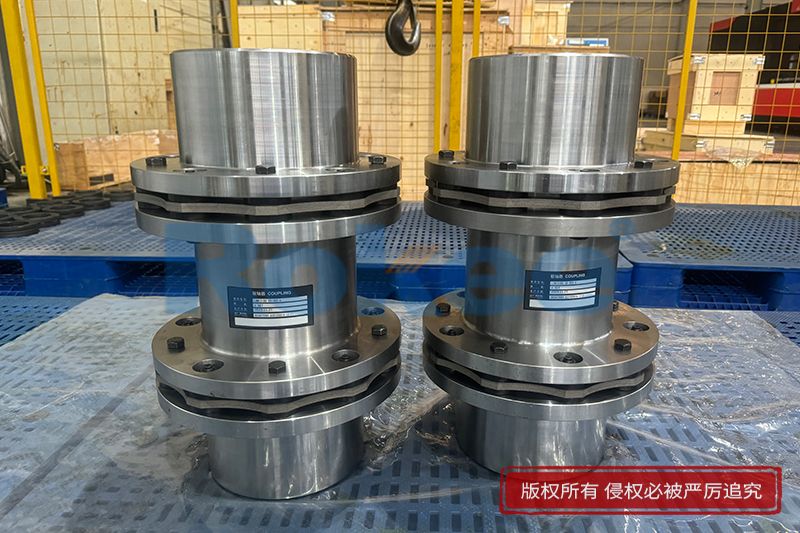

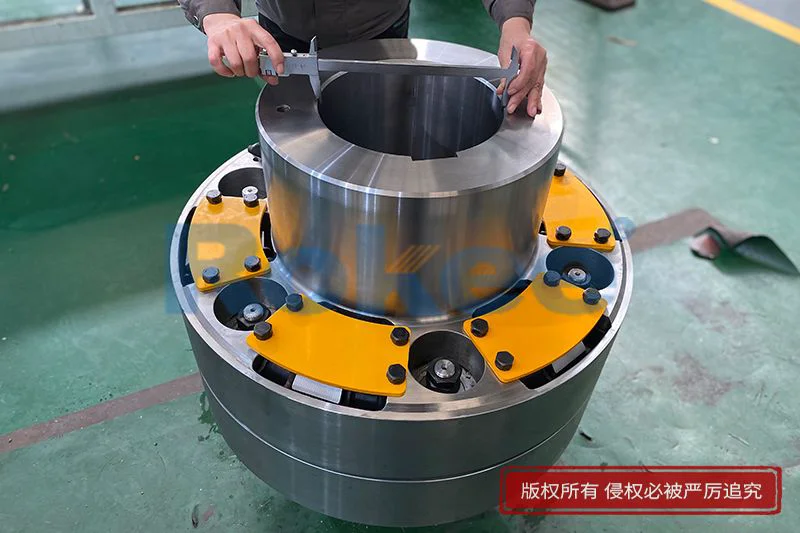
The core working logic of industrial flexible drive couplings lies in controllable elastic deformation and mechanical displacement compensation. In the actual operation of mechanical systems, absolute perfect alignment between two connecting shafts is almost impossible to maintain permanently. Various objective factors will lead to different types of shaft misalignment, including axial displacement caused by equipment thermal expansion and contraction during long-term operation, parallel offset generated by installation deviation and structural load deflection, and angular deviation formed by component wear and foundation settlement. When these misalignment phenomena occur, the internal flexible components of the coupling will produce reversible and regular elastic deformation or adaptive mechanical displacement according to the specific offset direction and amplitude. This subtle structural change will not interfere with the continuous and stable transmission of rotational torque and speed, but can effectively offset the stress concentration and mechanical friction caused by shaft misalignment, avoiding rigid collision between shaft bodies and connecting parts, and timely dispersing and releasing additional mechanical loads generated by operational deviations.
Beyond basic misalignment compensation, industrial flexible drive couplings undertake multiple auxiliary protection functions for mechanical transmission systems, which are key to their widespread popularity in industrial manufacturing. In high-speed operation or variable load working environments, mechanical equipment is inevitably affected by instantaneous shock loads, frequent start-stop impacts and alternating vibration. The flexible structure inside the coupling can effectively absorb and buffer these instantaneous impact forces and vibration energy, reduce the vibration amplitude of the transmission system, and weaken mechanical noise generated by rotational friction and structural jitter. This vibration damping and shock absorption effect not only optimizes the operating environment of equipment, but also protects precision components such as bearings, gears and sealing parts in the transmission structure. It avoids premature wear, fatigue damage and functional failure of core components caused by long-term vibration and impact, thereby reducing equipment failure rates and extending the overall service cycle of mechanical systems.
The performance diversity of industrial flexible drive couplings stems from rich material matching and structural design differences, which endow products with targeted adaptability to different working conditions. Common flexible core materials include polymer elastic materials and metal flexible materials, each with distinct performance characteristics and application scenarios. Polymer materials represented by polyurethane and rubber have excellent elastic ductility and vibration damping performance, with good buffering effect on high-frequency micro-vibration and instantaneous soft impact. Such materials are lightweight and low in friction, capable of providing quiet and stable transmission effects, and are mostly suitable for medium and low load, conventional speed operating environments with frequent start and stop. Metal flexible materials such as alloy steel discs and spring grids feature high structural strength, strong fatigue resistance and excellent high-temperature stability, able to maintain stable deformation compensation ability under high load, high speed and high-temperature working conditions. Metal flexible components have strong tolerance to harsh environments, not easy to aging and deform permanently, and are widely used in heavy-duty industrial transmission scenarios that require long-term continuous operation.
Different structural designs further enrich the functional dimensions of flexible drive couplings and expand their industrial application boundaries. Elastomeric flexible couplings rely entirely on the elastic deformation of intermediate polymer components to complete misalignment compensation and vibration damping, with simple overall structure, convenient installation and maintenance, and low operational cost, meeting the daily operation needs of most conventional industrial equipment. Mechanical flexible couplings realize displacement compensation through the relative movement of internal precision matching parts, with higher structural rigidity and torque transmission accuracy, able to maintain precise transmission ratios under complex variable load conditions. Composite flexible couplings integrate the advantages of elastic materials and mechanical structures, taking into account both vibration damping performance and high-precision transmission capability, and can adapt to more extreme working conditions such as alternating load and frequent variable speed operation. Different structural forms enable flexible drive couplings to cover transmission requirements from light-duty precision equipment to heavy-duty industrial machinery, forming a comprehensive product application system.
Industrial flexible drive couplings are involved in almost all fields of mechanical power transmission, showing strong industrial universality and practical value. In fluid power equipment such as various pumps and compressors, the coupling can offset shaft deviation caused by pipeline vibration and equipment operation vibration, ensure stable power output of fluid conveying equipment, and avoid equipment failure and fluid conveying instability caused by transmission jitter. In material handling systems such as conveyor equipment, which needs frequent start-stop and variable load operation, the flexible coupling can buffer starting impact and load sudden change, protect the power source and transmission structure, and ensure continuous and stable material conveying operation. In industrial mixing, stirring and processing equipment, the vibration damping performance of the coupling can reduce the resonance phenomenon of the equipment during operation, improve the stability of processing operation, and ensure the consistency of product processing quality.
In heavy industrial equipment such as mining machinery, engineering machinery and metallurgical equipment, the operating environment is harsh with heavy load, strong impact and serious dust interference, putting forward higher requirements on the durability and stability of transmission components. High-strength flexible drive couplings can adapt to these extreme working conditions, rely on excellent structural toughness and fatigue resistance to resist long-term heavy load impact and alternating stress, effectively compensate for shaft misalignment caused by equipment structural deformation and foundation changes, and ensure the safe and continuous operation of heavy machinery. In precision industrial equipment such as automated production lines and precision transmission instruments, low-vibration and high-precision flexible couplings can eliminate transmission error caused by shaft deviation, maintain high-precision rotational operation, and meet the high-precision transmission requirements of automated processing and precision manufacturing.
Scientific selection and standardized application of industrial flexible drive couplings are crucial to giving full play to their performance advantages and ensuring long-term stable operation of equipment. The core of selection is to match the appropriate coupling type and specification according to actual working condition parameters, including equipment operating speed, transmission torque magnitude, load change frequency, operating temperature environment and misalignment range. In conventional low-load and low-speed working conditions, couplings with good elasticity and low cost can be selected to meet basic transmission and protection needs. For high-speed and high-precision transmission scenarios, it is necessary to prioritize products with high transmission accuracy, small deformation error and stable high-speed performance to avoid transmission deviation affecting equipment operation accuracy. For high-temperature, dusty and corrosive harsh environments, couplings with high weather resistance and structural durability should be selected to reduce performance attenuation and component aging caused by environmental factors.
In addition to model selection, standardized installation and daily maintenance also directly affect the service performance and service life of flexible drive couplings. During the installation process, reasonable shaft alignment operation must be completed to minimize initial installation deviation, avoid long-term over-deformation of flexible components caused by excessive initial misalignment, and prevent premature fatigue damage. In the daily operation cycle of equipment, regular inspection of the coupling’s operating state is required, including checking whether the flexible components have aging, cracking, permanent deformation and wear, and confirming whether the connecting structure is loose or displaced. Timely replacement of aging and damaged parts and fastening of loose structures can effectively avoid sudden equipment failures caused by coupling failure. Good maintenance habits can not only maintain the efficient transmission performance of the coupling, but also greatly extend its service life, reduce equipment operation and maintenance costs, and improve the overall operational efficiency of industrial production lines.
With the continuous upgrading of modern industrial manufacturing towards high efficiency, energy saving, precision and intelligence, the technical iteration of industrial flexible drive couplings is also advancing continuously. Modern industrial production puts forward higher requirements for transmission components, including higher transmission efficiency, lower vibration noise, longer service life and stronger environmental adaptability. In response to industrial development needs, flexible drive coupling manufacturing technology is constantly optimized, new high-performance composite materials are continuously applied, and structural design is more refined and scientific. Optimized structural design further reduces transmission friction and energy loss, improves mechanical transmission efficiency, and helps industrial equipment achieve energy-saving operation. The application of new materials enhances the aging resistance, corrosion resistance and fatigue resistance of products, enabling couplings to maintain stable performance in more complex and harsh industrial environments.
Moreover, the integrated and lightweight design of modern flexible drive couplings makes the product structure more compact, which can effectively save equipment installation space, optimize the overall structural layout of mechanical equipment, and provide more design flexibility for miniaturization and integration of industrial equipment. While improving basic transmission performance, the new generation of flexible drive couplings also optimizes vibration damping, noise reduction and impact resistance, further improving the operating comfort and stability of mechanical systems. These technical optimizations make flexible drive couplings more adaptable to the development needs of modern intelligent manufacturing, automated production and high-efficiency industrial operation, and consolidate their important core status in industrial transmission systems.
In the entire industrial mechanical transmission system, the value of industrial flexible drive couplings is not limited to the basic function of connecting shafts and transmitting torque. More importantly, it serves as a buffer and protection core in the mechanical operation process, resolving various adverse mechanical factors such as misalignment deviation, vibration impact and load fluctuation in the transmission process. It effectively reduces the failure rate of mechanical equipment, extends the service life of core components, reduces production and maintenance costs, and ensures the stability, continuity and efficiency of industrial production operations. As a basic but key mechanical component, flexible drive couplings always adapt to diverse and complex industrial working conditions with flexible performance and reliable quality, providing solid basic guarantee for the stable operation and technological upgrading of various industrial mechanical equipment, and playing an irreplaceable role in the healthy development of modern industrial manufacturing industry.
« Industrial Flexible Drive Couplings » Update Date: 2026/7/17
Contact
If you require custom machined couplings, please contact Rokee via the contact information below for inquiries.
Email: https://www.gshmdpq.com
 WeChat