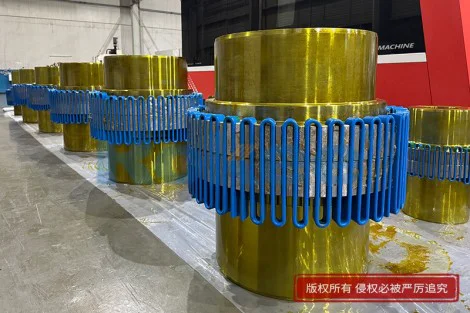
Tooth Gear Couplings
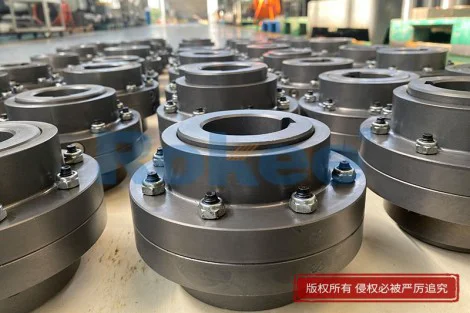
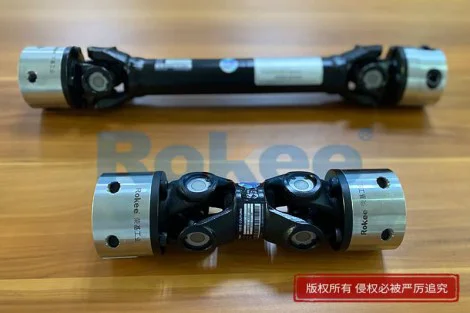
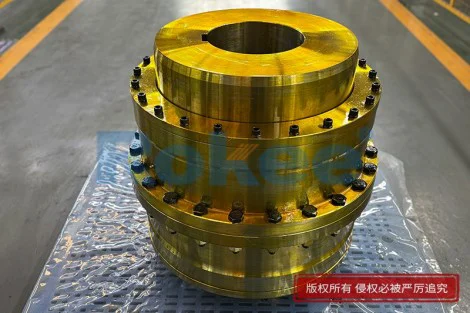
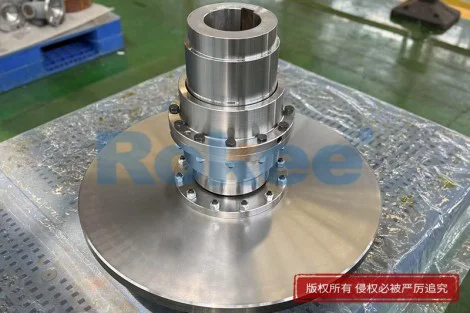
Rokee is a manufacturer of tooth gear couplings from china, we can provide non-standard custom tooth gear couplings based on parameters or drawings supplied by customers, with export support available.

Tooth gear couplings stand as one of the most versatile and widely adopted mechanical transmission components in modern industrial machinery, serving as a critical connecting unit that bridges rotating shafts to deliver torque and rotational motion across diverse mechanical systems. Classified as a flexible rigid coupling, this mechanical device integrates ingenious gear meshing structure design to achieve efficient power transmission while possessing unique adaptive capabilities that distinguish it from ordinary rigid connection parts. Unlike fixed couplings that completely restrict relative movement between shafts, tooth gear couplings can tolerate and compensate for minor deviations and displacements between connected shafts during equipment operation, making them indispensable in heavy-duty, high-speed, and continuous operating mechanical scenarios. The core value of this coupling lies in its balanced combination of high transmission rigidity and moderate flexibility, which ensures stable and accurate power delivery while effectively buffering the adverse effects caused by installation errors, mechanical wear, and operational vibration.
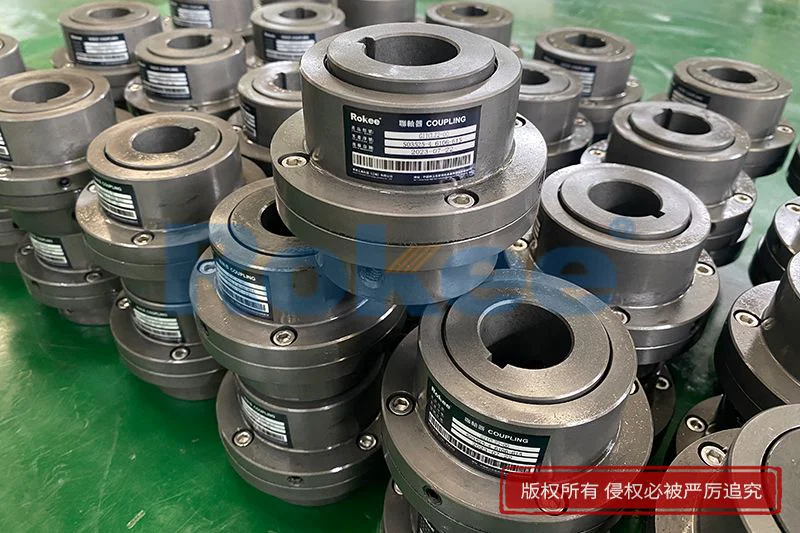
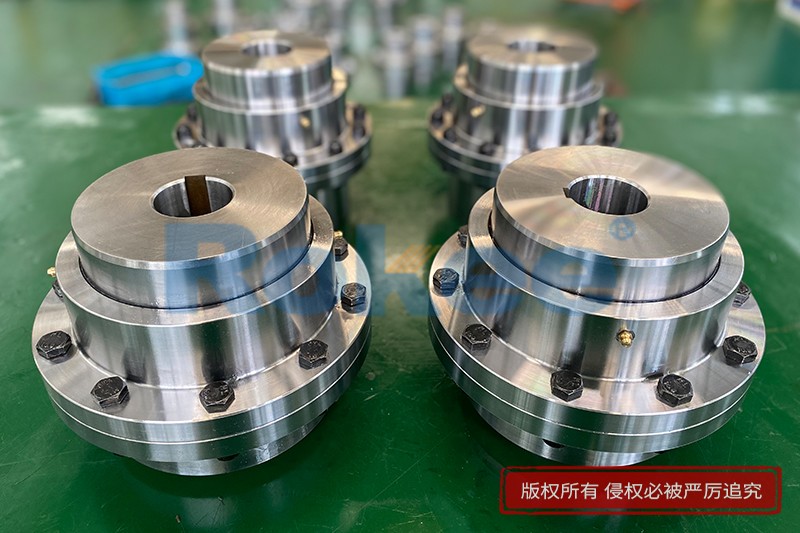
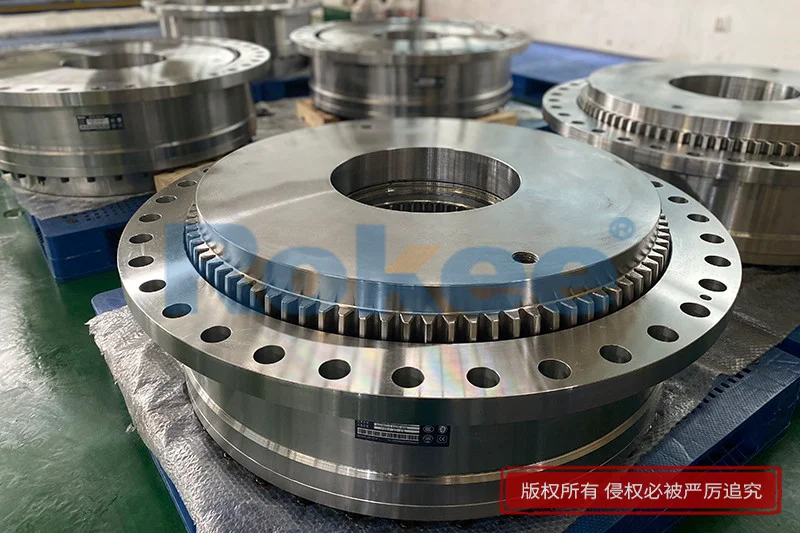
The basic structural composition of tooth gear couplings is concise and scientific, with all core components designed around the gear meshing transmission mechanism to optimize stress distribution and operational stability. The primary components include outer gear hubs fixed on the driving and driven shafts and an inner gear sleeve that meshes with the outer gears. The outer gear hubs are precision-machined with external involute teeth, while the inner gear sleeve is equipped with matching internal tooth profiles, forming a complete meshing transmission pair. In practical structural designs, most tooth gear couplings adopt a double-gear meshing layout, where two outer gear hubs are respectively installed on the two connected shafts and encapsulated inside a shared inner gear sleeve. Some optimized structures are also fitted with auxiliary accessories such as sealing end covers and spacer sleeves, which further enhance the operational stability and environmental adaptability of the coupling. The overall structural layout is highly compact, enabling the coupling to occupy minimal axial and radial installation space while bearing large torque loads, a feature that perfectly adapts to the compact structural design trends of modern industrial equipment.
The working principle of tooth couplings is rooted in the stable meshing motion of involute gear teeth, a mature and efficient transmission principle that guarantees constant transmission ratio and no relative sliding during power delivery. When the power source drives the driving shaft to rotate, the outer gear hub fixed on the driving shaft rotates synchronously, and the external teeth continuously mesh with the internal teeth of the sleeve to transfer torque and rotational motion to the inner gear sleeve. Subsequently, the inner gear sleeve drives the outer gear hub on the driven shaft to rotate, thereby realizing synchronous operation of the two shafts and completing the entire power transmission process. What makes this transmission structure unique is its adaptive displacement compensation function. Due to the reasonable tooth profile design and matching clearance between meshing teeth, the coupling can automatically adapt to tiny axial displacement, radial offset, and angular deflection between the two connected shafts during operation. This adaptive adjustment capability does not affect the overall transmission efficiency and accuracy, fundamentally solving the problem of abnormal stress concentration and mechanical wear caused by shaft misalignment in traditional rigid coupling connections.
In terms of operational performance, tooth gear couplings exhibit outstanding comprehensive advantages that make them superior to many other types of couplings in industrial applications. First and foremost, they boast extremely high torque bearing capacity and transmission efficiency. The multi-tooth simultaneous meshing structure disperses the transmission load evenly on each tooth surface, avoiding local overstress and enabling the coupling to stably bear heavy torque and impact loads. The pure rolling and sliding composite motion of involute tooth profiles during meshing minimizes friction resistance, ensuring high-efficiency power transmission with almost no power loss in the transmission process. Secondly, the transmission stability is excellent. The uniform load distribution and precise tooth profile meshing effectively suppress operational vibration and noise, maintaining smooth rotation even under high-speed operating conditions. Additionally, the structural rigidity of the tooth gear coupling is remarkable; it will not produce obvious elastic deformation or rotational angle deviation during load operation, ensuring high transmission accuracy and meeting the precise operation requirements of most mechanical transmission systems.
The adaptive displacement compensation performance is another core advantage of tooth gear couplings, which endows the equipment with stronger fault tolerance in installation and operation. In the actual assembly process of mechanical equipment, it is difficult to achieve absolute coaxiality of the two connected shafts due to processing errors, assembly deviations, and equipment foundation deviations. Moreover, during long-term operation of equipment, factors such as component wear, thermal expansion and contraction of materials, and micro-deformation of the frame will further cause relative displacement between shafts. The tooth gear coupling can well adapt to these inevitable deviations: the flexible matching clearance between internal and external teeth can compensate for radial and angular misalignment, and the movable fit structure between the gear hub and the sleeve allows for a certain range of axial displacement. This multi-dimensional compensation capability avoids additional bending stress and shear stress on the shaft system caused by misalignment, protects the rotating shaft, bearings, and other core components from abnormal wear and fatigue damage, and greatly extends the overall service life of the equipment transmission system.
In terms of material selection and service life performance, tooth gear couplings are manufactured with high-strength alloy materials and precision processing technology, presenting excellent durability and environmental adaptability. The core gear components usually undergo integral forging and heat treatment processes such as quenching and tempering, which significantly improve the surface hardness, wear resistance, and comprehensive mechanical properties of the tooth surface. The high-strength material characteristics enable the coupling to resist abrasion, fatigue cracking, and deformation under long-term high-load and high-speed operating conditions. Meanwhile, matched sealing structures are adopted in most coupling designs, which can effectively isolate external dust, moisture, and corrosive media, prevent internal tooth surface wear and corrosion, and maintain long-term stable operating performance. Compared with elastic couplings that rely on flexible rubber or plastic components, tooth gear couplings avoid aging, deformation, and failure of elastic materials, and can maintain stable working performance in high-temperature, low-temperature, and harsh industrial environments for a long time, with far longer service life and more reliable operation stability.
Tooth gear couplings have a wide range of application scenarios, covering almost all industrial fields that require high-power and high-stability shaft transmission. In heavy machinery and engineering equipment, they are widely used in excavators, cranes, crushers, and conveyor equipment, stably transmitting heavy torque and resisting frequent impact loads generated during equipment operation. In metallurgical and mining industries, where equipment operates continuously for a long time with harsh working conditions, tooth gear couplings rely on their wear resistance and high load-bearing capacity to ensure the stable operation of rolling mills, mining conveyors, and sorting equipment. In petrochemical and energy industries, they are applied to various pump bodies, fans, and power transmission units of compressor equipment, adapting to continuous and stable operation requirements under complex working conditions. In addition, they also play an important role in precision processing machinery, transportation equipment, and automated production lines, providing accurate and stable power transmission support for high-speed and high-precision mechanical systems.
Despite their excellent comprehensive performance, tooth gear couplings also have certain limitations in application, which need to be reasonably matched according to working conditions to maximize their performance advantages. Compared with simple elastic couplings, the structural design of tooth gear couplings is more complex, with higher processing precision requirements for gear tooth profiles and matching dimensions, leading to relatively higher manufacturing and processing costs. Meanwhile, the gear meshing operation requires good lubrication conditions; insufficient lubrication or aging of lubricating grease will directly increase tooth surface friction and wear, cause increased operational vibration and noise, and even affect transmission accuracy and service life. In addition, although the coupling can compensate for minor shaft misalignment, it has a limited adaptive range and cannot cope with excessive shaft displacement and severe deflection. For working conditions with extremely high vibration damping requirements, pure elastic couplings with stronger buffering performance are still more suitable, while tooth gear couplings are more inclined to scenarios prioritizing high rigidity, high precision, and high load-bearing transmission.
Daily maintenance and reasonable use are key factors to ensure the long-term stable operation of tooth gear couplings and give full play to their performance advantages. The core of maintenance work focuses on lubrication management and regular inspection. During equipment operation, it is necessary to regularly check the sealing state of the coupling to prevent lubricant leakage and external impurity infiltration, and replace aging and failed lubricating grease in a timely manner to ensure sufficient and effective lubrication between meshing tooth surfaces. Regular operational inspections should be carried out to observe whether the coupling has abnormal vibration, noise, and local temperature rise, judge whether the meshing state of internal gears is normal, and eliminate hidden dangers such as tooth surface wear and meshing deviation in advance. In addition, during equipment overhaul, the coaxiality of the connected shafts should be calibrated regularly to avoid long-term operation with excessive misalignment, reduce additional load on the coupling, and delay component fatigue wear. Scientific and standardized maintenance can not only maintain the high-efficiency and stable operation performance of the coupling but also effectively extend its service life and reduce equipment operation and maintenance costs.
With the continuous upgrading of modern industrial machinery towards high speed, high precision, and high intelligence, the design and manufacturing technology of tooth gear couplings are also constantly optimized and innovated. Modern processing technologies such as precision CNC machining and fine tooth surface grinding are applied to the production of couplings, further improving the machining accuracy of tooth profiles and the matching precision of internal and external gears, reducing meshing friction and vibration, and enhancing transmission stability and efficiency. At the same time, optimized structural designs such as lightweight integration and enhanced sealing are continuously emerging, which reduce the overall weight of the coupling while improving environmental adaptability, making it suitable for more diverse and complex working conditions. The innovation of new high-strength wear-resistant materials also further improves the load-bearing capacity and fatigue resistance of the coupling, enabling it to adapt to higher-power and longer-cycle industrial production requirements. As a classic and efficient mechanical transmission component, tooth gear couplings will continue to rely on their superior comprehensive performance to occupy an irreplaceable important position in the field of mechanical transmission, providing reliable basic support for the stable operation of various industrial equipment.
« Tooth Gear Couplings » Update Date: 2026/7/17
Contact
If you require custom machined couplings, please contact Rokee via the contact information below for inquiries.
Email: https://www.gshmdpq.com
 WeChat