Reducer Couplings
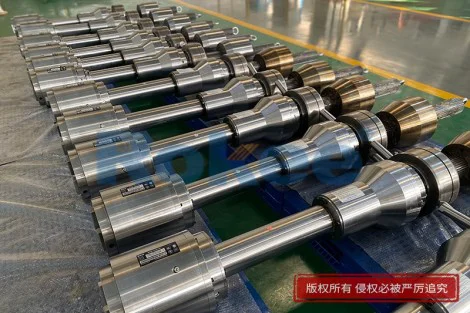
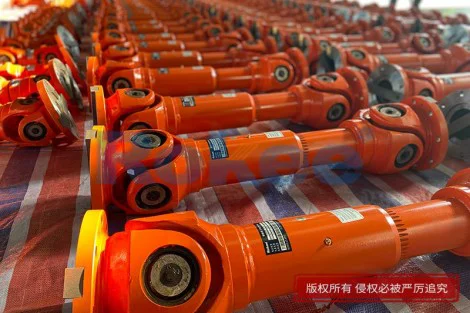
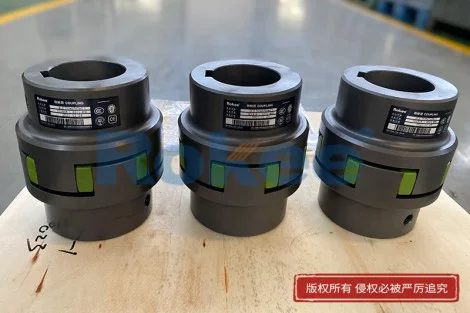
Rokee is a manufacturer of reducer couplings from china, we can provide non-standard custom reducer couplings based on parameters or drawings supplied by customers, with export support available.

In modern industrial piping systems and mechanical transmission structures, the stable operation of fluid transportation and power transmission relies heavily on the rational matching of connecting components. Among numerous precision fittings, reducer coupling stands out as a core functional component that solves the connection problem of mismatched pipe and shaft diameters, serving as an indispensable bridge for size transition in engineering systems. Unlike standard couplings that only connect components of the same specification, this specialized structural part is designed with variable diameter transition characteristics, enabling seamless connection between two pipelines or transmission shafts of different calibers while maintaining the stability and efficiency of the entire operating system. It is widely applied in fluid delivery, mechanical transmission, industrial manufacturing and other fields, and its structural design, material performance and working mechanism directly affect the operational safety and service life of the entire engineering system.


The essential function of reducer coupling originates from the objective demand of system operation. In complex engineering scenarios, the flow rate, pressure and transmission power of media often need to be adjusted according to operational stages and functional requirements, which requires corresponding changes in pipeline or shaft specifications. Sudden diameter changes in pipelines or transmission structures without transitional fittings will lead to drastic changes in fluid flow velocity, severe turbulence and local pressure loss in fluid systems, and cause eccentric wear, vibration and torque loss in mechanical transmission systems. Reducer coupling precisely compensates for this structural defect through its gradual tapered transition design. The internal smooth curved structure avoids abrupt changes in the cross-sectional area of the flow channel or transmission interface, effectively stabilizing the operating state of the system and eliminating potential safety hazards caused by size mismatch.
From the perspective of working mechanism, the operating logic of reducer coupling varies slightly in fluid piping systems and mechanical transmission systems, but the core design concept remains consistent, which is to achieve stable transition through gradient structural changes. In fluid transportation systems, when fluid flows from a large-diameter pipeline to a small-diameter pipeline or vice versa through the reducer coupling, the tapered inner wall guides the fluid to complete steady acceleration or deceleration. This structural design greatly reduces the generation of turbulent eddies and wall shear force, minimizes pressure drop and flow resistance in the transmission process, and ensures the continuity and stability of fluid delivery. For liquid media such as domestic water, industrial circulating water and chemical solutions, this stable transmission effect can avoid medium splashing and pipeline impact; for gaseous media, it can prevent pressure fluctuation and airflow disorder, maintaining the constant operating pressure of the closed system.
In mechanical transmission scenarios, reducer coupling undertakes the important task of torque transmission and axis deviation compensation. It connects the output end of the reduction device and the input end of the working equipment, realizing the matching transmission of power between shafts of different diameters. In the process of mechanical operation, the flexible and precise structural characteristics of the coupling can effectively compensate for tiny axial displacement, radial deviation and angular deflection between the two connecting shafts caused by equipment operation vibration and installation errors. This compensation function avoids rigid friction and stress concentration between shafts, reduces mechanical vibration and noise in the transmission process, and protects the core components such as reducers and drive shafts from fatigue damage caused by long-term eccentric operation. At the same time, the integrated structural design of the coupling ensures efficient torque transmission, avoiding power loss caused by interface mismatch.
Material selection is a key factor determining the performance and application scope of reducer coupling, and different manufacturing materials endow the product with distinct environmental adaptability and functional characteristics. Metal materials represented by stainless steel and carbon steel are the most widely used in industrial heavy-duty scenarios. Metal reducer couplings have excellent mechanical strength, structural rigidity and pressure resistance, and can stably operate in high-pressure, high-temperature and strong vibration working environments. Their good wear resistance and structural stability enable them to bear large torque and impact load, making them suitable for heavy mechanical transmission and high-pressure industrial fluid transportation. In addition, metal materials have outstanding welding performance and sealing stability, which can realize integrated sealing connection through fusion welding or threaded assembly, effectively preventing medium leakage and power transmission failure.
Polymer materials such as polypropylene random copolymer and chlorinated polyvinyl chloride are commonly used in civil and light industrial scenarios. Plastic reducer couplings have the advantages of light weight, corrosion resistance and low thermal conductivity. They are immune to the corrosion of daily water media, weak acid and weak base solutions, and can avoid rust and scaling problems that are common in metal fittings during long-term use. This type of coupling has good hydraulic smoothness on the inner wall, which can further reduce fluid flow resistance and ensure efficient medium transportation. Moreover, plastic materials have excellent insulation and anti-aging properties, can adapt to humid and corrosive working environments, and have lower installation difficulty and later maintenance cost, which is very suitable for building water supply and drainage, agricultural irrigation, light chemical fluid transmission and other fields.
The structural design details of reducer coupling fully reflect the optimization concept of engineering practicability. The overall structure adopts a one-piece forming process without assembled gaps, which fundamentally reduces potential leakage points and structural failure risks. The two ends of the coupling are designed with standard connecting structures, which can be perfectly matched with conventional pipeline and shaft parts, realizing universal assembly and convenient installation. The transition section between the large diameter end and the small diameter end adopts a uniform gradient taper design, avoiding local sharp shrinkage or expansion. This symmetrical and smooth transition structure not only optimizes the fluid flow state and mechanical stress distribution, but also improves the overall structural uniformity, preventing local stress concentration from causing structural cracking or deformation under long-term load.
In terms of practical engineering value, reducer coupling plays an irreplaceable role in simplifying system structure and reducing operating costs. In traditional pipeline transformation and equipment matching projects, the connection of different diameter components often requires the combination of multiple adapters, connecting pipes and sealing parts, which not only increases the complexity of system installation, but also multiplies the risk of interface leakage and structural failure. The integrated design of reducer coupling integrates the size transition and connection functions into one component, which greatly simplifies the installation process, shortens the construction cycle, and reduces the use of auxiliary accessories. In the long-term operation stage, the stable performance of the coupling reduces system failure rate and maintenance frequency, effectively saving the operation and maintenance cost of engineering projects and improving the overall operational efficiency of the system.
The application scenarios of reducer coupling cover almost all fields involving fluid transmission and mechanical power transmission. In municipal construction, it is used for size transition connection of building water supply and drainage pipelines, community heating pipelines and urban irrigation pipelines, ensuring the stable operation of civil fluid systems. In industrial production, it is applied to chemical processing lines, pharmaceutical fluid transmission systems, food processing water circuits, etc. Its corrosion resistance and hygienic material characteristics can meet the stringent purity and safety requirements of special medium transportation. In energy and power fields, reducer couplings adapt to high-pressure and high-temperature working conditions, serving circulating water systems and power transmission structures of energy equipment, maintaining the stable operation of industrial energy systems.
In mechanical manufacturing and automated production lines, reducer couplings are widely used in the connection of reduction equipment, conveyor equipment, robotic transmission components and automated assembly equipment. It realizes precise power matching between power components and execution components, ensures the stability and accuracy of equipment operation, and reduces the vibration and deviation of automated equipment during high-speed operation. In agricultural irrigation and environmental protection engineering, the fittings adapt to outdoor complex working environments, with good anti-aging and anti-corrosion capabilities, stably completing the size transition of fluid pipelines and supporting the efficient development of agricultural production and environmental governance work.
Reasonable selection and standardized installation are important prerequisites to ensure the performance of reducer coupling. In the selection process, it is necessary to comprehensively consider the actual working conditions including medium characteristics, operating pressure, temperature range and transmission load. For corrosive chemical media, it is necessary to select high-corrosion-resistant polymer or special alloy materials; for high-pressure and heavy-load mechanical transmission scenarios, priority should be given to high-strength metal couplings with good rigidity and torque resistance. At the same time, the transition specification of the coupling needs to accurately match the size difference of the connecting components, and the excessive diameter difference should be avoided, so as to prevent excessive flow velocity change and stress fluctuation from affecting the system stability.
Installation standardization directly determines the sealing performance and service life of the coupling. During assembly, the connecting interface needs to be cleaned to remove impurities such as dust and burrs, ensuring the tight fit of the connecting surface. For threaded connection structures, uniform fastening force should be maintained to avoid sealing failure caused by excessive or insufficient fastening; for fusion welding connection, accurate temperature and time control is required to ensure the integration of the connecting interface and avoid virtual welding and leakage problems. After installation, pressure testing and operation debugging should be carried out to check the stability of the connecting part, ensure no medium leakage and abnormal vibration, and verify that the size transition function meets the operational requirements of the system.
With the continuous upgrading of modern engineering technology and the improvement of system precision requirements, the performance optimization of reducer coupling is also advancing continuously. Modern manufacturing technologies such as precision integrated molding and numerical control finishing are applied to the production of couplings, which further improves the smoothness of the inner wall and the dimensional accuracy of the structure, minimizes fluid flow resistance and mechanical transmission loss. At the same time, new composite materials are gradually applied to product manufacturing, which balances the advantages of metal strength and polymer corrosion resistance, enabling the coupling to adapt to more extreme working environments such as ultra-low temperature, high corrosion and heavy load.
In addition, the modular design concept is gradually integrated into the product iteration of reducer coupling. The standardized and serialized product specifications realize the rapid matching of different engineering scenarios, greatly improve the versatility and compatibility of the components. The optimized structural design further reduces the weight of the product while ensuring structural strength, reducing the load of the overall system and energy consumption in the operation process. These technological optimizations not only improve the comprehensive performance of the reducer coupling, but also expand its application boundary, making it more adaptable to the intelligent, precise and efficient development trend of modern engineering systems.
As a basic but core engineering component, reducer coupling undertakes the key function of size transition and stable connection in fluid transmission and mechanical systems. Its simple structural form contains rigorous engineering logic, and its stable operating performance provides basic guarantee for the safe and efficient operation of various industrial and civil systems. From civil pipeline transmission to industrial heavy-duty equipment operation, from daily life infrastructure to professional industrial production lines, reducer couplings are always playing an irreplaceable role. In the future, with the continuous progress of material technology and processing technology, this basic component will continue to achieve performance breakthroughs, provide more reliable technical support for the upgrading of engineering systems, and create greater practical value for industrial production and social infrastructure construction.
« Reducer Couplings » Update Date: 2026/7/16
Contact
If you require custom machined couplings, please contact Rokee via the contact information below for inquiries.
Email: https://www.gshmdpq.com
 WeChat