Gearbox Shaft Couplings
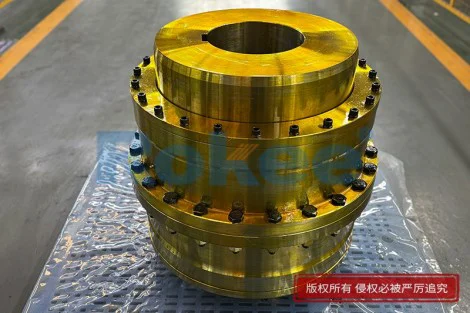
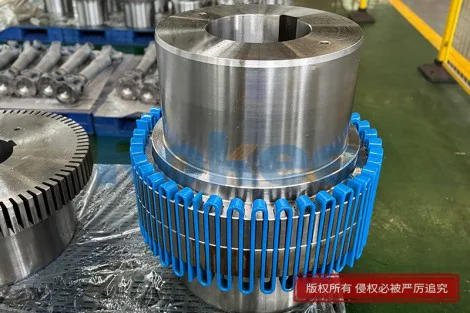
Rokee is a manufacturer of gearbox shaft couplings from china, we can provide non-standard custom gearbox shaft couplings based on parameters or drawings supplied by customers, with export support available.

In the intricate ecosystem of industrial mechanical transmission systems, the gearbox shaft coupling stands as a foundational yet often underappreciated mechanical component. Serving as the critical connecting bridge between a gearbox and adjacent power components, including drive motors, driven machinery, and auxiliary transmission shafts, this specialized coupling undertakes the core task of transmitting rotational torque and mechanical motion across interconnected mechanical units. Beyond basic power transfer, it functions as a systemic buffer and protective barrier, addressing inherent mechanical deviations, mitigating operational vibrations, and isolating impact loads that would otherwise erode the stability and service life of entire transmission systems. As industrial machinery evolves toward high precision, high load capacity, and continuous cyclic operation, the performance reliability of gearbox shaft couplings has become a pivotal factor determining the overall operational efficiency, maintenance cycle, and long-term operational stability of mechanical equipment.


The essence of a gearbox shaft coupling’s operational value lies in its ability to coordinate the collaborative operation of discrete mechanical units. In typical transmission configurations, the gearbox acts as the core power regulation module, responsible for adjusting rotational speed, amplifying torque, and changing transmission direction to match the operational requirements of terminal equipment. However, the gearbox cannot operate independently; it needs to receive power from prime movers and output regulated power to load equipment. The shaft coupling precisely fills the mechanical gap between the gearbox’s input and output shafts and matching equipment shafts, enabling synchronous rotation and consistent power transmission between independent shaft systems. Unlike fixed mechanical connections, this coupling structure retains reasonable mechanical flexibility under normal operating conditions, laying the groundwork for adaptive adjustment in complex industrial operating environments.
One of the most prominent and indispensable functions of the gearbox coupling is compensating for multi-dimensional shaft misalignment. In actual industrial assembly and long-term equipment operation, absolute coaxial alignment between interconnected shafts is virtually unattainable. Mechanical processing errors, assembly deviation, equipment foundation settlement, long-term operational vibration, and thermal expansion and contraction of metal components will inevitably lead to three typical forms of misalignment: axial displacement, radial offset, and angular deflection. Axial displacement refers to the relative longitudinal movement of two shafts along the rotation axis, usually caused by equipment thermal expansion or assembly clearance changes; radial offset means the parallel dislocation of the two shaft centers in the radial plane, stemming from installation errors and foundation deformation; angular deflection occurs when the central axes of the two connected shafts form a tiny included angle, which is common in complex vibration operating environments. Without adaptive compensation from shaft couplings, these subtle misalignments would generate tremendous additional bending stress and torsional shear force during high-speed rotation, leading to severe shaft wear, bearing fatigue damage, gear meshing failure in gearboxes, and even sudden shaft fracture in severe cases. The structural design of gearbox shaft couplings fully targets these misalignment problems, utilizing elastic deformation of flexible components or mechanical clearance coordination of rigid movable structures to absorb and offset multi-dimensional deviations, ensuring that the transmission system maintains stable stress and uniform operation under non-ideal alignment conditions.
Vibration damping and impact buffering constitute another core functional advantage of high-performance gearbox shaft couplings. Most industrial transmission systems face intermittent startup and shutdown, load mutation, and alternating impact loads during operation. Instantaneous torque shocks generated during equipment startup, sudden load changes, or external mechanical impacts will directly act on the gearbox and prime mover without buffer protection, causing sharp fluctuations in transmission torque, aggravating gear meshing impact in the gearbox, and producing intense mechanical vibration and noise. Long-term accumulation of such impact loads will accelerate the fatigue aging of precision components inside the gearbox, reduce transmission accuracy, and shorten the service life of bearings, gears, and other core parts. Gearbox shaft couplings effectively solve this problem through diversified structural designs. Flexible couplings equipped with elastic elements can convert instantaneous impact kinetic energy into elastic potential energy for absorption and release, smoothing torque transmission curves and suppressing vibration propagation between adjacent mechanical units. Even rigid movable couplings with high torque resistance can disperse concentrated impact loads through internal mechanical meshing clearance coordination, avoiding local stress concentration in the transmission system and realizing effective protection of gearbox core components and overall mechanical structures.
In addition to power transmission, misalignment compensation, and vibration reduction, gearbox shaft couplings also undertake implicit overload protection tasks in many operating scenarios. When industrial equipment encounters extreme working conditions such as sudden equipment jamming, overloaded operation, or external force obstruction, the transmission system will generate instantaneous ultra-rated torque far exceeding the normal operating range. In the absence of protective structures, this abnormal torque will directly act on the gearbox’s gear set, shaft body, and prime mover, easily causing tooth breakage, shaft distortion, or motor burnout. Reasonably selected and installed shaft couplings can serve as a weak link in the transmission system. When the load exceeds the preset safe threshold, the coupling will produce elastic failure, structural slippage, or component deformation to cut off the transmission of abnormal torque, thereby isolating extreme loads and protecting high-value core equipment such as gearboxes and motors from irreversible damage. This passive protection mechanism greatly reduces the maintenance cost of mechanical systems and improves the safety and fault tolerance of equipment operation.
Gearbox shaft couplings can be broadly classified into two main categories based on structural characteristics and working principles: rigid movable couplings and flexible couplings, each with distinct performance characteristics and applicable working conditions. Rigid movable couplings are composed of pure metal rigid structures, relying on the matching and relative sliding of internal mechanical structures to compensate for shaft misalignment. Represented by gear couplings, this type of coupling adopts a structure of internal and external gear meshing. The crowned tooth profile design enables the gear teeth to maintain stable meshing contact while allowing tiny relative displacement and angle deviation between shafts. This structural feature endows rigid movable couplings with ultra-high torque transmission capacity, excellent structural rigidity, and stable performance under high-speed and heavy-load operating conditions. They have small torsional deformation during operation, can maintain high-precision power transmission, and are widely suitable for heavy industrial scenarios such as large mechanical transmission, turbine equipment, and high-power compressor systems that require high torque and high stability. However, due to the lack of elastic components, rigid movable couplings have limited vibration and impact buffering capacity, making them more suitable for stable working environments with small load fluctuations and low vibration intensity.
Flexible couplings, by contrast, integrate elastic deformation components such as polymer elastomers and metal flexible sheets into the connection structure, relying on elastic deformation to realize misalignment compensation and vibration absorption. Common structural forms include jaw couplings, disc couplings, and bellows couplings. Jaw couplings use elastic spacer components clamped between two metal hubs, and the elastic deformation of the spacer can adapt to small-range radial, axial, and angular misalignment, with good vibration damping effects and simple structure, convenient installation and replacement. Disc couplings adopt stacked thin metal flexible sheets, which can produce micro elastic bending during operation to offset shaft deviations, while maintaining high torsional rigidity, realizing high-precision and low-backlash power transmission, and being suitable for high-speed and high-precision transmission scenarios. Bellows couplings rely on the elastic deformation of integral metal bellows, featuring zero backlash, high sensitivity, and excellent comprehensive compensation performance, and are widely used in precision automation equipment and high-precision transmission systems. Overall, flexible couplings excel in vibration damping, impact resistance, and misalignment adaptation, making them suitable for complex working conditions with frequent load changes, obvious vibration, and high assembly deviation tolerance, though their ultimate torque transmission capacity is slightly lower than that of rigid movable couplings.
The matching selection of gearbox shaft couplings is a systematic engineering work that needs to comprehensively consider multiple key parameters and actual working conditions to ensure the matching degree between coupling performance and system operation requirements. The first core consideration is the rated torque of the transmission system. The maximum instantaneous torque and long-term stable operating torque of the gearbox in actual operation determine the basic load-bearing grade of the coupling. It is necessary to reserve a sufficient safety margin on the basis of the rated operating torque to avoid structural fatigue and failure caused by long-term overload operation of the coupling. The second key factor is the operating speed. High-speed transmission systems have strict requirements on the dynamic balance performance and structural stability of couplings. High-speed rotating couplings need to have excellent concentricity and low vibration characteristics to prevent resonance and dynamic unbalance failure caused by high-speed rotation. Low-speed and heavy-load systems focus more on the structural strength and wear resistance of couplings to adapt to long-term high-torque operation.
Meanwhile, the actual misalignment range of the shaft system, the severity of operational vibration and impact, and the ambient working conditions are also crucial bases for selection. For mechanical systems with large assembly errors or easy foundation deformation, couplings with strong multi-dimensional misalignment compensation capacity should be prioritized; for equipment with frequent startup and shutdown and obvious load impact, flexible couplings with excellent buffer and damping performance are more suitable; for special working environments such as high temperature, low temperature, humidity, and dust corrosion, it is necessary to select couplings with corresponding material adaptability, such as high-temperature resistant metal structures and corrosion-resistant elastic materials, to avoid performance degradation and structural aging caused by environmental factors. Reasonable type selection can not only maximize the operational performance of the coupling but also effectively reduce the operating failure rate of the entire transmission system and extend the overall service life of the equipment.
Installation accuracy and daily maintenance quality directly determine the service life and operational performance stability of gearbox shaft couplings. In the installation process, the coaxiality of the two connected shafts must be strictly calibrated to minimize initial assembly misalignment. Excessive initial deviation will cause the coupling to bear continuous alternating load during operation, accelerate the fatigue loss of elastic components and the wear of mechanical meshing parts, and lead to early failure of the coupling. The fastening degree of connecting bolts also needs to meet standard requirements. Excessively loose fastening will cause relative displacement of coupling components and transmission vibration, while excessive fastening will cause structural stress concentration and component deformation. After installation, it is necessary to conduct no-load trial operation and load debugging to check for abnormal vibration, noise, and temperature rise, ensuring that the coupling operates within a stable parameter range.
Daily maintenance mainly includes regular inspection of component wear, fastening state, and elastic component aging. For rigid movable couplings, regular lubrication maintenance is required to ensure sufficient lubricating oil or grease in the meshing parts, reduce metal friction and wear, and avoid transmission jitter and torque loss caused by dry friction. For flexible couplings, it is necessary to regularly check the aging, deformation, and fatigue damage of elastic components. Elastic materials will gradually age, harden, and lose elasticity after long-term alternating load operation, resulting in reduced damping and compensation performance, which needs to be replaced in a timely manner. In addition, long-term continuous operation will cause bolt loosening and component displacement, so regular fastening calibration and dust and corrosion protection are essential maintenance links. Scientific and standardized maintenance can effectively extend the service life of gearbox shaft couplings, maintain the long-term stability of the transmission system, and reduce unexpected equipment downtime and maintenance costs.
With the continuous upgrading of modern industrial manufacturing technology, the performance requirements for gearbox shaft couplings are constantly improving, driving the continuous innovation and optimization of coupling design, materials, and manufacturing processes. Traditional single-performance couplings are gradually unable to meet the comprehensive operating requirements of high-speed, high-precision, heavy-load, and long-life industrial equipment. Modern gearbox shaft couplings are developing toward composite performance integration, adopting new alloy materials and high-performance elastic polymer materials to achieve dual improvement of high torque resistance and vibration damping performance. At the same time, precision machining technology and dynamic balance calibration technology are widely applied in coupling production, effectively reducing structural errors and dynamic unbalance factors, improving the stability and precision of high-speed operation. In addition, the integrated and lightweight structural design optimizes the spatial layout of the transmission system, reduces the overall rotational inertia of the equipment, and improves the response speed and operational efficiency of the mechanical system.
In the entire industrial transmission field, gearbox shaft couplings are tiny in volume but bear indispensable systemic functions. They are not only simple connecting components but also key guarantee units for the stable operation, fault protection, and efficiency optimization of mechanical transmission systems. From traditional heavy industrial machinery to modern precision automation equipment, from conventional power transmission systems to special working condition equipment such as high temperature, low temperature, and corrosion resistance, gearbox shaft couplings are involved in all links of mechanical power transmission. Their performance quality and matching application level directly affect the operational reliability and economic benefits of industrial equipment. In future industrial development, with the continuous progress of intelligent manufacturing and high-end equipment manufacturing technology, gearbox shaft couplings will further develop in the direction of high precision, high durability, intelligence, and multi-function integration, providing more solid basic component support for the efficient and stable operation of modern mechanical systems.
« Gearbox Shaft Couplings » Update Date: 2026/7/16
Contact
If you require custom machined couplings, please contact Rokee via the contact information below for inquiries.
Email: https://www.gshmdpq.com
 WeChat