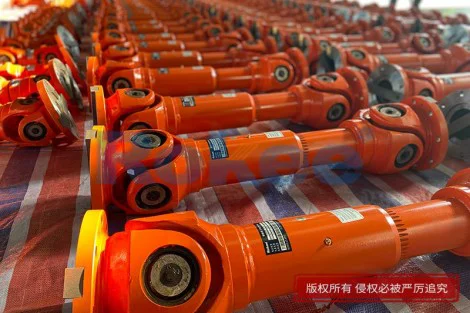
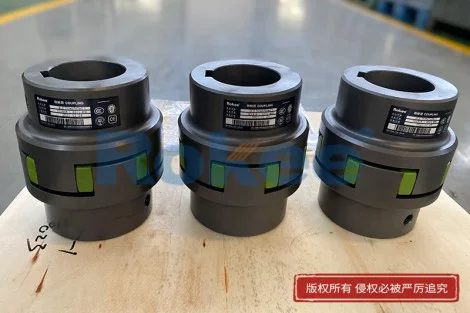
Flexible Pin Couplings
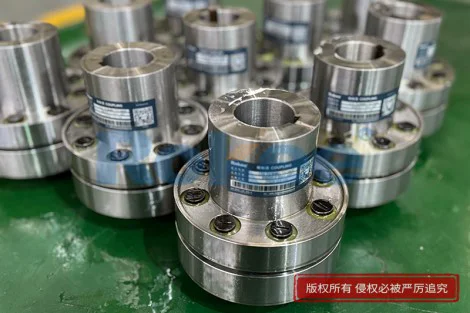
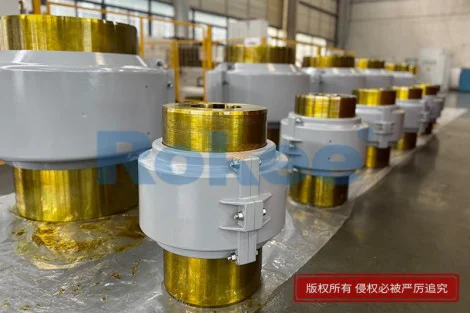
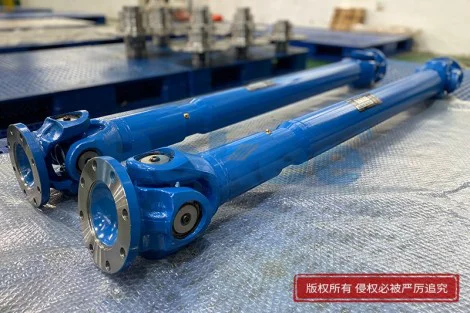
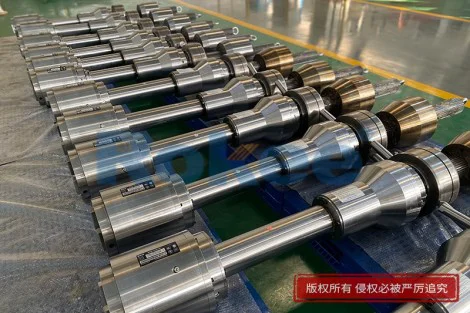
Rokee is a manufacturer of flexible pin couplings from china, we can provide non-standard custom flexible pin couplings based on parameters or drawings supplied by customers, with export support available.

In the intricate ecosystem of mechanical power transmission, flexible pin couplings stand out as indispensable foundational components, serving as critical connecting bridges between rotating shafts in diverse industrial machinery and mechanical systems. As a mature and highly practical flexible transmission device, it ingeniously integrates rigid mechanical transmission stability and flexible vibration damping performance, effectively solving common operational problems in shaft transmission systems such as installation misalignment, operational vibration, impact load interference and axial displacement deviation. With its simple and reliable structural design, excellent adaptive performance and low long-term operating costs, flexible pin couplings have been widely applied in general machinery, industrial manufacturing, transportation equipment and automated production lines, becoming a core guarantee for the stable and efficient operation of medium and low-speed power transmission systems.
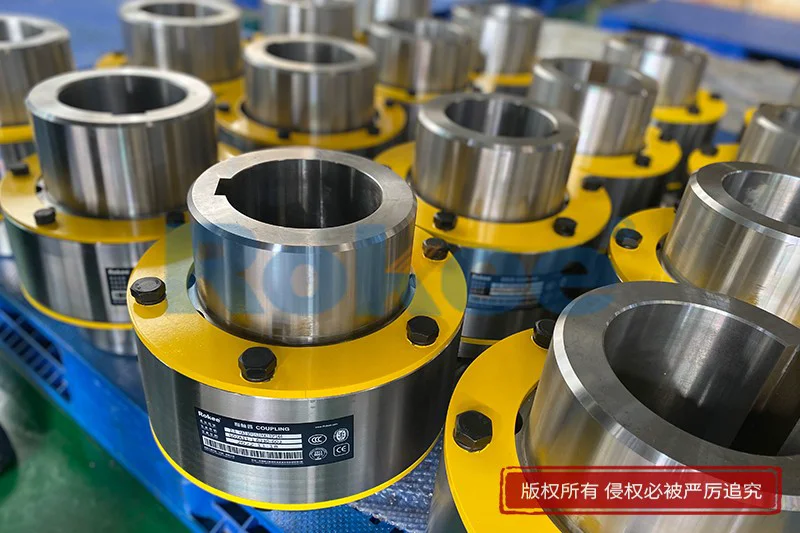

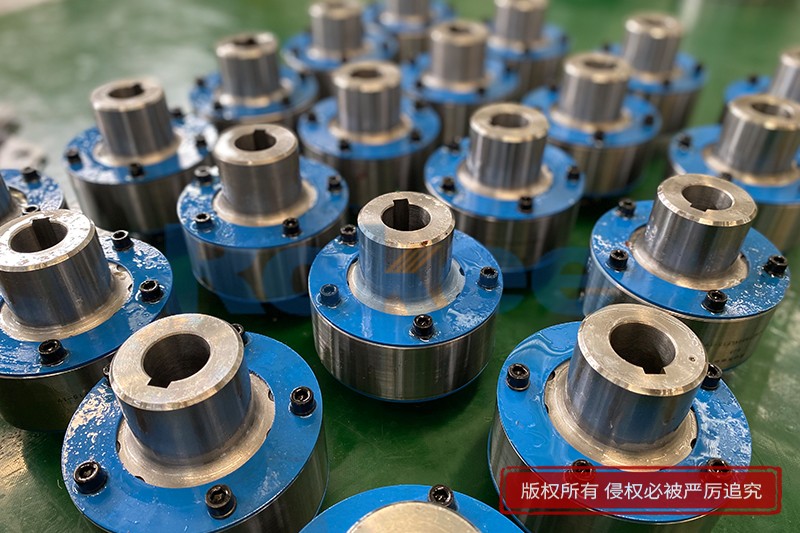
The basic structural composition of flexible pin couplings follows a minimalist and practical design logic, abandoning the complex tooth-shaped or diaphragm structures of other flexible couplings and adopting a dual-flange matching structure combined with flexible pin-bush assemblies. The overall structure consists of two symmetrical flange hubs installed on the driving shaft and driven shaft respectively, and the precise connection and power transmission between the two hubs are realized through uniformly distributed high-strength pins and matching elastic bushings. The pins are usually made of high-rigidity metal materials with excellent shear resistance and fatigue resistance, which can bear continuous torque transmission and instantaneous impact load during long-term operation. The outer layer of each pin is sleeved with an elastic bushing made of non-metallic flexible materials such as rubber or nylon, which forms a flexible contact buffer layer between the rigid pin and the flange pin hole. This unique rigid-flexible composite structure is the core source of the superior performance of flexible pin couplings, distinguishing it from rigid couplings that lack deformation compensation ability and other flexible couplings with complex structures and high maintenance thresholds.
The working principle of flexible pin couplings is based on elastic deformation and flexible force transmission, realizing synchronous shaft rotation and efficient torque transmission while achieving multi-dimensional mechanical protection. During equipment operation, the driving shaft drives the active flange hub to perform synchronous rotational motion, and the rotational torque is transmitted to the elastic bushings through the contact force between the flange holes and the bushings. The elastic bushings evenly transfer the torque to the built-in pins, and the pins further drive the driven flange hub to rotate synchronously, thus completing the continuous and stable transmission of power from the driving end to the driven end. In this process, the flexible elastic bushings do not play a simple connecting role. When the transmission system generates vibration, impact load or minor shaft misalignment due to equipment start-stop, load fluctuation or installation deviation, the elastic bushings will produce micro elastic deformation. This deformation can effectively absorb and dissipate mechanical vibration and impact energy, buffer the instantaneous pressure on the shaft and transmission parts, and avoid rigid friction and stress concentration between flanges.
More importantly, the elastic deformation characteristics of the bushing enable the coupling to adapt to multiple forms of shaft misalignment that are unavoidable in actual mechanical installation and operation. In industrial production, limited by installation precision, equipment aging, base settlement and thermal expansion and contraction of mechanical parts, the two connected shafts often have tiny deviations in axial displacement, radial offset and angular deflection. Rigid couplings cannot adapt to such deviations, which will lead to severe shaft wear, increased bearing load, transmission noise and even equipment failure in the long run. In contrast, flexible pin couplings can rely on the flexible deformation of the pin-bushing assembly to automatically compensate for these minor misalignment errors, ensuring that the power transmission process remains smooth and stable without additional mechanical stress. This adaptive compensation capability covers axial, radial and angular three-dimensional displacement deviations, which greatly improves the fault tolerance of the transmission system and extends the service life of supporting equipment.
Compared with other types of flexible couplings, flexible pin couplings have comprehensive practical advantages in structural performance, operational adaptability and later maintenance costs. First of all, the overall structure is extremely simple with few matching parts, no complex precision components or closed transmission structures, which greatly reduces the difficulty of manufacturing, processing and installation. The assembly and disassembly process does not require professional precision tools and complex operation steps, and the positioning and matching between flanges and pins can be completed quickly, which significantly improves the efficiency of equipment assembly and later maintenance. Secondly, this coupling type does not need lubrication during daily operation. Unlike gear couplings and slider couplings that rely on lubricating oil to reduce friction and wear, the flexible pin-bushing structure realizes low-friction transmission through the elastic buffer of non-metallic materials, avoiding a series of problems such as lubricant deterioration, leakage, and regular oil replacement maintenance. This oil-free operation feature not only reduces daily operating and maintenance costs, but also avoids equipment pollution caused by lubricant leakage, making it suitable for clean production scenarios such as food processing, pharmaceutical manufacturing and precision instrument production.
In terms of operational performance, flexible pin couplings have excellent vibration damping and impact resistance. The non-metallic elastic bushing has good energy absorption characteristics, which can effectively attenuate high-frequency vibration generated during equipment operation and instantaneous impact load during frequent start-stop and load switching. In the transmission system with unstable load, this vibration damping performance can stabilize the transmission torque, reduce the fluctuation of mechanical operation, and avoid fatigue damage of shafts, bearings and other key parts caused by long-term vibration. At the same time, the material characteristics and structural design of the coupling enable it to have good corrosion resistance and aging resistance. The metal flange hub has stable mechanical properties after surface anti-corrosion treatment, and the elastic bushing can resist mild corrosion such as moisture and weak acid and alkali in conventional industrial environments, ensuring stable performance in different working conditions and reducing the failure rate of transmission components.
Flexible pin couplings also show outstanding applicability in load adaptation and speed matching. Its structural design is highly compatible with medium and low-speed, medium and heavy-load transmission scenarios, and can maintain stable torque transmission efficiency under continuous load operation and intermittent impact load conditions. For mechanical equipment with frequent start-stop cycles, the flexible buffer structure can effectively offset the starting impact force, protect the motor power end and the driven working end equipment, and reduce the failure probability of motor overload and component damage. Although its high-speed dynamic balance performance is not as good as that of precision diaphragm couplings, it fully meets the operational requirements of most general industrial machinery, and has higher cost performance and practicability in conventional working conditions.
The application scenarios of flexible pin couplings cover almost all general mechanical transmission fields that require flexible connection and vibration reduction. In the field of industrial manufacturing, they are widely used in conveying machinery, mixing equipment, crushing machinery, printing and textile machinery, serving as the core connecting parts of power transmission systems, ensuring the stable operation of production equipment. In the field of power equipment, they are applied to fans, water pumps, compressors and other equipment, effectively reducing the vibration and noise of fluid power machinery and improving the overall operational stability of the equipment. In automated production lines and light industrial machinery, the precise compensation and low-noise operation characteristics of flexible pin couplings can meet the high stability requirements of automated equipment for power transmission, avoiding production errors and equipment jitter caused by transmission deviation.
In addition, in construction machinery, agricultural machinery and transportation auxiliary equipment, flexible pin couplings adapt to harsh working environments such as complex load changes and poor installation conditions. The working conditions of such equipment are often accompanied by irregular impact loads, dust pollution and temperature changes, and the simple and durable structure of flexible pin couplings can resist external environmental interference, maintain stable transmission performance, and reduce the downtime and maintenance frequency of engineering equipment. It is precisely because of this strong environmental adaptability that flexible pin couplings have become the preferred transmission connection components for most general machinery equipment, occupying an irreplaceable position in the field of mechanical transmission.
In actual equipment application and selection, the matching between flexible pin couplings and working conditions directly affects the operational stability and service life of the transmission system. The core selection principle is to match the specification and structural type according to the transmission torque, operating speed, misalignment range and working environment of the equipment. For light-load and frequent start-stop equipment, flexible pin couplings with soft elastic bushings can be selected to enhance vibration damping and buffering effects; for medium and heavy-load continuous operation equipment, products with high-strength pins and thickened bushings are required to improve shear resistance and load-bearing capacity. At the same time, the installation accuracy must be strictly controlled during equipment assembly. Although the coupling has misalignment compensation ability, excessive installation deviation will cause long-term abnormal deformation of the elastic bushing, accelerate aging and wear, and lead to reduced transmission efficiency and shortened service life.
Daily maintenance and inspection are key links to ensure the long-term stable operation of flexible pin couplings. In routine equipment inspection, it is necessary to focus on checking the wear degree of elastic bushings and the fastening state of pins. After long-term operation, the elastic bushing will gradually age, deform and wear, resulting in reduced flexibility, weakened vibration damping effect and even loose transmission gap, which will cause equipment vibration and abnormal noise. Timely replacement of aging and worn bushings can effectively restore the working performance of the coupling and avoid secondary damage to the transmission system. In addition, it is necessary to check the coaxiality of the two connected shafts regularly to eliminate hidden dangers of excessive misalignment caused by equipment vibration and base displacement, and ensure that the coupling operates within a reasonable deformation range. Compared with other precision couplings, the maintenance of flexible pin couplings is extremely simple, with low replacement cost and short maintenance time, which can maximize the continuous operation time of production equipment and create higher economic benefits for industrial production.
With the continuous upgrading of industrial machinery towards high efficiency, stability and intelligence, the technical optimization of flexible pin couplings is also advancing steadily. Modern production processes and new material technologies are continuously applied to the manufacturing of flexible pin couplings. High-strength composite elastic materials replace traditional single rubber and nylon materials, improving the wear resistance, aging resistance and fatigue resistance of bushings, and further expanding the service life and application range of products. At the same time, the structural design is continuously optimized, realizing more accurate misalignment compensation and more efficient vibration damping performance, and adapting to the increasingly stringent operational requirements of modern automated production equipment.
As a classic flexible transmission component, flexible pin couplings have gone through long-term industrial verification, and their structural rationality and performance reliability have been fully recognized in the mechanical industry. Its core advantages of simple structure, convenient installation, stable performance, low maintenance cost and strong environmental adaptability make it still have strong market competitiveness and application value in the increasingly updated mechanical transmission component industry. In the future, with the continuous development of intelligent manufacturing and green industrial production, flexible pin couplings will further realize lightweight, high-precision and long-life upgrading, and play a more important role in the field of general mechanical power transmission.
« Flexible Pin Couplings » Update Date: 2026/7/16
Contact
If you require custom machined couplings, please contact Rokee via the contact information below for inquiries.
Email: https://www.gshmdpq.com
 WeChat