Cutter Couplings
Rokee is a manufacturer of cutter couplings from china, we can provide non-standard custom cutter couplings based on parameters or drawings supplied by customers, with export support available.

In the complex operating system of modern mechanical transmission, the cutter coupling stands as a vital and sophisticated component that integrates power transmission, motion coordination and safety protection. As a specialized connecting device applied to rotary cutting equipment and power transmission shafts, it undertakes the core task of connecting rotating parts, transmitting stable torque and coordinating the synchronous operation of mechanical structures. Unlike ordinary transmission couplings that only focus on simple power conduction, the cutter coupling is uniquely designed to adapt to the special working conditions of cutting operations, featuring strong vibration resistance, precise motion matching and reliable overload protection. It has become an indispensable core part of various cutting machinery, ranging from industrial precision cutting equipment and agricultural harvesting devices to engineering mechanical cutting tools and underwater cutting systems, supporting the stable and efficient operation of mechanical cutting work in diverse scenarios.
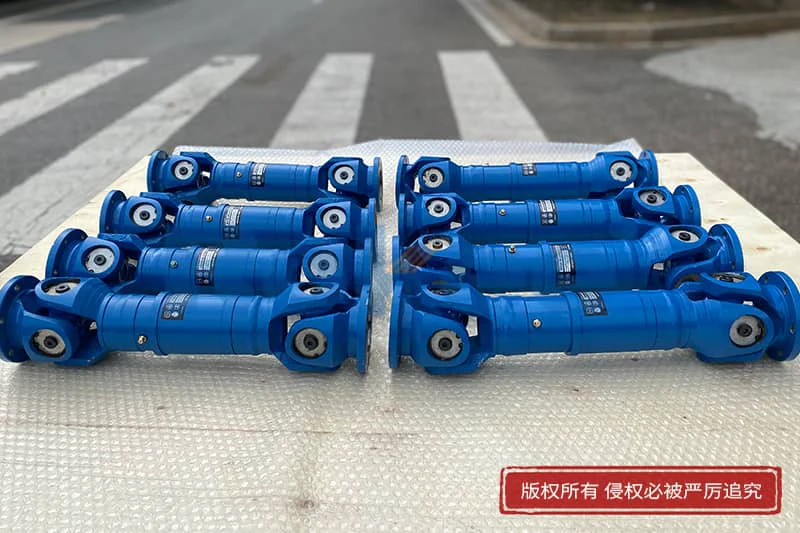

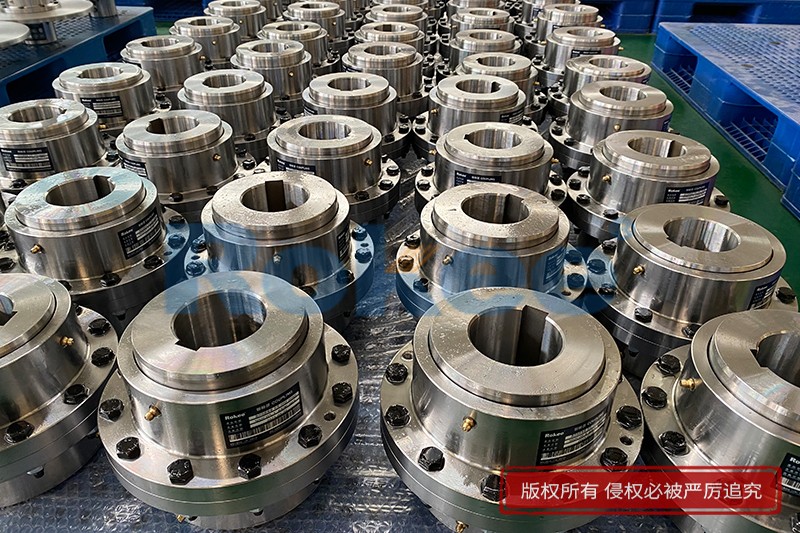
The core essence of the cutter coupling’s working mechanism lies in its integrated design of linkage coordination and adaptive buffering. In all cutting mechanical systems, the power source outputs rotational power through the driving shaft, while the cutting blade or cutter head completes material cutting, breaking and trimming operations through rotational or reciprocating motion. The cutter coupling serves as the key intermediate link between the power driving end and the cutting execution end. In normal operating conditions, it synchronizes the rotation of the driving shaft and the cutting component without relative sliding or disconnection, ensuring that the power output by the power source is accurately and completely transmitted to the cutting structure, so that the cutting tool can maintain stable rotating speed and uniform cutting force during operation. This basic transmission function guarantees the basic operating efficiency of cutting equipment and avoids power loss caused by asynchronous motion between shafts.
What distinguishes the cutter coupling from conventional couplings is its excellent adaptive compensation capability for complex operating deviations. During the long-term operation of cutting machinery, various unavoidable mechanical deviations will occur due to equipment assembly errors, component wear, mechanical vibration and uneven stress of cutting operations. These deviations include axial displacement, radial deflection and angular misalignment between the driving shaft and the driven shaft. Ordinary rigid couplings are difficult to adapt to such deviations, which will lead to increased transmission resistance, severe mechanical friction, and even local stress concentration on the shaft and cutting components, resulting in equipment vibration, cutting accuracy decline and accelerated component damage. The cutter coupling is optimized with a flexible adaptive structure, which can effectively absorb and compensate for various minor axis deviations during operation. This structural design eliminates the rigid collision and friction between transmission components, maintains the stability of the transmission system, and ensures that the cutting tool can always maintain a precise operating posture even under slight mechanical displacement, thus guaranteeing the consistency and accuracy of cutting results.
Vibration and impact resistance is another core performance advantage of cutter couplings, which is particularly critical for cutting equipment with intermittent and impact working characteristics. Most cutting operations belong to intermittent load working modes. When the cutting tool contacts materials with different hardness and textures, it will generate instantaneous impact load and periodic torsional vibration. For example, when cutting tough fiber materials, hard granular materials or uneven bulk materials, the resistance borne by the cutting tool changes instantaneously, forming fluctuating torque that acts on the transmission shaft system. If the transmission system lacks effective buffering measures, this instantaneous impact and vibration will be directly transmitted to the power source and the overall mechanical structure, causing equipment resonance, loose assembly parts, reduced cutting flatness, and even sudden shaft breakage or tool damage in severe cases. The internal structural configuration of the cutter coupling is designed with vibration damping and buffering mechanisms, which can effectively absorb torsional vibration and instantaneous impact force generated during cutting. It isolates the fluctuation of cutting load from the power output end, protects the motor, reducer and other power components from impact damage, and at the same time stabilizes the operating state of the cutting tool, making the cutting process smoother and more stable.
The overload protection function embedded in the cutter coupling further enhances the safety and durability of cutting mechanical systems. In actual industrial and field operation scenarios, cutting equipment often encounters unexpected working conditions such as material jamming, sudden increase of cutting resistance and foreign matter entanglement. When the cutting tool is blocked and cannot operate normally, the load of the transmission shaft increases sharply, forming excessive torque that far exceeds the normal working range. Without effective protection measures, this overload torque will directly act on the transmission shaft, cutting tool and power equipment, leading to tool fracture, shaft deformation, motor burnout and other serious mechanical failures, and even cause safety accidents and equipment shutdown losses. The cutter coupling is endowed with intelligent overload response characteristics through structural optimization and material matching. When the system encounters overload torque beyond the set range, it can produce moderate sliding, torque limiting or adaptive disconnection protection. This mechanism effectively cuts off the transmission of overload torque, avoids the damage of core mechanical components caused by sudden overload, and plays the role of a mechanical safety fuse for cutting equipment. After the overload fault is eliminated, the coupling can automatically recover the transmission function, ensuring the continuous and efficient operation of the equipment and reducing unnecessary downtime and maintenance costs.
The structural design of cutter couplings always adheres to the dual principles of high transmission efficiency and strong environmental adaptability. In terms of material selection, most high-performance cutter couplings adopt high-strength alloy materials with excellent wear resistance, fatigue resistance and impact resistance. After precise forging, heat treatment and surface strengthening processes, the materials maintain high structural rigidity and dimensional stability under long-term high-speed rotation and impact load conditions, avoiding structural deformation and performance attenuation caused by long-term operation. In terms of structural design, it abandons the complex redundant structure of traditional transmission parts, and adopts a compact integrated layout, which not only reduces the overall volume and weight of the transmission system, saves the installation space of cutting equipment, but also effectively reduces the rotational inertia of the transmission component, improves the response speed of cutting action, and makes the equipment operation more flexible and sensitive.
Meanwhile, the optimized structural gap and surface processing technology of the cutter coupling enable it to adapt to various harsh working environments. Many cutting operations are carried out in complex environments such as dust, humidity, mud and oil pollution. Ordinary mechanical couplings are prone to dust accumulation, corrosion and lubrication failure in such environments, resulting in blocked transmission and reduced service life. The special structural sealing design of the cutter coupling can effectively isolate external dust, moisture and corrosive media, prevent internal friction parts from contamination and corrosion, and maintain the stability of internal lubrication state for a long time. This excellent environmental adaptability enables the cutter coupling to work stably for a long time in harsh working conditions such as field harvesting, engineering construction, underwater operation and industrial workshop cutting, greatly improving the environmental tolerance and continuous working capacity of the whole equipment.
In terms of industrial application scenarios, cutter couplings cover almost all mechanical equipment that relies on rotary cutting for operation, showing extremely high universal applicability and scenario matching. In the field of industrial precision processing, precision cutting equipment used for metal trimming, plastic cutting and composite material processing relies on cutter couplings to maintain high-precision synchronous transmission. The stable torque output and tiny deviation compensation capability of the coupling ensure that the precision cutting equipment can achieve micron-level cutting accuracy, avoid cutting burrs and dimensional errors caused by transmission jitter, and meet the high-standard processing requirements of industrial precision parts.
In agricultural machinery equipment, cutter couplings are widely used in various harvesting and trimming machinery such as crop harvesters, lawn trimmers and branch cutters. Agricultural cutting equipment often operates in complex field environments with uneven ground and diverse crop textures, and the cutting system needs to bear frequent impact loads and uneven resistance. The vibration damping, anti-impact and overload protection performance of the cutter coupling can effectively cope with the complex and variable working load of agricultural cutting operations, reduce the failure rate of agricultural machinery in field operation, improve the continuity of harvesting and trimming work, and provide reliable mechanical support for efficient agricultural production.
In engineering machinery and special operation fields, cutter couplings also play an irreplaceable role. Excavator matching cutting and breaking equipment, road surface cutting machinery, underwater cutting equipment and emergency breaking cutting tools all need the support of high-performance cutter couplings. Engineering cutting operations are characterized by high load, high strength and strong impact, and the excellent structural strength and overload protection performance of cutter couplings can adapt to high-intensity engineering operation requirements. Especially in underwater cutting and high-risk operation scenarios, the stable and reliable operation of the coupling can avoid equipment failure caused by unstable transmission, ensure the safety and efficiency of special operations, and reduce operational risks and construction losses.
The service life and operating cost control of cutting equipment are also closely related to the performance of cutter couplings. As the core connecting component of the transmission system, the operating state of the coupling directly determines the wear degree of the shaft system, cutting tool and power components. High-quality cutter couplings can maintain stable transmission performance for a long time, reduce friction and impact wear between mechanical components, effectively extend the service life of the whole cutting equipment, and reduce the frequency of parts replacement and equipment maintenance. In the long-term equipment operation cycle, it can greatly reduce the daily maintenance cost and equipment failure loss, and improve the economic benefit of mechanical equipment operation.
In terms of daily maintenance and operation, the structural characteristics of cutter couplings also bring obvious advantages. The compact and integrated structural design makes the disassembly, inspection and maintenance of the coupling more convenient. The good sealing performance avoids frequent lubrication replacement and internal cleaning work, reducing the difficulty of daily equipment maintenance. In the regular equipment inspection process, staff can quickly check the operating state of the coupling, judge the transmission stability and component wear degree, and carry out targeted maintenance and replacement, which effectively improves the efficiency of equipment management and ensures the long-term stable operation of cutting machinery.
With the continuous progress of modern mechanical manufacturing technology and the continuous upgrading of industrial production requirements, the performance optimization of cutter couplings is also advancing continuously. Modern cutting equipment is developing towards high speed, high precision, high intelligence and high environmental adaptability, which puts forward higher requirements for the transmission accuracy, vibration damping performance, overload sensitivity and service life of cutter couplings. Through the continuous innovation of new materials, structural optimization and intelligent design, the new generation of cutter couplings is further improving transmission efficiency, reducing operating vibration, enhancing environmental adaptability and realizing more accurate overload protection. At the same time, with the development of intelligent mechanical equipment, some optimized cutter coupling structures can also cooperate with the equipment sensing system to realize real-time monitoring of transmission torque, vibration state and operating load, providing data support for intelligent fault diagnosis and predictive maintenance of cutting equipment.
From the perspective of the whole mechanical transmission industry, the cutter coupling, as a specialized and refined transmission component, is an important guarantee for the efficient and safe operation of cutting mechanical systems. It is not only a simple power connecting part, but also a functional component integrating transmission, buffering, protection and compensation. Its performance directly affects the operating efficiency, cutting accuracy, service life and operation safety of cutting equipment. In the field of modern industrial manufacturing, agricultural production, engineering construction and special operations, the reliable performance of cutter couplings provides solid technical support for the efficient development of various cutting operations, promotes the continuous optimization and upgrading of cutting mechanical technology, and plays an important role in improving the overall operational level of modern mechanical equipment.
In conclusion, the cutter coupling relies on its unique structural design, excellent transmission performance, reliable protection function and wide scenario adaptability, and has become an indispensable core component of cutting mechanical systems. In the continuous development of mechanical technology, the continuous optimization and innovation of cutter coupling technology will further release the operational potential of cutting equipment, adapt to more complex and diverse working scenarios, and provide more stable, efficient and safe transmission solutions for modern cutting mechanical operations. Its application value and development prospect will be further highlighted with the continuous progress of modern mechanical engineering technology.
« Cutter Couplings » Update Date: 2026/7/15
Contact
If you require custom machined couplings, please contact Rokee via the contact information below for inquiries.
Email: https://www.gshmdpq.com
 WeChat