Industrial Gear Couplings
Rokee is a manufacturer of industrial gear couplings from china, we can provide non-standard custom industrial gear couplings based on parameters or drawings supplied by customers, with export support available.

As a core mechanical transmission component in modern industrial systems, industrial gear couplings serve as a critical connecting medium between driving and driven shafts, undertaking the key task of torque transmission, motion synchronization, and operational stability maintenance. In the complex and variable operating environments of industrial production, mechanical equipment often faces challenges such as shaft misalignment, variable load impact, high-speed operation friction, and harsh environmental interference. Unlike ordinary flexible couplings with limited load resistance and rigid couplings with poor deviation compensation capability, gear couplings integrate high structural rigidity and micro-flexibility, enabling them to adapt to diverse extreme working conditions while maintaining efficient and stable power transmission. Widely applied in heavy machinery, power generation, metallurgy, mining, chemical engineering, and automated production lines, this type of coupling has become an indispensable foundational component to ensure the long-term reliable operation of industrial mechanical systems.
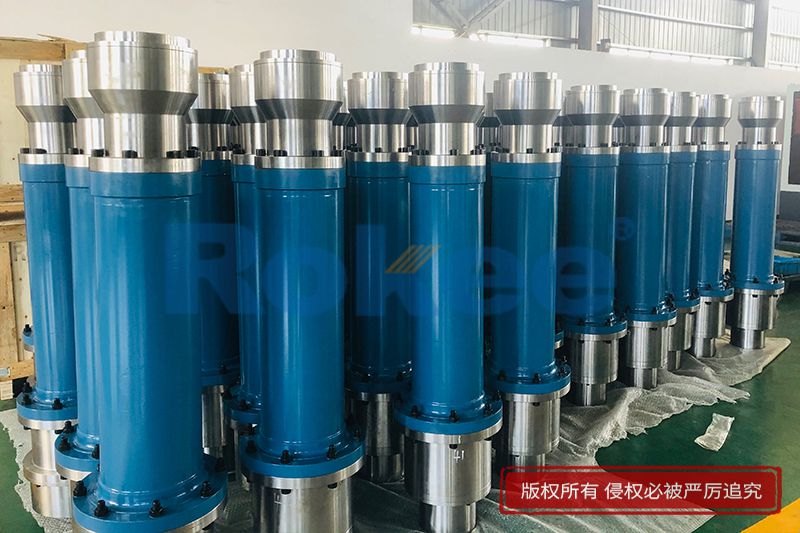

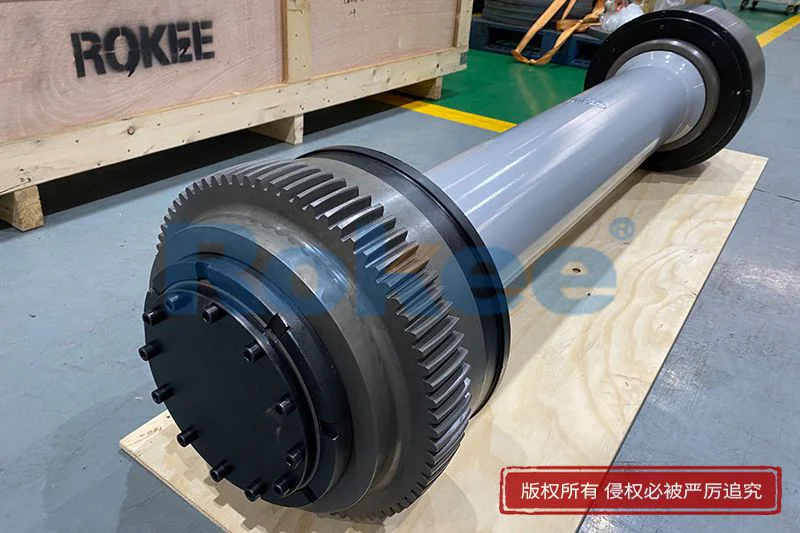
The basic structural composition of industrial gear couplings follows a mature and optimized mechanical design logic, with the core components including external gear hubs, internal gear sleeves, sealing assemblies, and lubrication structures. A complete gear coupling is usually composed of two external gear hubs fixed on the driving shaft and driven shaft respectively, and one or two internal gear sleeves that mesh with the external gears. The tooth surfaces of external gears are carefully processed with arc modification and precision grinding, which is the key to realizing deviation compensation and reducing transmission friction. The internal gear sleeve adopts an integral or assembled structure according to different application scenarios, with high machining accuracy of internal tooth profiles, ensuring tight and uniform meshing with external gears. Different from traditional fixed-axis gear transmission structures in gearboxes, the gear meshing pair of gear couplings reserves reasonable matching clearance, which does not affect the efficiency of torque transmission, but provides a tiny movable space for shaft position deviation. Auxiliary structures such as sealing end covers and rubber sealing rings are installed at both ends of the coupling, forming a closed lubrication cavity with the internal gear sleeve and gear hubs. This enclosed structure lays a foundation for long-term stable operation, effectively isolating external impurities and locking internal lubricants.
The working principle of industrial gear couplings is based on the basic mechanical law of gear meshing transmission, realizing synchronous rotation and torque transfer between two connected shafts through the continuous meshing action of internal and external gear teeth. When the industrial equipment starts to operate, the power source drives the driving shaft and the fixed external gear hub to rotate synchronously. The torque generated by mechanical operation is transmitted to the internal gear sleeve through the meshing of external and internal gear teeth, and then the internal gear sleeve drives the external gear hub on the driven shaft to rotate, thereby completing the power transmission of the entire shaft system. In the actual industrial operation process, the coaxiality of the driving shaft and driven shaft is difficult to maintain absolutely due to equipment installation errors, mechanical vibration, thermal deformation of components during high-temperature operation, and foundation settlement. The reserved meshing clearance and modified tooth profile of the gear coupling can effectively compensate for tiny axial, radial, and angular deviations between the two shafts. When shaft deviation occurs, the gear teeth can produce slight sliding and displacement in the meshing state, avoiding additional bending stress and friction loss caused by rigid connection. This unique working mechanism enables the gear coupling to maintain stable transmission state even in non-ideal installation and operation conditions, reducing equipment failure risks caused by shaft system deviation.
Industrial gear couplings possess unparalleled comprehensive performance advantages compared with other types of mechanical couplings, which is the core reason for their wide popularity in heavy-duty industrial fields. First of all, they have extremely high torque transmission capacity and structural rigidity. Made of high-strength alloy steel through overall forging and precision heat treatment, the gear teeth and main components have high tensile strength, wear resistance, and fatigue resistance, which can bear ultra-large load torque generated by heavy equipment operation. Under continuous heavy load and impact load conditions, the coupling will not produce structural deformation or tooth surface damage, ensuring the stability of power output. Secondly, the multi-directional deviation compensation performance is outstanding. Relying on the flexible meshing design of gear pairs, it can simultaneously adapt to axial stretching deviation caused by thermal expansion and contraction of the shaft system, radial offset caused by equipment vibration, and angular deflection caused by installation errors, with a far wider compensation range than elastic couplings such as rubber couplings and spring couplings.
In terms of high-speed operation performance, industrial gear couplings also show excellent adaptability. The precision-machined gear tooth profile reduces meshing friction and running vibration, enabling stable operation in high-speed rotating equipment. The balanced overall structure effectively suppresses resonance and noise generated by high-speed operation, improving the smoothness of the entire mechanical system. In addition, the environmental adaptability of gear couplings is extremely strong. Different from elastic couplings that are easily affected by high temperature, low temperature, corrosion, and aging, all metal main structures can work stably in high-temperature metallurgical workshops, low-temperature cold storage equipment, dusty mining sites, and corrosive chemical production environments. With the cooperation of reliable sealing and lubrication systems, the service life of the coupling can be greatly extended, and the maintenance frequency of equipment can be reduced in harsh working conditions.
Industrial gear couplings are widely used in almost all heavy industrial mechanical transmission scenarios, covering upstream raw material production, midstream equipment manufacturing, and downstream energy power supply fields. In the metallurgical industry, they are applied to rolling mills, smelting equipment, and steel conveying machinery. These devices need to operate continuously with heavy loads for a long time, and the high torque resistance and stable transmission performance of gear couplings can adapt to the harsh working conditions of high temperature and strong vibration in metallurgical workshops. In the mining industry, mining conveyors, crushing equipment, and drilling machinery often face impact loads and complex working condition changes. The deviation compensation and anti-fatigue performance of gear couplings can effectively buffer the mechanical impact generated by equipment operation and avoid component damage caused by frequent load changes.
In the power generation industry, whether it is thermal power, hydropower, or new energy wind power equipment, gear couplings play a key role in shaft system connection. Power generation equipment requires extremely high transmission stability, and any transmission failure will lead to equipment shutdown and economic losses. The high-precision meshing structure of gear couplings ensures synchronous and efficient operation of the generator shaft system, reducing energy loss in the transmission process. In the chemical industry, various reaction kettles, conveying pumps, and compressor equipment need to operate stably for a long time in corrosive environments. The all-metal corrosion-resistant structure of gear couplings, matched with professional sealing design, can prevent chemical medium erosion and ensure the continuous operation of chemical production lines. In addition, in port handling machinery, construction engineering equipment, and large automated production lines, gear couplings also undertake important transmission tasks, providing basic guarantee for the efficient operation of modern industrial equipment.
Although industrial gear couplings have high structural reliability and long service life, standardized installation, lubrication maintenance, and daily inspection are still key factors to maintain their optimal working state and extend service life. Installation accuracy directly affects the operation effect and service life of the coupling. Excessive shaft deviation caused by improper installation will increase the meshing friction of gear teeth, lead to accelerated wear of tooth surfaces, and even cause tooth breakage in severe cases. Therefore, in the installation process, it is necessary to strictly calibrate the coaxiality of the driving and driven shafts, control the deviation within the allowable range of the coupling, and ensure the firm fit between the gear hub and the shaft body to avoid relative sliding during operation.
Lubrication maintenance is the core link of daily maintenance of gear couplings. The meshing operation of internal and external gear teeth relies entirely on lubricating oil to reduce friction and wear, and good lubrication can also play a role in heat dissipation, vibration reduction, and corrosion prevention. In the actual use process, it is necessary to select high-quality industrial gear lubricants suitable for different working temperatures and load conditions, and regularly check the oil quantity and oil quality of the closed lubrication cavity. Long-term operation will lead to lubricant aging, deterioration, and impurity precipitation. Timely oil replacement and cleaning of the internal cavity can avoid abrasive wear of gear teeth caused by deteriorated lubricants and hard impurities. At the same time, the sealing performance of the coupling should be inspected regularly. Aging, deformation or damage of the sealing ring will lead to lubricant leakage and external dust and moisture infiltration, destroying the lubrication environment and accelerating component wear.
Daily fault inspection and regular maintenance can effectively avoid sudden equipment failures. In the operation process of industrial equipment, abnormal vibration, increased noise, and unstable power output are often early signs of coupling failure. Common faults include gear tooth surface wear, pitting corrosion, fatigue peeling, lubrication failure, and sealing failure. Regular disassembly and inspection of the gear meshing state can timely find tiny defects on the tooth surface and carry out maintenance and repair, preventing small defects from expanding into major faults that affect equipment operation. For the couplings that have been used for a long time, regular fatigue detection of key components is required to replace aging and failed parts in time and ensure the safety and stability of mechanical transmission.
With the continuous upgrading of modern industrial manufacturing technology and the rapid development of intelligent and high-efficiency industrial equipment, the design and manufacturing technology of industrial gear couplings is also constantly innovating and optimizing. Traditional gear couplings are gradually optimized in terms of tooth profile design, material technology, and sealing structure to adapt to higher-speed, heavier-load, and more refined industrial transmission requirements. The application of precision CNC machining technology and tooth profile modification technology makes the gear meshing accuracy higher, the transmission friction smaller, and the operation smoother. The popularization of new high-strength wear-resistant alloy materials and surface heat treatment technology further improves the load resistance, wear resistance and fatigue life of couplings.
In the context of intelligent manufacturing, the intelligent upgrading of industrial gear couplings has become an important development trend. By integrating tiny sensing components, the coupling can realize real-time monitoring of operating parameters such as transmission torque, operating temperature, vibration frequency and shaft deviation. The real-time operating data is transmitted to the equipment control system, which can realize early warning of abnormal faults, predictive maintenance, and intelligent management of equipment operation. This intelligent monitoring mode completely changes the traditional passive maintenance mode of regular inspection, effectively reduces equipment shutdown time, improves industrial production efficiency, and reduces operation and maintenance costs. In addition, towards the development direction of energy-saving and green industrial production, the optimized structural design of gear couplings further reduces transmission energy loss, improves power transmission efficiency, and meets the green and low-carbon development requirements of modern industry.
In the entire industrial mechanical transmission system, industrial gear couplings are seemingly inconspicuous basic components, but they bear the important responsibility of connecting equipment power and ensuring system operation stability. Their excellent mechanical properties, wide working condition adaptability and reliable operation performance make them an indispensable core part of heavy industrial equipment. From traditional heavy industrial production to modern intelligent manufacturing, gear couplings have always provided stable basic support for the operation of mechanical systems. With the continuous progress of industrial technology and the continuous improvement of equipment performance requirements, the technical level of industrial gear couplings will continue to be upgraded, and their application fields will be further expanded, continuously empowering the high-efficiency, stable and intelligent development of modern industrial manufacturing industry.
« Industrial Gear Couplings » Update Date: 2026/7/16
Contact
If you require custom machined couplings, please contact Rokee via the contact information below for inquiries.
Email: https://www.gshmdpq.com
 WeChat