Flexible Coupling Shaft
Rokee is a manufacturer of flexible coupling shaft from china, we can provide non-standard custom flexible coupling shaft based on parameters or drawings supplied by customers, with export support available.

In modern mechanical transmission systems, the stable operation of rotating equipment relies heavily on the coordination of basic transmission components, among which flexible coupling shafts stand out as indispensable core functional parts. Serving as the connecting medium between driving and driven shafts, flexible coupling shafts undertake the fundamental task of torque and rotational motion transmission, while solving the inherent mechanical problems that rigid connection structures cannot avoid. In actual industrial assembly and operation, absolute coaxiality between two matching shafts is almost impossible to achieve due to manufacturing tolerances, installation deviations, equipment operational deformation, and thermal expansion and contraction during long-term service. Tiny misalignments in axial, parallel and angular dimensions will generate continuous alternating stress and friction in rigid transmission structures, accelerating component wear, inducing equipment vibration and noise, and even leading to shaft fracture and system shutdown in severe cases. It is in this context that flexible coupling shafts realize flexible transmission through structural optimization and material elasticity, effectively compensating for shaft misalignment, buffering impact loads and damping mechanical vibration, thus greatly improving the stability, safety and service life of the entire transmission system.
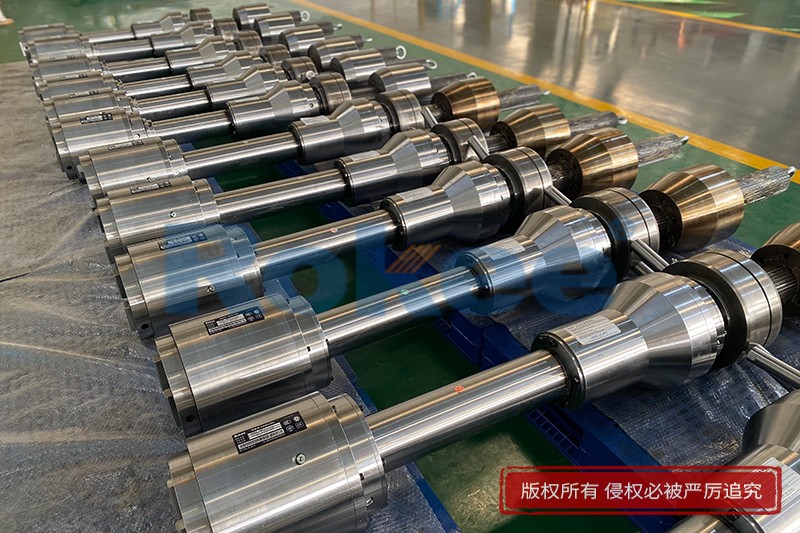


The core working logic of flexible coupling shafts lies in controlled elastic deformation and flexible kinematic compensation. Different from rigid coupling structures that pursue absolute fixation and zero displacement, flexible coupling shafts introduce compliant deformation characteristics into the transmission process. When the driving shaft rotates, torque is stably transmitted to the driven shaft through the flexible structure of the coupling. During this process, the elastic elements or movable structural gaps inside the coupling can adapt to three common types of shaft misalignment in mechanical operation. Axial misalignment refers to the linear displacement of two shafts along the rotation axis caused by thermal expansion or assembly gaps; parallel misalignment means the center lines of the two shafts are parallel but not coincident due to installation errors; angular misalignment is the angle deviation between the center lines of the two shafts during equipment operation. Through subtle elastic deformation or structural displacement, the flexible coupling shaft can offset these deviations without generating additional constraint force on the shaft body and bearing components, ensuring continuous and efficient torque transmission without destroying the mechanical balance of the system.
Beyond basic displacement compensation, flexible coupling shafts possess excellent vibration damping and impact buffering performance, which is crucial for high-speed and variable-load mechanical equipment. Most mechanical systems will produce instantaneous impact loads during startup, shutdown, sudden load change and alternating operation. Rigid transmission structures will directly transfer these impact forces to the entire equipment system, resulting in sharp fluctuations of operating load, increased bearing fatigue loss and resonance vibration of the frame. The flexible components inside the coupling shaft can convert instantaneous impact kinetic energy into elastic potential energy through self-deformation, and slowly release the energy in a stable state, thereby smoothing torque fluctuation and suppressing mechanical vibration. This energy buffering mechanism effectively isolates the vibration generated by the driving end from the driven end, avoids vibration superposition of the entire transmission system, and reduces mechanical noise generated by friction and impact, creating a more stable operating environment for precision mechanical equipment.
After long-term engineering iteration and structural optimization, flexible coupling shafts have derived diverse structural forms adapted to different working conditions, which can be roughly divided into two categories according to the deformation principle: elastic element flexible couplings and mechanical gap flexible couplings. The flexible coupling with elastic elements relies on the elastic deformation of polymer materials, metal elastic sheets and other components to realize misalignment compensation and vibration damping. This type of structure has excellent damping performance, small transmission backlash and stable operation, and is mostly suitable for high-speed, low-load and precision transmission scenarios such as servo control systems, precision instrumentation transmission and automated processing equipment. The mechanical gap flexible coupling realizes displacement adaptation through the relative sliding and matching of internal mechanical structures. Although its vibration damping performance is slightly weaker than that of elastic structural couplings, it has stronger structural rigidity and load-bearing capacity, and can withstand high torque and heavy load operation, so it is widely used in heavy industrial equipment such as mining machinery, metallurgical transmission equipment and large pumping systems.
Different structural designs endow flexible coupling shafts with differentiated performance characteristics and application boundaries. Beam-type flexible coupling shafts adopt an integral spiral slotted structure, which realizes multi-directional flexible deformation through the grooved design on the shaft body. This integrated processing structure has ultra-low backlash and high torsional rigidity, can accurately transmit rotational displacement, and is very suitable for precision positioning transmission scenarios that require high motion accuracy. Bellows flexible coupling shafts are made of thin-wall corrugated metal structures, with extremely high sensitivity and compensation accuracy, capable of adapting to tiny misalignment changes in high-speed operation, and are often used in high-precision automated production and detection equipment. Disc-type flexible coupling shafts use multi-group metal disc packs as the flexible transmission unit, with balanced torsional rigidity and displacement compensation capability, stable torque transmission and strong fatigue resistance, adapting to long-term continuous operation of medium and high-speed equipment. Jaw-type flexible coupling shafts equipped with elastic rubber spacers have outstanding shock absorption and noise reduction effects, with simple and compact structure, low assembly and maintenance difficulty, and are widely used in general industrial transmission scenarios with ordinary precision requirements.
In addition to structural design, material selection is the core factor that determines the comprehensive performance and service life of flexible coupling shafts. The main body of most flexible coupling shafts is made of high-strength aluminum alloy, stainless steel and carbon steel. Aluminum alloy materials have the advantages of light weight, high toughness and good processing performance, which can reduce the overall weight of the transmission system, reduce the operating load of bearings, and are mostly used in light-duty high-speed transmission equipment. Stainless steel materials have excellent corrosion resistance, high temperature resistance and fatigue resistance, and can maintain stable mechanical properties in harsh working environments such as high humidity, chemical corrosion and high temperature, suitable for chemical industry, marine equipment and high-temperature industrial production scenarios. Carbon steel materials have high structural rigidity and load-bearing capacity, low cost and good wear resistance, and are the preferred materials for heavy-load flexible coupling shafts in heavy industrial equipment. The elastic matching parts are mostly made of polyurethane, rubber and special engineering plastics, which have good elastic deformation ability and damping performance, and can effectively absorb vibration and impact, while reducing metal friction and wear between structures.
The value of flexible coupling shafts in industrial operation is also reflected in equipment protection and operating cost control. In the process of mechanical operation, unexpected overload, stuck rotation and impact load will cause huge instantaneous torque impact on the transmission shaft system, which is easy to cause damage to core components such as motors, reducers and bearings. The flexible structure of the flexible coupling shaft can play a role of overload buffer and mechanical protection. When the instantaneous load exceeds the normal operating range, the flexible element will produce large deformation or temporary displacement release, absorb excess torque impact, avoid the direct transfer of overload force to precision core equipment, and protect the key components of the transmission system from damage. At the same time, by reducing shaft misalignment friction and vibration wear, flexible coupling shafts effectively reduce the fatigue loss of bearings, shafts and transmission accessories, extend the maintenance cycle of equipment, reduce the replacement frequency of wearing parts, and greatly reduce the long-term operation and maintenance cost of mechanical systems.
In the field of modern industrial manufacturing, the popularization of intelligent manufacturing and high-precision automation equipment has put forward higher technical requirements for flexible coupling shafts. Traditional coupling shafts mainly meet the basic transmission and compensation needs, while the current industrial system requires coupling products to have higher transmission accuracy, more stable high-speed performance, longer fatigue life and stronger environmental adaptability. In high-precision servo transmission systems, tiny transmission errors and vibration fluctuations will affect the processing accuracy and positioning effect of equipment. The optimized flexible coupling shaft adopts ultra-precision processing technology and high-performance elastic materials, realizing zero-backlash transmission and micro-displacement high-precision compensation, ensuring the synchronization accuracy of rotational motion in high-speed operation. In intelligent logistics, new energy equipment and automated production lines, the compact and lightweight optimized flexible coupling shaft structure adapts to the miniaturization and integrated development trend of modern equipment, saving installation space while ensuring transmission performance.
Harsh working environment adaptability is another important development direction of flexible coupling shaft technology. In industrial scenarios such as mining, metallurgy, ocean engineering and outdoor power equipment, equipment often needs to operate continuously for a long time in dusty, humid, high-temperature, low-temperature and corrosive environments. Traditional flexible coupling shafts are prone to aging of elastic components, structural rust and performance degradation in harsh environments. The upgraded flexible coupling shaft products adopt surface anti-corrosion treatment technology, high and low temperature resistant elastic materials and sealed structural design, which can maintain stable flexible compensation and torque transmission performance in extreme environments, avoid performance failure caused by environmental factors, and improve the reliability and environmental adaptability of equipment long-term operation.
Reasonable selection and standardized installation are the prerequisites for flexible coupling shafts to exert optimal performance. In the selection process, it is necessary to comprehensively consider key factors such as equipment operating speed, transmission torque magnitude, working environment characteristics, misalignment range and transmission accuracy requirements. Excessively low rigidity coupling will cause torque transmission lag and affect equipment operating efficiency, while excessively high rigidity will reduce flexible compensation ability and lose the vibration damping protection effect. During installation, the coaxiality of the two shafts needs to be calibrated strictly to control the misalignment within the allowable range of the coupling structure. Excessive artificial installation deviation will increase the long-term deformation load of the flexible element, accelerate material fatigue aging, and lead to early failure of the coupling. In daily equipment maintenance, regular inspection of the operating state of flexible coupling shafts, timely cleaning of dust and foreign matters, and replacement of aging and deformed elastic components can effectively maintain the stable operating performance of the transmission system and extend the service life of the equipment.
With the continuous progress of mechanical manufacturing technology and the iterative upgrading of industrial equipment, the technical performance of flexible coupling shafts is also constantly optimized and improved. From the initial simple structural flexible compensation to the current high-precision, high-durability and multi-environment adaptive integrated design, flexible coupling shafts have completed the upgrade from basic transmission parts to high-performance functional components. In the future, with the deep integration of intelligent monitoring technology and mechanical parts, flexible coupling shafts will develop in the direction of intelligence and visualization. By embedding tiny sensing structures, it can realize real-time monitoring of operating torque, vibration amplitude, deformation degree and service state, provide data support for equipment predictive maintenance, and further improve the intelligent operation level of industrial transmission systems.
As a key connecting component in mechanical transmission systems, flexible coupling shafts bear the important functions of torque transmission, misalignment compensation, vibration damping and impact resistance. They solve many pain points in rigid transmission, such as easy wear, large vibration and poor stability, and provide a reliable guarantee for the stable, efficient and long-term operation of various mechanical equipment. Whether it is precision automated production equipment, civilian general mechanical equipment, or heavy industrial transmission systems and extreme environmental operation equipment, flexible coupling shafts play an irreplaceable role. Their continuous technological innovation and performance optimization will always accompany the development of modern mechanical manufacturing industry, providing basic technical support for the high-precision, high-efficiency and high-reliability development of industrial transmission systems.
« Flexible Coupling Shaft » Update Date: 2026/7/16
Contact
If you require custom machined couplings, please contact Rokee via the contact information below for inquiries.
Email: https://www.gshmdpq.com
 WeChat