Flexible Claw Coupling
Rokee is a manufacturer of flexible claw coupling from china, we can provide non-standard custom flexible claw coupling based on parameters or drawings supplied by customers, with export support available.

In the complex and dynamic operating system of modern industrial machinery, the stability of power transmission directly determines the overall operational efficiency, service life and safety level of equipment. As a core universal transmission component, the flexible claw coupling has become an indispensable key part of mechanical transmission systems by virtue of its unique flexible transmission structure, excellent deviation compensation capability and reliable vibration damping performance. It is widely applied in various medium and low-power transmission scenarios involving frequent start-stop, variable load operation and slight axis misalignment, serving as a critical buffer and protection mechanism between driving and driven equipment. Different from rigid couplings that pursue absolute transmission rigidity and precision, flexible claw couplings take the balance of transmission efficiency and mechanical protection as the core design concept, effectively solving multiple pain points in traditional mechanical transmission such as axis offset vibration, impact load damage and component fatigue wear, and adapting to the diversified and high-reliability operation requirements of modern industrial equipment.
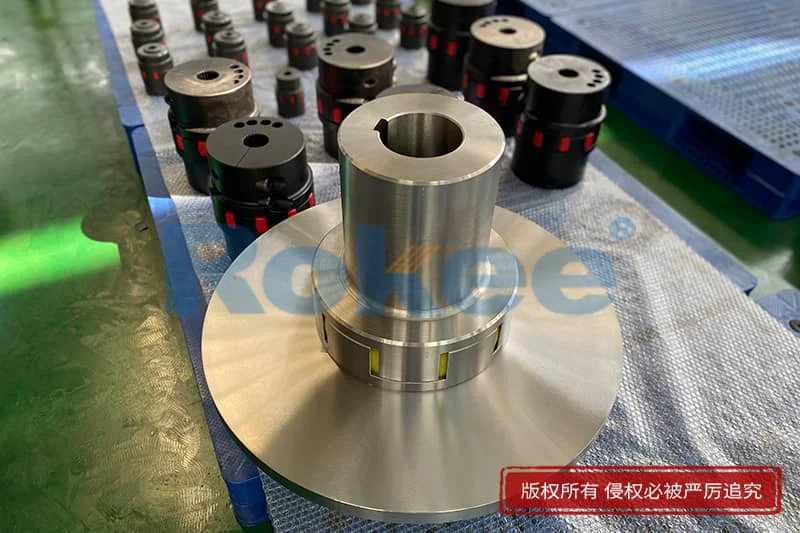
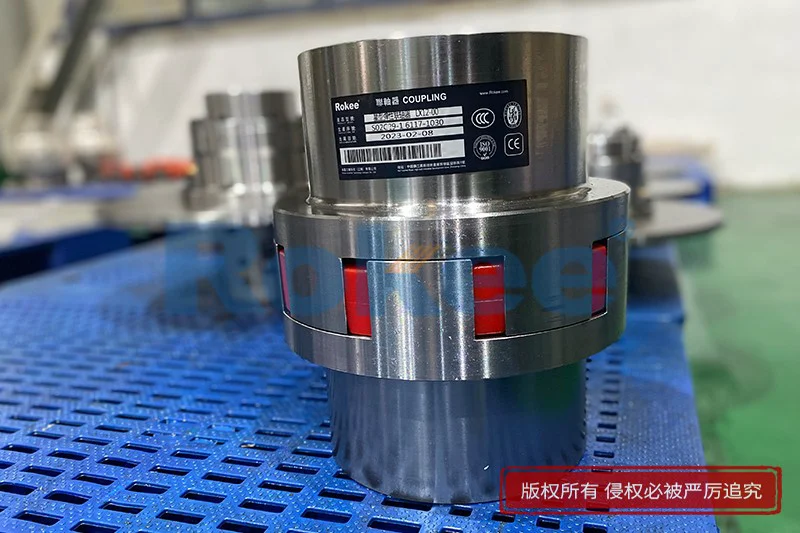

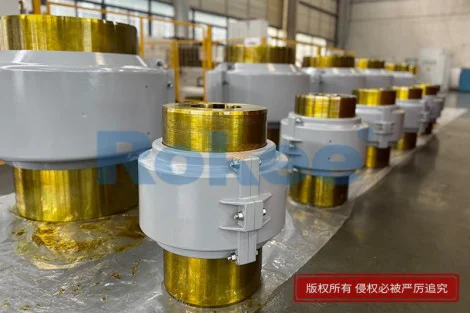
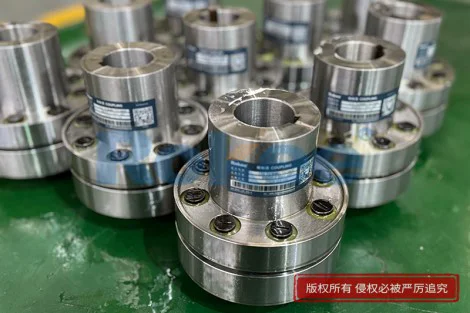
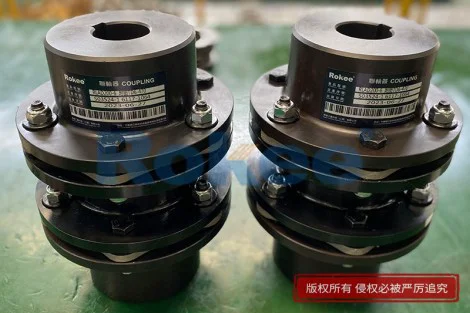
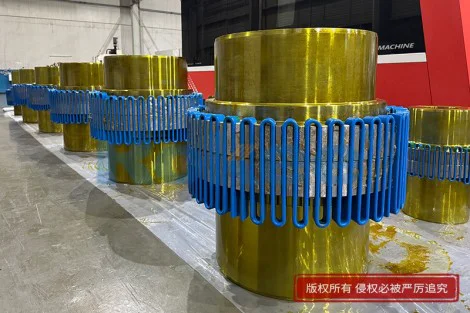
The basic structural composition of flexible claw couplings follows a simple and efficient mechanical design logic, mainly consisting of two metal claw hubs and an intermediate elastic elastomer spacer. The symmetrically distributed claw structures on the two metal hubs are arranged in a staggered manner, and the elastic body is embedded between the staggered claws to form a closed flexible transmission structure. This integrated combination of rigid metal framework and flexible elastic medium lays the foundation for its dual performance of efficient torque transmission and mechanical buffering. The metal hubs are usually made of high-strength alloy materials processed by fine machining, which possesses excellent structural rigidity, wear resistance and pressure resistance, ensuring stable structural support and long-term dimensional stability during high-speed rotation and torque transmission. The intermediate elastic element is the core functional component of the coupling, and its material characteristics directly determine the vibration damping effect, deviation compensation range and service life of the entire equipment. Common elastic materials include high-performance polyurethane, rubber and nylon polymers, which have good elastic deformation ability, anti-aging performance and mechanical fatigue resistance, and can maintain stable working performance in complex industrial environments for a long time. In addition, some optimized structural designs are equipped with auxiliary protective structures, which can effectively block external dust, debris and moisture from entering the transmission gap, avoid abnormal friction and corrosion of internal components, and further improve the operational safety and environmental adaptability of the coupling.
The working principle of flexible claw couplings is based on the organic combination of mechanical meshing transmission and elastic deformation buffering, realizing synchronous torque transmission and dynamic mechanical adjustment. In the normal operating state of the equipment, the driving shaft drives the active claw hub to rotate, and the rigid claws on the active hub apply uniform compressive force to the embedded elastic element. Relying on the elastic compression and traction of the intermediate elastomer, the torque and rotational motion are stably transmitted to the driven claw hub, thereby driving the driven shaft to operate synchronously. In this process, the flexible connection mode completely avoids the rigid collision and hard friction between metal components in traditional rigid transmission structures, realizing smooth and low-loss power transmission. When the mechanical system has startup impact, load mutation or operating speed fluctuation, the intermediate elastic element can produce reversible micro elastic deformation instantly. This deformation can effectively absorb and buffer instantaneous impact energy and vibration energy, prevent the sharp fluctuation of torque from directly acting on the driving and driven equipment, and reduce the alternating stress of key components such as motor bearings, transmission shafts and gear structures. More importantly, the elastic deformation characteristics of the intermediate elastomer enable the coupling to realize multi-dimensional axis deviation compensation, which is the core advantage that distinguishes it from ordinary rigid transmission components.
In actual industrial operation, it is difficult to achieve absolute coaxiality between the driving shaft and the driven shaft due to machining errors, equipment installation deviations, thermal deformation during long-term operation and mechanical vibration displacement. Slight radial offset, angular inclination and axial displacement between the two shafts are inevitable, and these tiny deviations will cause severe vibration, eccentric wear and additional load loss in rigid transmission systems, seriously affecting the equipment operation accuracy and service life. The flexible claw coupling can perfectly adapt to this actual working condition through the flexible deformation of the intermediate elastic body. For radial deviation, the lateral elastic deformation of the elastomer can offset the tiny center offset of the two shafts to avoid eccentric friction of the transmission shaft; for angular deviation, the angle adaptive adjustment between the staggered claws and the elastic body can adapt to the slight inclination of the shaft body, ensuring uniform stress of the transmission structure; for axial deviation, the telescopic deformation space of the elastomer along the axial direction can compensate the axial displacement caused by equipment thermal expansion and mechanical movement. This multi-dimensional adaptive compensation capability eliminates the additional mechanical stress caused by shaft misalignment, realizes error self-correction in the transmission process, and greatly improves the stability and tolerance of the mechanical transmission system.
Compared with other types of flexible transmission couplings, flexible claw couplings show comprehensive advantages in structural design, operating performance and application economy, making them occupy an important position in medium and low-power industrial transmission scenarios. First of all, the overall structure of the flexible claw coupling is compact and lightweight, with high power density. It can provide stable and efficient torque transmission capacity in a small installation space, which is very suitable for compact mechanical equipment with limited internal space. Its axial pluggable design simplifies the installation, disassembly and maintenance process, without the need to disassemble a large number of mechanical components, effectively reducing equipment maintenance time and labor costs. Secondly, the coupling has excellent vibration damping and noise reduction effects. The elastic medium can absorb most of the mechanical vibration and impact noise generated during equipment operation, effectively improving the operating environment of mechanical equipment and reducing the vibration fatigue damage of precision components. Test data shows that the optimized flexible claw coupling can achieve a vibration damping rate of more than 30% in conventional operating environments, significantly improving the smoothness of equipment operation.
In terms of environmental adaptability and operational reliability, flexible claw couplings have outstanding comprehensive performance. The optimized polymer elastic materials have good oil resistance, corrosion resistance and electrical insulation properties, and can work stably in harsh industrial environments such as oily, humid and slightly corrosive media for a long time. The overall structure has no need for lubrication and maintenance during operation, avoiding the failure risks and maintenance costs caused by lubricant deterioration, leakage and contamination. Meanwhile, the coupling has completely consistent forward and reverse rotation characteristics, can adapt to frequent forward and reverse switching and intermittent start-stop working conditions, and has strong anti-fatigue ability. In terms of temperature adaptability, different hardness grades of elastic materials can meet the operating requirements of wide temperature ranges, maintaining stable elastic performance and transmission accuracy in low-temperature cold environments and high-temperature heat-generating working conditions, and avoiding structural failure caused by material hardening, softening or aging.
Flexible claw couplings are widely used in various industrial fields involving medium and low-power mechanical transmission, covering precision processing equipment, general power equipment, industrial automation equipment and light industrial machinery. In the field of numerical control processing equipment, they are applied to machine tools, milling machines, engraving machines and other precision processing equipment. Through efficient vibration damping and deviation compensation, they ensure the stable operation of the transmission system, avoid processing errors caused by mechanical vibration and shaft offset, and effectively improve the processing precision and product qualification rate of precision parts. In general power transmission equipment such as fans, water pumps and reducers, the coupling can buffer the startup impact and operating vibration of the motor, reduce the operating load of the motor and transmission components, extend the service life of the equipment, and reduce the failure rate of daily operation.
In industrial automation and logistics transmission equipment, flexible claw couplings adapt to frequent start-stop, variable speed operation and intermittent load changes of automated production lines. Their flexible transmission characteristics can protect precision transmission components such as servo motors and stepping motors from impact damage caused by load mutation, ensuring the continuous and stable operation of automated production lines. In addition, they also show good application effects in light industrial machinery, textile equipment, chemical machinery and mining auxiliary equipment. For light industrial equipment with high requirements for operating stability and low noise, their vibration damping and noise reduction performance can optimize the production environment; for chemical and mining equipment operating in harsh environments, their corrosion resistance, dust resistance and maintenance-free characteristics can reduce equipment failure frequency and improve production efficiency.
Scientific selection and standardized installation and maintenance are key prerequisites to give full play to the performance advantages of flexible claw couplings. In the selection process, it is necessary to comprehensively evaluate multiple factors such as equipment transmission power, operating speed, load characteristics, working environment and shaft offset range. For working conditions with frequent start-stop and impact load, elastic materials with higher toughness and fatigue resistance should be prioritized to ensure long-term stable buffering performance; for high-temperature and low-temperature extreme environments, elastic materials with special temperature resistance need to be selected to avoid performance failure caused by temperature changes; for precision transmission equipment, couplings with high machining accuracy and small elastic deformation tolerance should be selected to balance flexibility and transmission accuracy.
In terms of installation and commissioning, the coaxiality of the driving and driven shafts should be strictly calibrated during installation to avoid excessive installation deviation exceeding the compensation range of the coupling, which may cause accelerated wear of elastic components and reduced transmission efficiency. The clamping and fixing state of the coupling hub should be checked to ensure stable connection with the shaft body and avoid relative sliding during operation. In daily equipment operation and maintenance, regular visual inspection of the coupling structure is required to check for aging, cracking, deformation and abnormal wear of the intermediate elastic body. Although the coupling is maintenance-free in conventional operation, the elastic element belongs to the wearing part, and regular replacement is needed after long-term operation to ensure the continuous stability of vibration damping and deviation compensation performance. Timely cleaning of dust and sundries on the surface of the coupling can avoid abnormal friction caused by foreign matter accumulation, further extending the overall service life of the equipment.
With the continuous upgrading of modern industrial machinery towards high precision, high efficiency and high reliability, the technical iteration and performance optimization of flexible claw couplings are also advancing continuously. Modern optimized flexible claw couplings are developing towards higher power density, stronger environmental adaptability and longer service life. Through the innovation of elastic material formula and structural optimization design, the torsion resistance, fatigue resistance and extreme environment adaptability of the coupling are further improved, which can adapt to more complex and diversified industrial working conditions. At the same time, with the improvement of industrial precision transmission requirements, the flexible claw coupling, which balances flexibility and precision, has broken through the performance limitations of traditional single-function couplings, and can not only protect mechanical components through flexible buffering, but also meet the basic precision requirements of medium-precision transmission equipment.
In the entire mechanical transmission system, the flexible claw coupling is not a core power component, but it undertakes the important functions of connecting transmission, buffering vibration, compensating deviation and protecting equipment. Its excellent comprehensive performance solves many practical problems in industrial mechanical transmission, reduces equipment operating failure rates and maintenance costs, and improves the overall operational efficiency and stability of mechanical systems. With the continuous development of intelligent manufacturing and modern industrial technology, the application scenarios of flexible claw couplings will be further expanded, and their technical value and industrial application significance in the field of mechanical transmission will become more prominent. As a mature and efficient flexible transmission component, it will continue to provide stable and reliable basic support for the safe and efficient operation of various industrial mechanical equipment.
« Flexible Claw Coupling » Update Date: 2026/7/16
Contact
If you require custom machined couplings, please contact Rokee via the contact information below for inquiries.
Email: https://www.gshmdpq.com
 WeChat