Working Principle of Flexible Membrane Coupling
Rokee® is a well-known high-quality flexible membrane coupling supplier from china, learn more about working principle of flexible membrane coupling, pls contact Rokee technology. Rokee has been established in China since 1999, over the years, with excellent quality, we have been continuously providing many flexible membrane coupling products of various categories and uses complying with multiple standards and a full range of services, from the flexible membrane coupling selection to final installation and operation, for the industry fields of ferrous metallurgy, nuclear power, gas turbine, wind power, ropeway construction, lifting transportation, general equipment, etc.
There are many types of flexible couplings available on the market. Each has its own features and benefits, but all are required to perform a few primary functions: connect two shafts, transmit rotary power and compensate for some shaft misalignment. Elastic couplings are integrally formed metal elastomers, usually cut from metal round rods. Commonly used materials include aluminum alloy, stainless steel, and engineering plastics, which are suitable for various deviations and precise torque transmission.
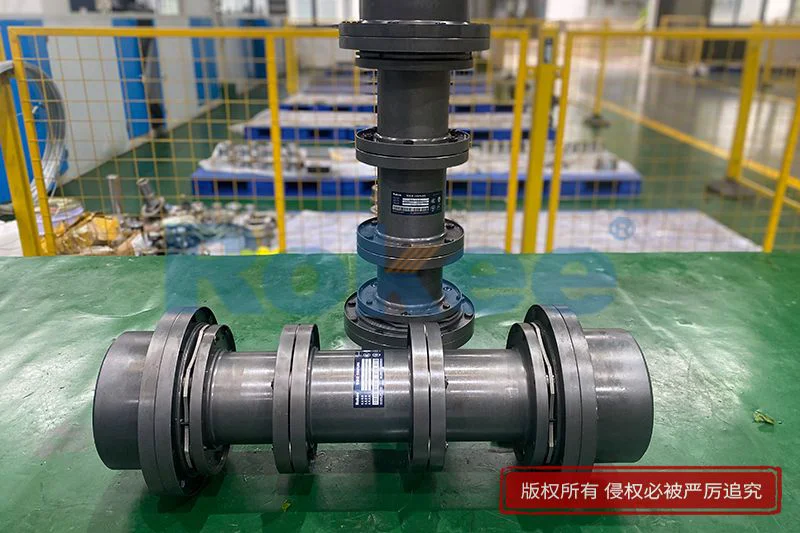


The flexible membrane coupling is a kind of high-performance metal flexible coupling, which compensates axial and angular displacements by the deformation of elastic diaphragm while transferring torque, flexible membrane coupling features with compact structure, large transmission torque, long service life, maintenance-free, high temperature resistance, acid and alkali resistance, and corrosion resistance, suitable for shafting transmission in high temperature, high speed and corrosive environment.
The flexible membrane coupling utilize a single or a series of plates or diaphragms for the flexible members, flexible membrane coupling transmits torque from the outside diameter of a flexible plate to the inside diameter, across the spool or spacer piece, and then from inside to outside diameter. The deflection of the outer diameter relative to the inner diameter is what occurs when the diaphragm is subject to misalignment.
Flexible Membrane Coupling Products
-
![RLM Diaphragm Coupling,Working Principle of Flexible Membrane Coupling]()
RLM Diaphragm Coupling
Standard, Single Section, Small-scale
The RLM standard single section small metal diaphragm coupling is suitable for various industrial process pumps and small torque working situations with a working speed not exceeding 5000rpm, and cannot compensate for radial errors.View More -
![RLMD Diaphragm Coupling,Working Principle of Flexible Membrane Coupling]()
RLMD Diaphragm Coupling
Standard, Bimodal, Small-scale
The RLMD standard double section small metal diaphragm coupling is suitable for various industrial process pumps and small torque working occasions with a working speed not exceeding 5000rpm.View More -
![RLA Diaphragm Coupling,Working Principle of Flexible Membrane Coupling]()
RLA Diaphragm Coupling
Standard, Single Section
The classic design of metal flexible diaphragm couplings is a reliable choice for medium to low speed applications, but cannot compensate for radial deviation.View More -
![RLAD Diaphragm Coupling,Working Principle of Flexible Membrane Coupling]()
RLAD Diaphragm Coupling
Standard, Bimodal
The classic design of metal flexible diaphragm couplings is a reliable choice for medium to low speed applications.View More -
![RLAR Diaphragm Coupling,Working Principle of Flexible Membrane Coupling]()
RLAR Diaphragm Coupling
Single Shaft Sleeve, Reverse Installation
Single side shaft sleeve reverse installation design, suitable for occasions with limited shaft head distance.View More -
![RLARD Diaphragm Coupling,Working Principle of Flexible Membrane Coupling]()
RLARD Diaphragm Coupling
Double Shaft Sleeve, Reverse Installation
The double-sided shaft sleeve reverse installation design is also applicable in situations where the distance from the shaft head is limited or the additional bending moment is smaller.View More -
![RLAF Diaphragm Coupling,Working Principle of Flexible Membrane Coupling]()
RLAF Diaphragm Coupling
Large and Small Axis Installation
The size difference design of the bilateral shaft sleeve is suitable for situations where the diameter difference between the two ends of the shaft is significant.View More -
![RLAT Diaphragm Coupling,Working Principle of Flexible Membrane Coupling]()
RLAT Diaphragm Coupling
Extra-long Wheelbase
Adopting an intermediate shaft design, suitable for ultra long shaft spacing power transmission applications.View More -
![RLQA Diaphragm Coupling,Working Principle of Flexible Membrane Coupling]()
RLQA Diaphragm Coupling
No Flange, Quick Installation
Suitable for various industrial process pumps, fans, and other medium to low speed applications, with a maximum speed generally not exceeding 25000 rpm. It meets the requirements of API610/ISO14691 and is one of the first products for API applications.View More -
![RLQF Diaphragm Coupling,Working Principle of Flexible Membrane Coupling]()
RLQF Diaphragm Coupling
Flange Type, Quick Installation
Suitable for drum pressure fans, turbine compressors, and other high speed applications, with a maximum speed of up to 35000rpm.View More -
![RLQU Diaphragm Coupling,Working Principle of Flexible Membrane Coupling]()
RLQU Diaphragm Coupling
Improved Flange, Quick Installation
The improved RLQF has smaller additional bending moments and better performance. Suitable for drum pressure fans, turbine compressors, and other high speed applications.View More -
![RLHD Diaphragm Coupling,Working Principle of Flexible Membrane Coupling]()
RLHD Diaphragm Coupling
High Speed
Suitable for higher speed applications, it also adopts a flexible component integrated assembly design, with a maximum speed of up to 42000rpm.View More -
![JMI Diaphragm Coupling,Working Principle of Flexible Membrane Coupling]()
JMI Diaphragm Coupling
Basic Type, Counterbore
JMI metal diaphragm coupling adopts the single-piece design, suitable for short distance transmission. Besides, the semi-coupling sleeve at one end has a counterbore, facilitating the fixing of the shaft end.View More -
![JMIJ Diaphragm Coupling,Working Principle of Flexible Membrane Coupling]()
JMIJ Diaphragm Coupling
Counterbore, Intermediate Shaft
JMIJ metal diaphragm coupling is designed with intermediate shaft, suitable for long distance transmission. Besides, the semi-coupling sleeve at one end has a counterbore, facilitating the fixing of the shaft end.View More -
![JMII Diaphragm Coupling,Working Principle of Flexible Membrane Coupling]()
JMII Diaphragm Coupling
Single Section, No Counterbore
JMII metal diaphragm coupling also adopts the single-piece design but has no counterbore, suitable for short distance transmission, with more compact structure.View More -
![JMIIJ Diaphragm Coupling,Working Principle of Flexible Membrane Coupling]()
JMIIJ Diaphragm Coupling
No Counterbore, Intermediate Shaft
JMIIJ metal diaphragm coupling is designed with intermediate shaft, suitable for long distance transmission. Besides, the semi-coupling sleeve at both ends have no counterbore.View More
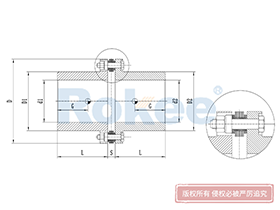
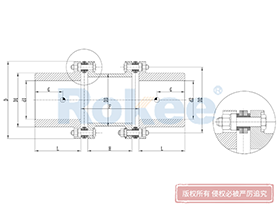
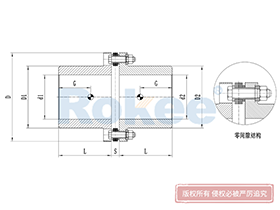
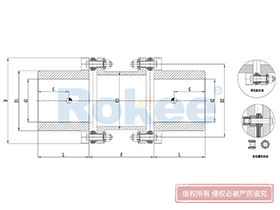
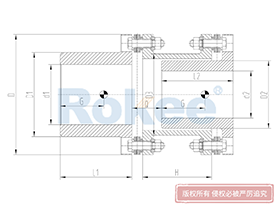
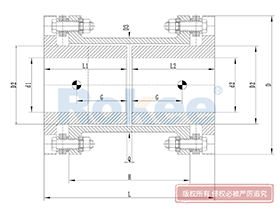
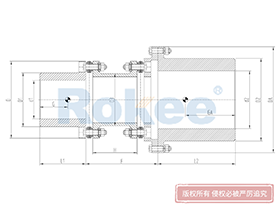
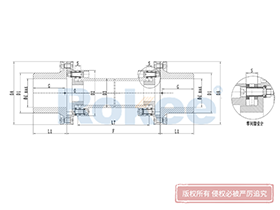
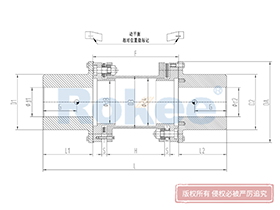
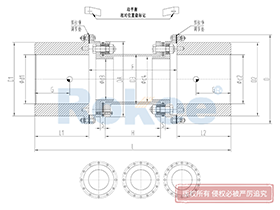
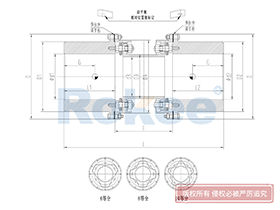
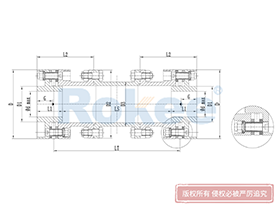
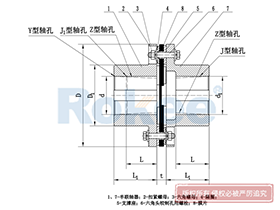
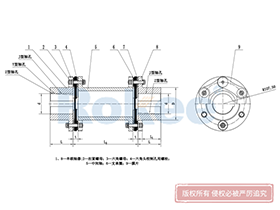
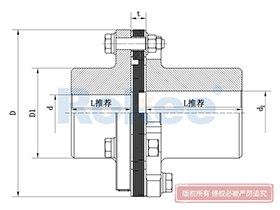
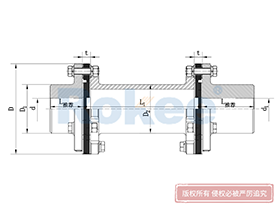

In the field of mechanical power transmission, flexible membrane couplings stand as a critical component that bridges driving shafts and driven shafts, addressing the inherent challenges of shaft misalignment, torque transmission, and operational stability across diverse industrial scenarios. Unlike rigid couplings that demand perfect shaft alignment and offer no tolerance for positional deviations, flexible membrane couplings integrate thin, resilient membrane elements into their structural design, enabling them to transmit torque reliably while accommodating various forms of shaft displacement. This unique combination of torque transmission capability and misalignment compensation defines their core working principle, a mechanism rooted in material elasticity, structural mechanics, and dynamic load distribution, which has made them a preferred choice in precision machinery, heavy industrial equipment, and high-speed rotating systems alike.
At the most fundamental level, the structure of a flexible membrane coupling is engineered to balance rigidity for torque transmission and flexibility for displacement adaptation, with no redundant components that would compromise its dynamic response. Typically, the assembly consists of two hub sections, each securely attached to the driving and driven shafts via interference fits, keyways, or clamping mechanisms, ensuring a firm, non-slip connection that prevents power loss during rotation. Between these two hubs lies the core functional component: the flexible membrane group, which may consist of a single membrane disc or a stacked set of thin membrane plates, depending on the intended load capacity and operational requirements. The membrane elements are crafted from high-strength, high-ductility metallic alloys, selected for their ability to withstand repeated elastic deformation without suffering fatigue failure or permanent distortion. These membranes are precisely fastened to the hubs using high-precision fasteners, distributed evenly around the circumference to ensure uniform load distribution, eliminating localized stress concentrations that could shorten the component’s service life. The absence of sliding parts, friction surfaces, or lubrication-dependent elements in the core transmission structure distinguishes flexible membrane couplings from other flexible coupling types, such as gear couplings or elastomer couplings, laying the groundwork for their low-maintenance, high-durability operating characteristics.
The primary function of torque transmission in flexible membrane couplings relies on the rigid yet adaptable nature of the membrane elements, operating on a direct force-transfer mechanism that minimizes energy loss. When the driving shaft begins to rotate, rotational force and torque are transferred from the driving hub to the flexible membrane group through the circumferential fasteners. The membrane elements, despite their thin profile, possess sufficient tangential rigidity to resist twisting deformation under rated torque loads, ensuring that nearly all input torque is transmitted to the driven hub and subsequently to the driven shaft. This direct shear and tension-based torque transfer eliminates the play and backlash common in couplings with meshing or sliding components, making these couplings ideal for applications requiring precise rotational synchronization, such as pump systems, compressor units, and machine tool drives. The efficiency of torque transmission is further enhanced by the uniform load distribution across the membrane surface; even under fluctuating torque loads, such as those caused by startup shocks or intermittent operational loads, the membrane elements distribute stress evenly across their structure, preventing localized overloading and maintaining stable torque delivery. Unlike couplings that rely on friction or material compression for power transfer, the membrane-based mechanism ensures consistent transmission efficiency across a wide range of rotational speeds, from low-speed heavy-duty operations to high-speed precision drives.
Beyond reliable torque transmission, the defining working principle of flexible membrane couplings is their ability to accommodate multiple forms of shaft misalignment through controlled elastic deformation of the membrane elements, a feature that addresses a pervasive challenge in mechanical drive systems. Shaft misalignment is unavoidable in practical engineering applications, arising from manufacturing tolerances, installation errors, thermal expansion during operation, or structural settling of equipment foundations over time. Uncompensated misalignment generates excessive radial, axial, and angular loads on shafts, bearings, and seals, accelerating component wear, increasing vibration levels, and ultimately leading to premature system failure. Flexible membrane couplings mitigate these issues by leveraging the elastic flexibility of their membrane components to absorb and compensate for three primary types of misalignment: angular misalignment, parallel misalignment, and axial displacement, each handled through distinct deformation modes of the membrane structure.
Angular misalignment, which occurs when the axes of the driving and driven shafts intersect at a small angle, is compensated by the bending deformation of the membrane elements. As the shafts operate at a slight angular offset, the membrane group flexes incrementally around its circumference, with one side undergoing compressive bending and the opposite side experiencing tensile bending. This controlled, reversible bending action aligns the rotational axes dynamically without transmitting the angular offset as destructive stress to the shafting system. The thin, flexible nature of the membranes allows for a meaningful range of angular compensation while maintaining the coupling’s torsional rigidity, ensuring that rotational precision is not compromised despite the shaft angle deviation. This capability is particularly vital in equipment where thermal growth causes subtle shifts in shaft orientation, such as industrial fans, blower units, and turbine-driven systems, where constant angular realignment is necessary during operation.
Parallel misalignment, also known as radial misalignment, involves the lateral offset of the driving and driven shaft axes while remaining parallel to one another, and it is addressed through a combination of membrane bending and shear deformation. When subjected to radial offset, the membrane elements undergo continuous, uniform flexing around the coupling’s circumference as it rotates, adjusting their shape to counteract the lateral displacement. This dynamic deformation ensures that the radial load caused by misalignment is absorbed by the membrane’s elastic strain, rather than being transferred to the shaft bearings and associated components. Unlike elastomer couplings that rely on material compression for radial compensation, flexible membrane couplings provide consistent radial compliance without experiencing material fatigue or hardness degradation over time, maintaining stable performance even under prolonged exposure to moderate parallel misalignment.
Axial displacement, referring to the back-and-forth linear movement of shafts along their rotational axis, is accommodated through the tensile and compressive elasticity of the membrane group. During operation, shafts may extend or contract due to thermal fluctuations or mechanical thrust loads, and the membrane elements stretch or compress axially in response to these movements. The high tensile strength and elastic resilience of the membrane material allow it to withstand repeated axial loading cycles without losing its ability to revert to its original shape, preventing axial forces from damaging thrust bearings or disrupting the alignment of adjacent equipment. This axial compliance is especially beneficial in systems with significant thermal expansion, such as large-scale pump drives and power generation equipment, where shaft length changes are inevitable during continuous operation.
A key advantage of the flexible membrane coupling’s working principle is its ability to handle combined misalignment—where two or more forms of misalignment occur simultaneously—without a significant drop in performance. In real-world operating environments, pure angular, parallel, or axial misalignment is rare; most systems experience a mix of these deviations, and the membrane structure’s multi-directional elasticity allows it to adapt to these complex conditions seamlessly. The coupling’s design ensures that deformation modes overlap smoothly, with stress distributed across the entire membrane surface rather than concentrating in specific areas, preserving structural integrity and operational stability even under mixed misalignment loads. This adaptability eliminates the need for overly precise shaft alignment during installation, reducing assembly time and labor costs while enhancing the overall resilience of the drive system.
The dynamic operating behavior of flexible membrane couplings further reinforces the practicality of their core working principle, particularly in terms of vibration damping, fatigue resistance, and operational longevity. The absence of sliding or meshing components means there is no friction-induced wear, no lubrication requirements, and no generation of particulate contaminants during operation, making these couplings suitable for clean operating environments as well as harsh industrial settings. The membrane elements act as a mild vibration damper, absorbing minor torsional vibrations and shock loads generated by the driving mechanism, preventing these disturbances from propagating through the drive train to sensitive downstream components. This vibration-damping effect reduces noise levels and minimizes the risk of resonance, a common issue in high-speed rotating systems that can lead to catastrophic failure.
Fatigue resistance is integral to the long-term functionality of flexible membrane couplings, and their working principle is engineered to minimize cyclic stress that leads to material fatigue. The membrane elements are designed to operate within their elastic limit under all rated load and misalignment conditions, meaning every deformation is fully reversible and does not cause permanent structural damage. The high-quality alloy materials used in membrane manufacturing exhibit exceptional fatigue life under repeated bending, tension, and compression cycles, ensuring the coupling maintains its performance characteristics over extended service intervals. Unlike elastomer couplings that degrade with age, exposure to oil, or temperature fluctuations, metallic membrane components retain their mechanical properties consistently, resisting corrosion, oxidation, and material breakdown in diverse environmental conditions, from extreme temperature fluctuations to exposure to mild industrial contaminants.
The operational versatility of flexible membrane couplings stems directly from their foundational working principle, allowing them to be deployed across a vast spectrum of industrial applications with varying load, speed, and environmental requirements. In high-speed precision machinery, such as centrifugal pumps, turbochargers, and precision machine tools, their backlash-free torque transmission and low vibration operation ensure rotational accuracy and consistent performance. In heavy-duty industrial equipment, including conveyors, crushers, and large compressor systems, their robust torque-carrying capacity and misalignment tolerance withstand heavy loads and harsh operating stresses. They are also well-suited for applications where maintenance access is limited, as their lubrication-free, wear-resistant design reduces the need for routine inspections and part replacements, lowering total operational costs over the component’s lifespan.
While flexible membrane couplings offer substantial benefits, understanding the boundaries of their working principle is crucial for optimal application and performance. The range of misalignment compensation, torque capacity, and rotational speed is determined by the thickness, material, and number of membrane elements, as well as the overall dimensional design of the coupling. Exceeding the rated misalignment limits, torque thresholds, or speed ranges can subject the membrane elements to excessive stress, leading to plastic deformation, fatigue cracking, or structural failure. Proper selection based on operational parameters—including torque load, rotational speed, shaft size, and expected misalignment—ensures the coupling operates within its design limits, maximizing efficiency and service life. Additionally, proper installation, including secure hub fastening and balanced assembly, preserves the coupling’s dynamic balance and prevents uneven stress distribution that could compromise its functionality.
In summary, the working principle of flexible membrane couplings is a refined integration of elastic deformation mechanics and efficient torque transmission, centered on the unique performance of high-strength flexible membrane elements. By combining torsional rigidity for reliable power transfer with elastic flexibility for multi-directional misalignment compensation, these couplings solve the core challenges of shaft connection in mechanical drive systems, delivering stable, efficient, and low-maintenance operation. Their design eliminates common failure modes associated with other coupling types, leveraging material science and structural engineering to create a component that adapts to real-world operational conditions while maintaining precision and durability. As industrial machinery continues to evolve toward higher speeds, heavier loads, and greater operational resilience, the fundamental working principle of flexible membrane couplings remains highly relevant, supporting advancements in power transmission technology and ensuring the reliable operation of critical mechanical systems across global industries. This blend of functional simplicity, engineering efficiency, and practical adaptability solidifies their role as an indispensable component in modern mechanical design.
« Working Principle of Flexible Membrane Coupling » Update Date: 2026/3/7
URL: http:/en/blog/working-principle-of-flexible-membrane-coupling.html